







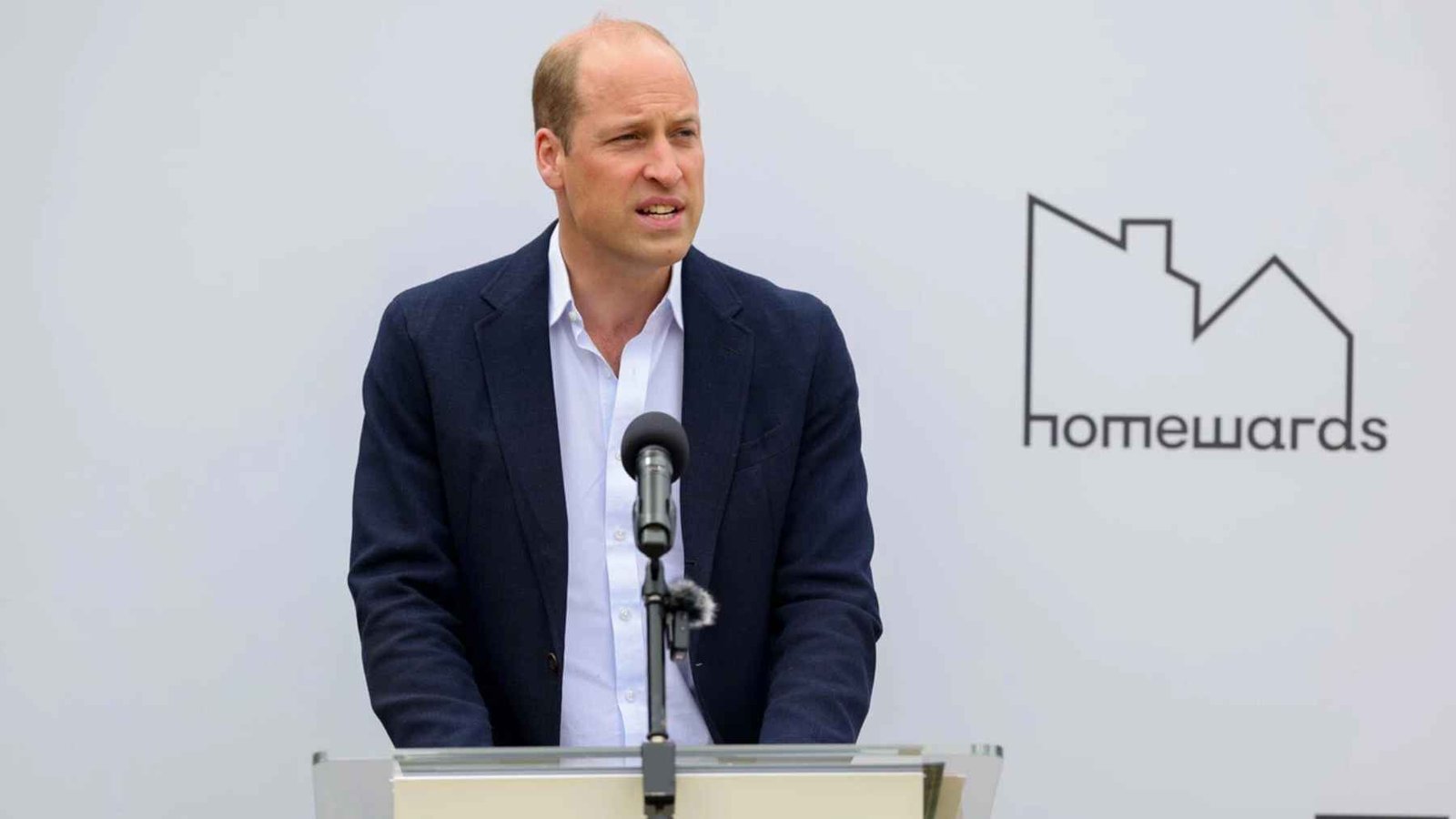
Prince William is preparing to sell parts of the Duchy of Cornwall over the next decade to help fund more than £530 million (about $670 million) in local investment for affordable housing and environmental projects. Reuters reported that the sales, first reported by The Times, would amount to about 20% of one of Britain’s biggest landholding estates.
It is a striking pivot for a property portfolio that has long funded the Prince of Wales and now faces a very public question. Can land held for generations help ease the housing crunch, support cleaner energy, and restore nature at the same time?
A royal estate with a new test
The Duchy is not a small patch of countryside. Its 2025 Integrated Impact Report lists more than 129,000 acres across 19 counties, making natural capital one of its major resources.
Created in 1337 to support the Prince of Wales, the estate generates private income rather than taxpayer funding for the heir to the throne. That history matters, because this plan is not just a real estate story. It asks what a royal estate should be doing in a century shaped by high rents, climate risks, and pressure on rural communities.
Why sell now
Will Bax, the Duchy’s chief executive, framed the change as a shift in purpose. “The Duchy should exist to make a positive impact,” he said, adding that the plan may require “rebalancing what we own” to help communities now and in the future.
In practical terms, that means capital from asset sales, development income, partnerships, and some borrowing would be reinvested. For families struggling with rent or young workers priced out of a village, the key question is simple. Will that money actually lead to homes people can afford?
Five places for impact
The Duchy’s own website says its heartlands are Cornwall, the Isles of Scilly, Dartmoor, Bath and West, and Kennington in South London. These are the areas where the estate says its roots run deepest and where it wants to make the greatest difference.
That geographical focus matters because housing and environmental problems do not look the same everywhere. In an island community, one empty vacation home can sting differently than it does on a city street. In a rural area, a farm lease, a protected habitat, and a worker’s commute can all be tied to the same patch of land.
Housing with cleaner design
The Duchy has already pointed to small but concrete housing projects. On the Isles of Scilly, it says 10 sustainable homes are under construction for people with a strong local connection to the islands, with first residents expected in winter 2026.
Those homes are planned with rooftop solar panels, high insulation, positive ventilation, Electric Vehicle (EV) charging, and space for a car-share scheme. It is not a giant number of homes, but the details show where the wider plan could land in daily life. Lower energy demand may not sound glamorous, but it can matter when the electric bill arrives.
Homelessness is part of the plan
The estate is also working on its first homelessness project in Nansledan, Newquay. The Duchy says the project will provide 24 homes with wraparound support for local people experiencing homelessness, in partnership with St Petrocs.
The project is being built to low-carbon standards, including all-electric homes, roof-mounted solar panels, hemp insulation, and ultra-low-carbon cement with a carbon footprint about one-sixth that of traditional cement. That is where the housing and climate story overlap. A safer home should not come with a bigger environmental burden.
Nature is not a side issue
The environmental side of the plan is just as important, especially for an estate with farms, woodlands, coastline, and historic landscapes. The Duchy says it wants to become net zero by the end of 2032 and work with partners to address homelessness, restore nature, and support communities.
Its 2025 report says the Duchy invested about $3.8 million in environmental initiatives during the year, including net zero, future farming, and woodland programs. It also reported creating about 988 acres of new habitat and working with partners to restore Dartmoor peatlands.
A response to criticism
The new plan arrives after scrutiny of how royal estates make money. Reuters noted that William and King Charles have faced criticism in recent years over estate management, including charges to public institutions, and that the Duchy later reduced rents for some charity and community tenants.
That context does not cancel the new commitments, but it does raise the bar. A promise to invest in homes, nature, and renewable energy will be judged not only by announcements, but by how quickly projects appear on the ground, who gets access to them, and whether communities feel heard.
What to watch next
The scale is what makes this story unusual. A reported 20% sell-off could unlock a large investment pot, but it also means changing what the Duchy owns and where it puts its influence.
The coming decade will show whether this is a careful reset or simply a reorganization of assets. For now, the plan points in a direction many communities already know they need. More homes, healthier land, and energy systems that make sense.
The official statement was published on the Duchy of Cornwall’s website.