







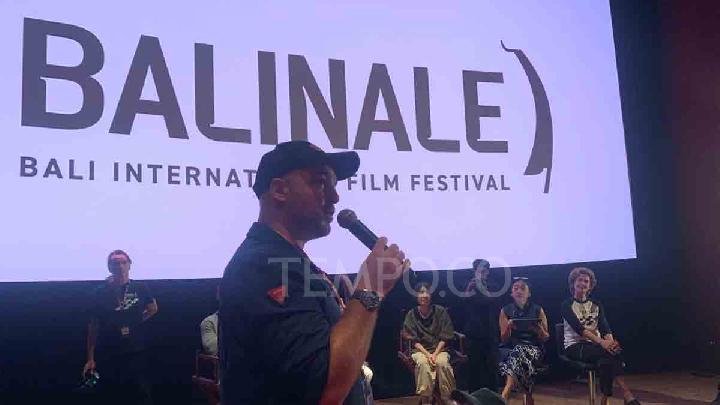
TEMPO.CO, Jakarta – The Balinale international film festival concluded its 19th edition by reaffirming its commitment to continuing to support the Indonesian Ministry of Culture’s (Kemenbud) program of preserving local wisdom through film.
“The government has recognized Balinale’s potential, as evidenced by the Ministry’s continued support. Therefore, this festival will continue to support the Ministry’s programs,” said Deborah Gabinetti, Founder and Director of the Balinale Festival, in Denpasar on Saturday.
Deborah explained that after a week-long competition, the jury determined the winners in six categories and four special awards at Balinale, which received more than 1,300 films and curated 94 films from 38 countries.
Of the 94 films, 26 were works by Indonesian filmmakers, and several of them received special awards as they were deemed the best works at this Oscar-qualifying film festival.
“Balinale has an international reputation and global affiliations, so what we do is definitely beneficial in promoting the Indonesian film industry. So, government programs to promote film can be implemented through our network,” said Deborah.
At the Balinale Film Festival awards ceremony, it was announced that “The Tuners” by Pawel Chorzepa (Poland) was selected as the winner of the Short Documentary Film category. “Ali” by Adnan Rajeev (Bangladesh/Philippines) won the Short Narrative category, and “Lifetime Warranty” by Daniel Lobos (Chile) won the Short Animation category.
Furthermore, “The Tuners” by Pawel Chorzepa (Poland) won the Best Short Film, while “The Designer is Dead” by Gonzalo Hergueta (Spain) won the Feature-Length Documentary Film, and “Aisha Can’t Fly Away” by Morad Mostafa (Egypt) won the Narrative Film category.
Special awards included the Gary L. Hayes Award, awarded to “Sound of Silence” by Gavrila Angelina (Indonesia), and Tapestry of Indonesia, or Best Indonesian Short Film, won by “Amazing Fantastic Extraordinary People” by Nadine Habsjah and Yusgunawan Marto (Indonesia). Two committee-choice awards were also awarded to filmmakers from South Korea and the United Kingdom.
Deborah said the continued increase in the involvement of local filmmakers, even those who won awards, demonstrates the potential of the Indonesian film industry.
“I think the more local filmmakers are recognized, the more confidence they build, and the greater pride they have in their work. That’s why we’re also starting the new Tapestry of Indonesia category, providing an opportunity for voices from across Indonesia,” she said.
Reflecting on the 19 years of Balinale, Deborah envisions filmmakers moving forward not to focus on a single theme but to be open to the realities of their surroundings.
According to her, the international community admires the Indonesian film industry for its frequent use of local wisdom in films.
“We want to be as open as possible. We don’t want to limit ourselves to specific themes. This means that when making a film, you ensure everything you need is there, both in terms of conveying the message and the production,” said Deborah.
This is also why this international film festival shares a vision with the Ministry of Culture: to continue highlighting local wisdom and local culture.
“Therefore, at the 20th Balinale, we are establishing closer collaboration with the government to encourage Indonesian films, especially young people, to participate in the festival. Through the festival, they can gauge quality compared to international film players. There’s plenty of time to highlight local potential, and the festival is the strategy,” she said.
Read: Indonesian Director Kamila Andini Joins Cannes Women in Cinema Spotlight
Click here to get the latest news updates from Tempo on Google News