What a visage it was that greeted me the first morning of my three-day visit to the Corca Dhuibhne peninsula in Co Kerry. I was in my accommodation, staring at the top of Cnoc Mhaoilionain as long fingers of snow-white cloud flanked its upper half, while a cap of cloud floated softly over its summit. In the morning light the wispy tendrils looked like something a giant slumbering dragon had breathed out the night before.
It was a fitting start to a trip that made me appreciate the character of a landscape like no trip had before. The Corca Dhuibhne peninsula has its own aura that I felt most strongly by exploring its varied topography, observing its interesting wildlife and feeling the legacy of generations gone by.
I felt this character particularly strongly in certain places. Looking across Dingle Bay every day as I drove towards Daingean Uí Chúis I could see the hazy apparitions of the Skelligs many miles to the southwest, putting me in mind of the legendary Hy-Brasil that sailors of yore claimed to have seen during long trips at sea.
A boat tour to the island of An Blascaod Mór gave me a real appreciation of the harsh realities of eking out a living in west Kerry in times gone by. The five-minute walk from the pier to the island’s caifé took me through the abandoned village, which has been devoid of human habitation for more than 70 years. As I passed the stone ruins, I could sense the ghostly pall of struggle and hardship still hanging over the place making me imagine the generations of hardy farmers and fishermen who toiled away on this wind-battered island.
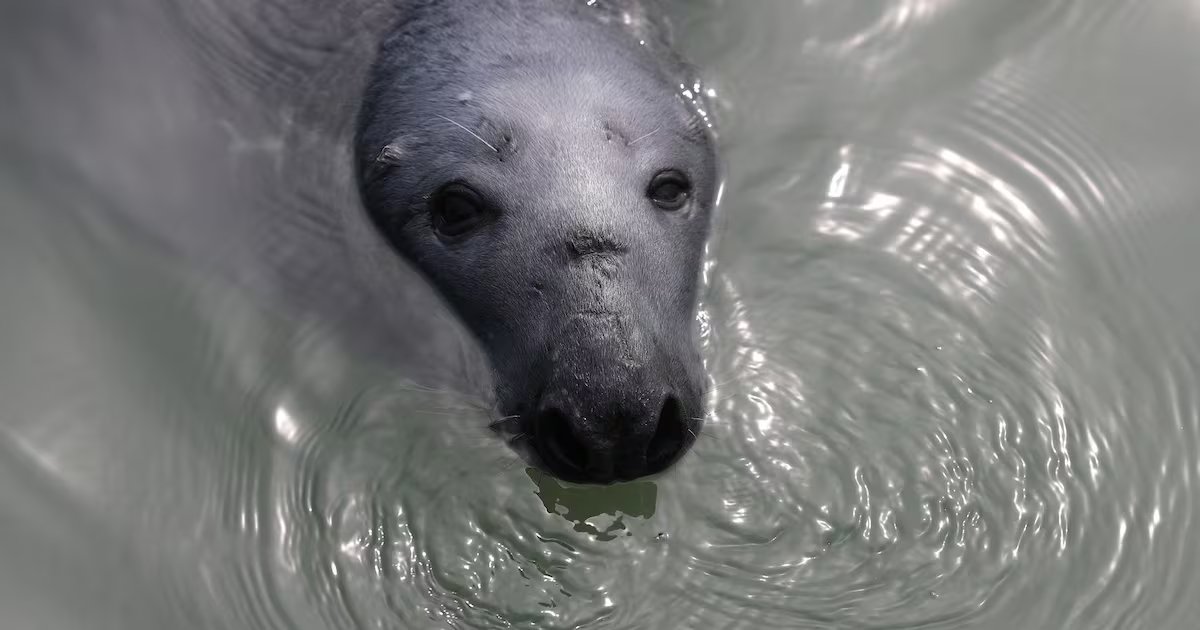
I spent my last hour on the island sharing the water with its famous colony of grey seals whose ancestors the islanders hunted. As they poked their heads out of the water to stare at me with a mixture of wariness and curiosity their mournful howls and large, black eyes put me in mind of Irish folklore where seals were sometimes described as being able to speak and transform into humans.
Once back on the boat we were brought past the island of Inis na Bró. Jutting majestically out of the churning waters like a great, rocky cathedral it provides sanctuary to thousands of puffins, guillemots, shags and razorbills, many of whom flew close to the boat as we passed, before diving into the water in search of fish.
The next day I went for a cycle around Ceann Sléibhe on the western part of the peninsula. Feeling the effects of the July heatwave, I stopped at Com Dhíneol beach to cool off in its light blue waters. After half an hour in the sea I got out and lay down on the sand. As I rested, I noticed with much excitement a tiny viviparous lizard, Ireland’s only native land reptile, scramble past me and on to the black rocks to my left.
About an hour after arriving I left the beach and continued on my way, cycling through the villages of Dún Chaoin and Baile an Fheirtéaraigh before cutting across through hills to Daingean Uí Chúis.
On my last day I began the long journey back to Sligo by driving through the fabled Conor Pass. As the winding road increased in altitude, I drove through a wall of white cloud that had descended upon the pass. After a few minutes in the cloud, I exited it close to the village of An Clochán.
As I drove home through Munster, the midlands and into Connacht I gazed out at the various landscapes I passed, comparing them with what I had seen in Kerry. The rolling green pasturelands of Limerick and Tipperary contrasted sharply with the many raised bogs I saw in Offaly and Roscommon. Each of them has their own distinct characters, the former being long associated with dairy farming, abundance and plenty, the latter with hard labour and acidic, barren soils.
This got me thinking about the sheer variety of landscapes on this island, especially those found in areas of marginal land such as west Kerry, Connemara and other parts of Connacht which are often celebrated as being wild and untamed. Virtually all of the Irish landscape though, even in these remote areas, has been shaped by the hand of man for millenniums, largely through deforestation and the extirpation of many kinds of fauna.
Interestingly, for all this environmental destruction, new ecosystems have actually emerged because of it, some of which are of international value. One that springs to mind is the Burren, a strange landscape of porous limestone, itself the product of deforestation thousands of years ago. The wildflowers and orchids of the region are beloved by botanists the world over, many of whom flock to the area in spring and summer to see them. These wildflowers thrive due to the grazing of upland areas by cattle in the winter who remove dead grasses and scrub, giving space for the flowers to bloom the following spring.
As I neared Sligo, I pondered the complex interplay of humans and the Irish landscape over time, the hardy people struggling against the elements, the loss of species as well as the formation of new and important ecosystems, all of which have contributed to the character of the country’s terrain that so enamours me today.
Ella McSweeney returns next month