





A computer algorithm used by ambulance service call handlers to triage cases “could not” have classed a County Durham man’s case as the highest priority, an inquest heard. The Pathways system provides call handlers with questions to ask of those calling 999.
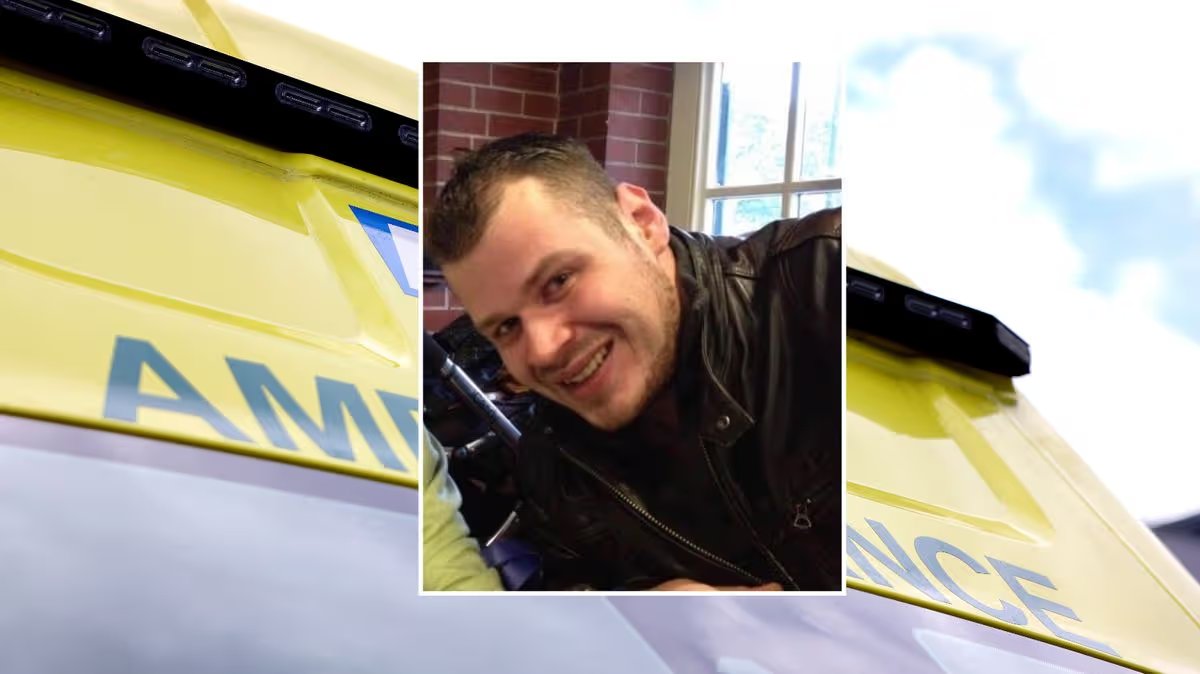
Andrew Watson, 32, died on October 10, 2019. He had quinsy, a rare complication of tonsillitis which saw a “tennis ball-sized” swelling in his throat block his airway.
A hearing at Crook Coroners’ Court was told how the “key issue” was that the ambulance response to Andrew’s Langley Moor supported accommodation was “too slow”. He first dialled 999 at 5.38pm, but an ambulance did not arrive until around 6.45pm.
On Monday, the court heard evidence showing that if an ambulance had reached Andrew within 18 minutes – the target average time for category two ambulance responses – he could have been in hospital quick enough to receive life-saving care.
The court has now heard how an expert report, by Dr Sami Sadek and prepared for the hearing, has suggested that Andrew would have had to arrive in hospital by around 6.35pm to have been likely to survive. North East Ambulance Service (NEAS) call handling team leader Frazer Gregory carried out a review of how the three 999 calls in Andrew’s case were handled.
He said that he had found improvements could have been made. The “right disposition” was not arrived at during the first call and although it could have been designated as a category two (C2) incident around two minutes sooner, it would not have been graded as a category one case, Mr Gregory added.
However, in court, Leila Benyounes, barrister for Andrew’s family, highlighted that there was a contradiction within the Pathways system. Category one calls are defined as life-threatening, the court heard. And a specific question the Pathways algorithm generated touched on whether his condition was in fact life-threatening.
But in Andrew’s case, despite the fact that investigations found this answer should have been “positive”, his case was life-threatening – the Pathways system then only generates a C2 response.
For Andrew’s family, Ms Benyounes said: “Is it the point that the algorithm can only get you to a C2 even though it’s absolutely clear that this situation is life-threatening? That’s a real problem.”
Mr Gregory agreed with this proposition. And then answering a question from the coroner, he said that “choking” incidents would trigger a category one response, but that: “We would consider that to be choking on a solid object.”
He said there were points during the 999 calls where he would have expected the call handler to have used “supporting information” to formulate questions which may have led to them pinpointing that he was seriously struggling to breathe – and that there was a growing swelling in his throat – sooner.
However, even if they had done that, they would still have only been able to, as per the software, designate the case as C2, the witness said. Mr Gregory added: “The position we were in that day was that we did not have an ambulance to send for a number of reasons. There was demand from lots of other patients, there were resources tied up at hospitals.”
He also said there had gone from being a shortage of paramedics at that time in 2019 to now having a surplus. However, he told Ms Benyounes that in a situation where Andrew’s case had been a category one case, this could have been different.
Mr Gregory said there had been broader improvement in ambulance service performance, including in dispatch times, in the seven years since Andrew’s death.
One of the attending paramedics, William Perry, told the court he had, immediately after leaving the scene, felt it necessary to raise concerns that there may have been “missed opportunities” in Andrew’s case.
Mr Perry said: “I raised concerns from the point of fact that I knew where we were and what call we had been on immediately before [being allocated] Andrew’s call. My concern was were there any missed opportunities and did Mr Watson not get the care he should have from us? It was my concern that he had this escalating condition for possibly 15 to 20 minutes before we got there.
The experienced paramedic said he had been “troubled” by the fact that Andrew had been seen at his GP surgery earlier that day and apparently the quinsy had not been spotted. However, Mr Perry said he could not comment as he had not himself seen Andrew earlier that day.
Did you know you can make ChronicleLive a preferred source of North East news in Google, which will mean you get more of our breaking news, exclusives, and must-read stories straight away? Here’s more information about what this means and how to do it – you can also do it straight away by clicking here.
He said the quinsy was the “biggest he had seen before or since” and was an example of how dangerous the condition could be. He said if he or colleagues came across such a case, “it should be treated as a medical emergency and the patient pre-alerted to hospital”.
Mr Perry later said he “would not have agreed” with a decision taken in a meeting led by then NEAS head of patient safety Shelley Dyson to downgrade the recorded harm level ascribed to Andrew’s case.
Andrew’s case is one of several to have been implicated in the alleged “covering-up” of safety investigations by North East Ambulance Service personnel, as disclosed by whistleblowers in 2022. It is only after media coverage of this, which saw NEAS’ then chief executive Helen Ray accept there had been “historical failings”, that Andrew’s family became aware of any safety investigation in his case.
Earlier the court heard from support workers Dawn Heatherington and Tracey Soulsby of Potens, who run Cecil Court where Andrew lived. They discussed how Andrew had seemed during the day of his death. It was reported that he had that morning told another care worker how he had been “choking” all night.
The court also heard how a support worker told paramedics after Andrew’s death that he had been crushing and snorting painkillers “because he could not swallow” – however neither care worker nor Beverley Richardson who gave evidence on Monday recalled this.
The court had also heard on Monday how Andrew had been examined by nurse practitioner Jacqueline Griffiths at the Medical Group in Sawmills Lane, but she had not recorded any signs of quinsy and instead diagnosed tonsillitis and prescribed antibiotics. GP partner Dr Jonathan Wing told the court he believed from Ms Griffiths’ notes that she would have checked for signs of quinsy and ruled them out.
The inquest continues.
Our ChronicleLive Daily newsletter is free. You can sign up to receive it here. It will keep you up to date with all the latest breaking news and top stories from the North East.