





On World Desertification and Drought Day (17 June), the EU is accelerating efforts to strengthen water and drought resilience, both vital for economic development and security.
The day is a global reminder of the growing threats posed by land degradation, desertification, and drought — crises that undermine food production, economic stability, social well-being, and the environment. In the EU, desertification already affects 13 countries, and soil degradation is estimated to cost around €50 billion per year.
The Water Resilience Strategy is the EU’s response to this global water crisis driven by overuse, poor management, climate change, biodiversity loss, and pollution.
This year’s World Drought and Desertification Day shines a spotlight on rangelands, which are natural spaces used for grazing cattle.
The goal is to recognise and draw attention to their economic, ecological and cultural value, to support their traditional stewards, and push for their restoration. This aligns with the International Year of Rangelands and Pastoralists to give rangelands the value they deserve as an ecosystem.
Looking ahead to UNCCD COP17
The EU will work with international partners to deliver on global commitments to tackle desertification, land degradation, and drought at this year’s United Nations Convention to Combat Desertification (UNCCD COP17), taking place in August in Ulaanbaatar, Mongolia.
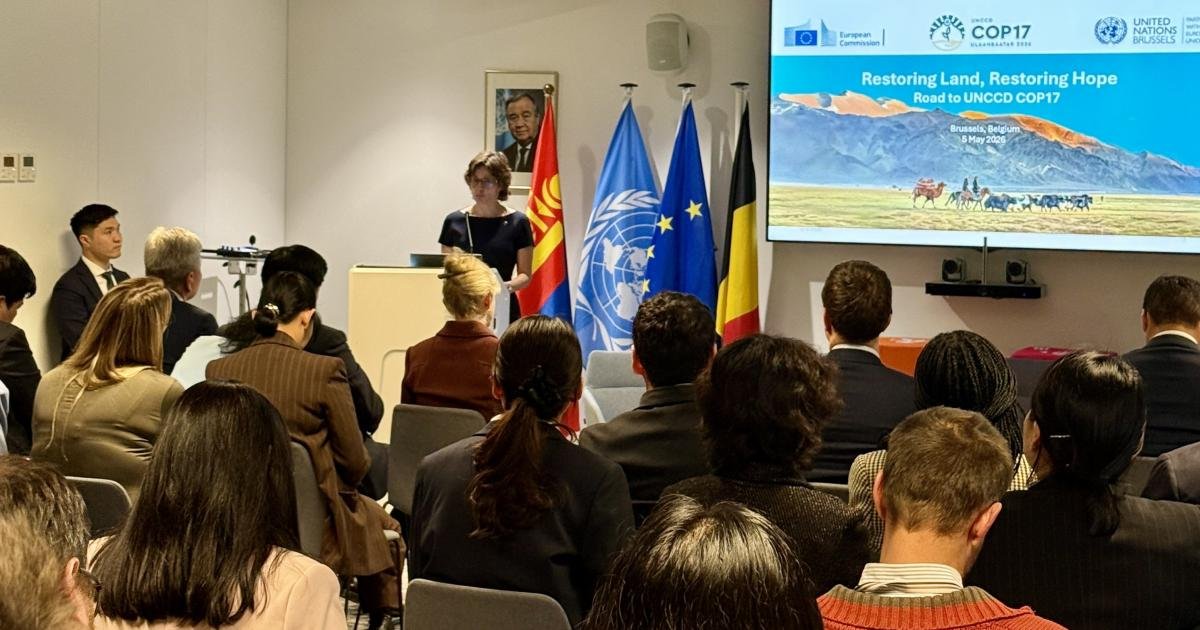
Ahead of UNCCD COP 17, a multistakeholder dialogue ‘Restoring Land, Restoring Hope: Road to UNCCD COP17‘ took place on 5 May in Brussels. The European Commission, the Government of Mongolia, and the United Nations co-hosted the event. Throughout discussions, the need to mobilise finance — public and private — figured prominently.
Given their key role in land management, the full and effective participation of women and girls and gender equality are essential for effective implementation on the ground.
Similarly, the active participation of Civil Society Organisations (CSOs) is important for meaningful outcomes of the UNCCD processes and their subsequent implementation.
The EU supports the involvement of CSOs in UNCCD processes and the meaningful participation of women in the UNCCD, including supporting, jointly with the Government of Mongolia, a preparatory meeting for CSOs and a year-long Women Negotiators Training for 20 women from developing countries, together with other initiatives, such as the UNCCD’s Women Delegates Fund.
“Land degradation and drought are not distant threats — they affect food security, climate stability, and millions of lives. These global challenges demand urgent action, stronger cooperation and sustainable land and water management for future generations. The EU is firmly committed to continue its global engagement and leadership.”
Jessika Roswall, European Commissioner for Environment, Water Resilience and a Competitive Circular Economy
Background
In her political guidelines for 2024-2029, President von der Leyen announced the development of an EU Water Resilience Strategy to ensure sources are properly managed, that scarcity is addressed and that we enhance the competitive, innovative edge of our water industry while taking a circular economy approach.
Global freshwater demand is predicted to exceed supply by a staggering 40% by 2030. Water resilience is also key to preventing and addressing the current and future health, food and energy crises.
Joint and coherent solutions to the triple planetary crisis of climate change, biodiversity loss and pollution of land are important, including upscaling nature-based solutions and ecosystem-based approaches.
More information
Water resilience strategy | European Commission
Water scarcity and droughts | European Commission
Council Conclusions on 3 Rio Convention COPs | European Commission
World Drought Atlas: Global water crisis requires urgent action | Joint Research Centre