








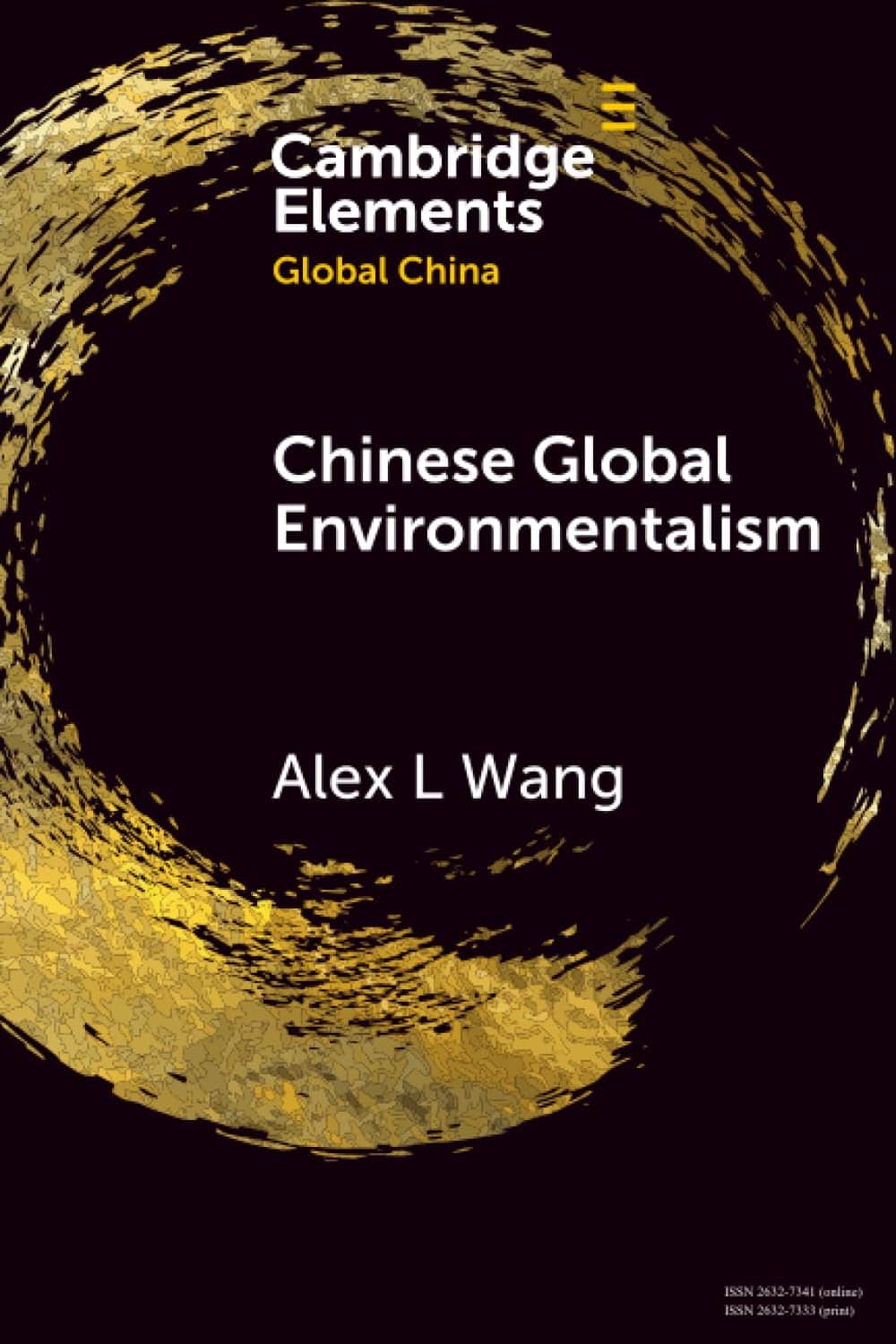
Alex Wang is a Professor of Law at UCLA School of Law, where he holds the Walter and Shirley Wang Chair in U.S.-China Relations and Communications and co-directs the Emmett Institute on Climate Change and the Environment. His research focuses on the law and politics of Chinese environmental governance. He first went to China on a Fulbright grant in 2004, then spent six years at the Natural Resources Defense Council in Beijing, building the organization’s environmental law and governance program and working with Chinese lawyers, environmentalists, and regulators during what he calls a period of real ferment. He is the author of Chinese Global Environmentalism, which examines China’s embrace of green development as a global political and economic strategy.

Illustration by Lauren Crow
Q: What is an example of something you did while working for the Natural Resources Defense Council in Beijing?
A: One of our more fascinating projects concerned environmental transparency. The question was whether one could get access to pollution data — what was in the air or water, or what a nearby factory was discharging, and whether it was complying with the law. China passed an open government information regulation in 2007 and environmental regulators in Beijing moved quickly to pass and implement rules. My sense was that they were interested in getting a better handle on environmental conditions in the provinces.
We worked with a Chinese environmentalist named Ma Jun, one of the most effective environmentalists in China, to create a ranking of over 100 cities on how well they were disclosing pollution data — what became known as the Pollution Information Transparency Index, or PITI, published jointly by NRDC and Ma Jun’s organization, IPE.
| MOST ADMIRED |
|---|
| Liang Congjie, founder of Friends of Nature (I attended his memorial in Beijing and recall vividly a slideshow of his personal effects — it showed things patched and reused rather than replaced, almost as a point of pride. It captured for me a strand of Chinese environmentalism rooted in real scarcity, not the symbolic, resource-intensive ‘green’ you sometimes see in wealthy Western environmentalism) |
We ended up with a list showing a handful of cities doing reasonably well, a large number in the middle, and a handful of laggards. This was a tried-and-true environmental advocacy technique — show who’s doing well and who’s doing badly, and let public pressure do the rest. The governments that did well wanted it promoted in their local media. I met people in their agencies who were monitoring what the other top 10 cities were doing, wanting to stay even or get ahead — a kind of race-to-the-top dynamic. We also saw laggard cities show up to explain what they were doing to fix the problems we had identified. That was one type of project: engaging with the system and building on legal developments in China to push implementation of the law in a better direction.
This period was when the smog was still really bad in Beijing.
Absolutely. China’s so-called “war on pollution” did not commence in earnest until 2012-13. Before then Chinese cities were often enveloped in pollution and factories would pollute with impunity.
| MISCELLANEA | |
|---|---|
| FAVORITE BOOK | Robert Heinlein’s Stranger in a Strange Land |
| FAVORITE FILM | When We Were Kings (about the Ali-Foreman “Rumble in the Jungle”) |
| FAVORITE MUSIC | Leonard Cohen, The Future (entire album) |
That said, I was in Shanghai for a couple days in October and it was still really smoggy.
PM2.5 levels are down 60-75 percent from 15 years ago [PM2.5 refers to fine particulate matter — airborne particles 2.5 micrometers or smaller in diameter. They’re small enough to penetrate deep into the lungs, making them one of the most closely tracked air quality metrics for health impact]. But China has significant room for improvement — levels in Beijing and Shanghai this year are still 5-6 times higher than WHO guidelines and around 3 times higher than the U.S. EPA annual PM2.5 standard.
What first brought you to China in 1993?
I graduated from college in 1993 and spent six weeks traveling around China. I’m of Chinese background — my parents were born on the mainland — but I grew up in the United States. That was my first time there. The following year I returned to China to teach English at an engineering college in Wuhan. China was obviously a very different place back then. Much poorer, yet bursting with an energy that one could feel in an almost visceral way.
| BIO AT A GLANCE | |
|---|---|
| AGE | 54 |
| BIRTHPLACE | Taipei |
Those early experiences led me to decide that I wanted a career that engaged with China. I went to law school a few years later, studying with the late, great Jerry Cohen, and used every chance I could to get back to Asia — working at law firms in Hong Kong and on environmental policy work in Beijing.
What do Americans misunderstand about law and the rule of law in China?
Big question. We know that the U.S. is a more law-oriented society than China. In the area of environmental protection, the Clean Air Act, Clean Water Act, Endangered Species Act and others were absolutely transformative. What’s more, in the U.S., issues of major social consequences end up decided in the courts, and often by just nine Supreme Court justices.
China has environmental law, but when it began its turn toward the environment some 20 years ago it did not move first through law. Rather, it acted through plan targets and metrics for bureaucrats — what the CCP these days calls “top-down design.” During the 11th Five-Year Plan, from roughly 2006 to 2010, China rolled out energy efficiency and pollution reduction targets in a fairly rough-and-ready way. Many had no idea how to actually meet them, and there were real struggles with implementation reported at the time. But the approach got refined, and twenty years later, target-setting and cadre evaluation are a central part of how China governs the environment.
This does not mean that law is irrelevant, though. Law often sets general principles at the highest level or legitimizes policies that the leadership wants to anchor more firmly for posterity. Litigation can be an important way for those harmed by pollution to seek compensation. But law is one tool among many in the CCP’s broader governance toolkit.
Why has China embraced green development?
I note in my book that China has embraced green development as a way to deal with the environmental contradictions of its previous GDP-maxxing approach to heavy industrial growth. These contradictions, to talk in Marxist terms, threatened the gains of development, social stability, and energy security.
This is different from the story of environmentalism in the U.S., which is more bottom-up and driven by public awareness of pollution’s harms. Think Rachel Carson’s Silent Spring or Earth Day.
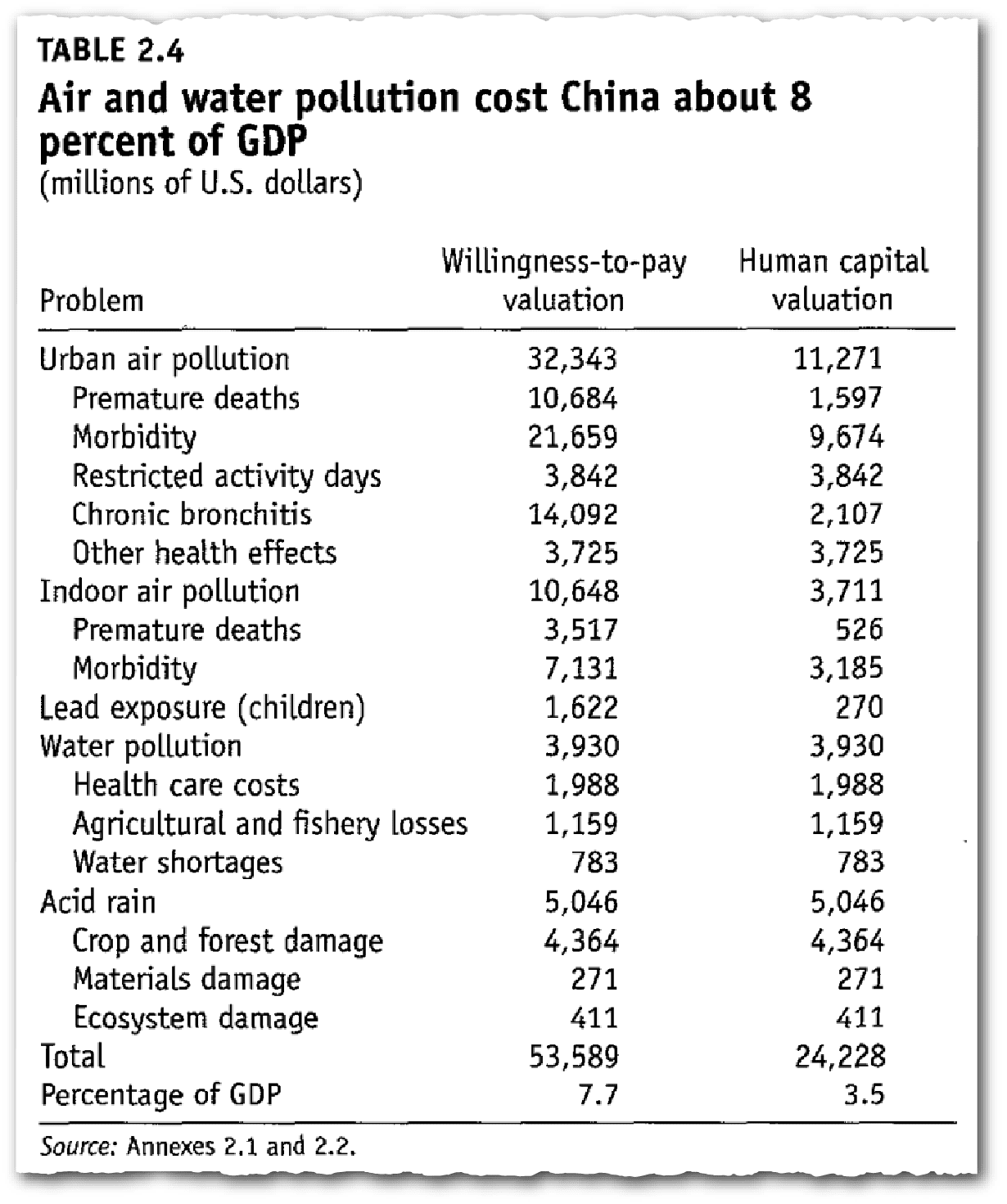
A few signposts stand out to me. In the late 1990s, the World Bank published an influential report quantifying the costs of air and water pollution at upwards of 8 percent of GDP. I was reading this report in law school when I first started working on Chinese environmental issues. This later drove an interest among Chinese regulators in calculating a green GDP that was ultimately aborted. I think of the power shortages that hit China in the early 2000s as China’s economic production skyrocketed after WTO entry in 2001.
That energy security concern created an opening for my NRDC colleagues to work with officials in Jiangsu Province on energy efficiency policy. Their motivation was pragmatic: they needed enough electricity to keep growing. I also think of my work with Chinese environmental lawyers, like Wang Canfa, who sought compensation for farmers who had lost their crops to pollution or residents of so-called cancer villages — people increasingly unwilling to stay quiet.
China’s ability to weather the shocks of the current Iran War and the fact that many countries are now looking to purchase renewables from China to reduce reliance on oil, make China’s energy and environment strategies that began some twenty years ago look more prescient than ever.
And I recall the emergence of the Strategic Emerging Industries program near the end of the Hu-Wen administration — later folded into the higher-profile Made in China 2025 program — which favored EVs, solar, wind, batteries, and pollution control technologies for increased government support. These could mitigate China’s pollution and energy challenges, but could also become new drivers of growth. At the time, it was not at all clear the policy would work; today it’s hard to say that these programs have not been a success for China.
What about the idea of self-sufficiency?
That was very much in the mix early on, although not necessarily in those specific terms. The leadership recognized that energy shortages and the prospect of increased energy imports were serious risks to China’s developmental goals. The Iraq War made leaders acutely aware of the ways reliance on energy imports was harming the United States. China’s ability to weather the shocks of the current Iran War and the fact that many countries are now looking to purchase renewables from China to reduce reliance on oil, make China’s energy and environment strategies that began some twenty years ago look more prescient than ever.
You’ve used the phrase “good environmental authoritarianism.” What do you mean by that?
The idea of environmental authoritarianism emerged more than fifteen years ago in an article by Mark Beeson discussing the relative ability of democracies and authoritarian states to tackle climate change. It’s often used pejoratively, to describe environmental governance that lacks public participation, transparency, or rule of law. Others — including Beeson — have called it potentially a necessary step: a Leviathan willing to step in and block us from doing things that are harmful to the planet.

In my book, I raise the idea of “good environmental authoritarianism” to denote a more positive strand of the discourse about Chinese green development, which sees China as a country able to get things done. In the environmental context, it plays out particularly in China’s dominance in clean tech — the sense that Chinese policy has driven this lead in solar, wind, batteries and EVs — and global public opinion has turned more positive toward China as a result.
But whether that dominance is due to Beijing or to Chinese entrepreneurs is hotly contested. A new article out this past month even argues Chinese EV companies rose despite, not because of, central policy. Still, it’s hard to argue policy consistency and state support haven’t played a major role. This is a lesson for the U.S., where we face persistent policy whiplash on climate and clean technology depending on who is in the White House.
What is “green diplomacy” and how does China promote green development globally?
In my book, I discuss how China has evolved over the last three to four decades from a country learning about international diplomacy and seeking resources from the global community, to one shaping global norms and beginning to lead by example. This is certainly true in the climate context.
I also introduce the lesser known case of China and the Montreal Protocol, the treaty dealing with ozone-depleting substances, to illustrate some of the nuances in how China is perceived in green diplomacy. China has been a fairly cooperative player in the Protocol and its amendments, and its compliance has been considered to be relatively good — largely because Chinese companies relied on exports and needed to sell to the U.S. and Europe, where compliance was the price of market entry.
But there’s another dimension: in recent years, foreign researchers found monitoring data showing banned CFCs in the air far above what China was reporting, and attributed the gap to undisclosed production within China. Officials and state media were often combative toward the NGOs that highlighted the problem, yet also announced a zero-tolerance domestic enforcement policy. A few years later, foreign research in leading journals reported the CFC problem appeared resolved.
I treat it as a mixed case: that foreign researchers were the ones to identify the problem was a black eye, raising questions about whether China’s own governance system could catch compliance problems, and the combative response bred mistrust among global observers. But that China ultimately solved it shows that once it identifies a problem, its governance system can mobilize to fix it. A related substance, HFCs, has also been found in the atmosphere at higher-than-reported levels. To my knowledge that issue has not been resolved.
In greening its economy, where has China performed the strongest?
In the production and deployment of clean energy technology — solar, wind, EVs, batteries — the sheer scale and speed of producing, deploying and selling them to global markets, along with the associated cost reductions. Looking back thirty years from now, this will be seen as the signature and most significant contribution. The availability of those technologies transforms the ability of China and the world to make the clean energy transition that’s essential to mitigating climate change.
And where are they weakest?
Two areas. China still relies substantially on coal for electricity. The share of coal in the energy mix has been declining for years, but the absolute amount kept rising until recently. Because of how fast China has built out renewables, absolute coal use has now started to dip, and if China keeps to its targets that would continue and presumably accelerate. A regular criticism China faces though is that it’s not moving quickly enough.
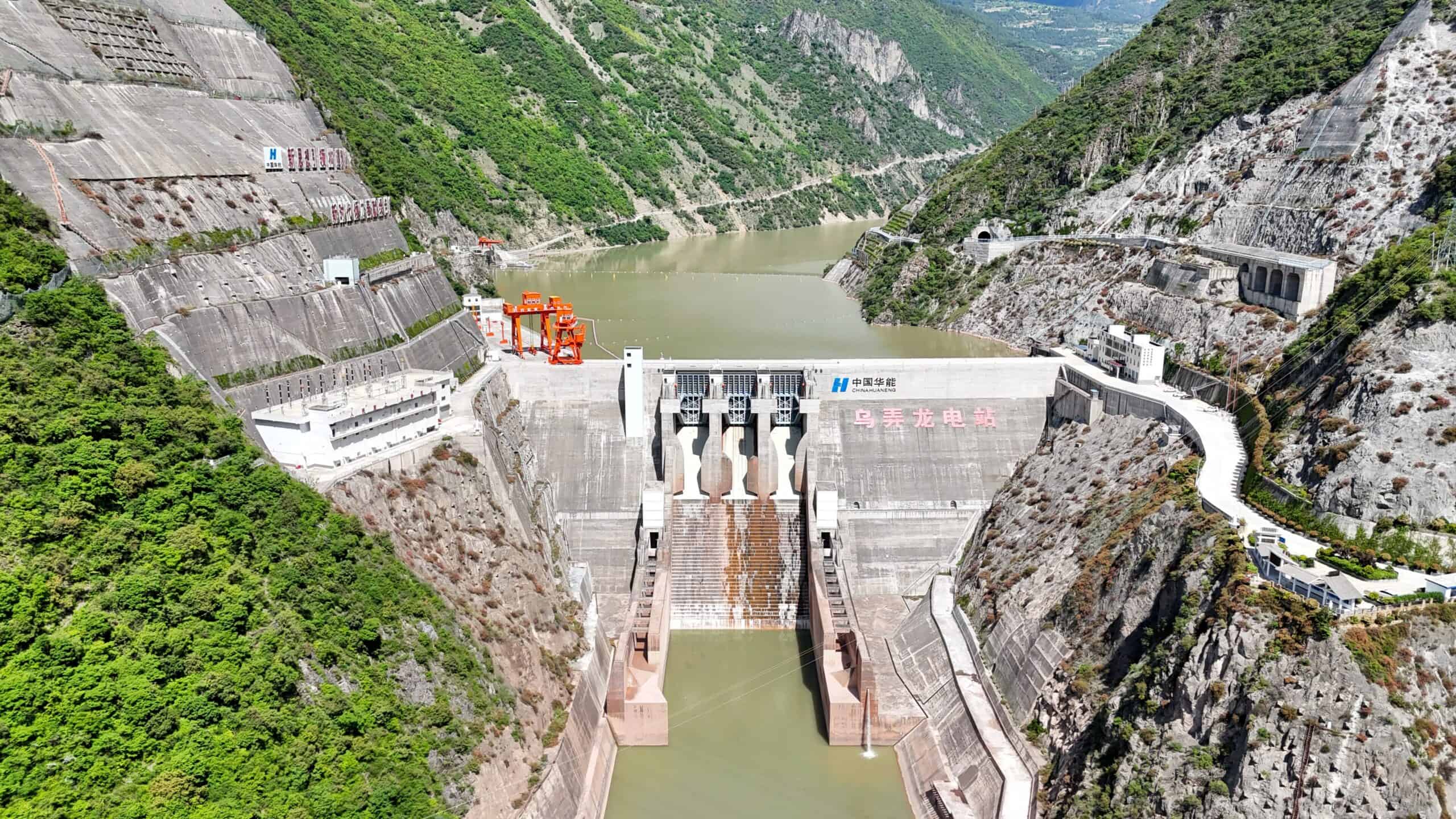
The other area I highlight in my book is Chinese dam building in Southeast Asia, which I raise as a negative case. At the core of the dispute is the way a series of dams along the Lancang-Mekong River are harming the Mekong River Delta’s natural systems by holding back silt and altering the natural cycle of flooding and nutrient replenishment that fishing and agricultural communities depend on.
Western NGOs largely oppose these dams for their ecosystem impacts and the availability of less harmful technologies like solar and wind. Chinese officials see large hydropower as an important driver of economic development, and essentially green because it is non-fossil. They have been less willing to engage in debates over the ecosystem impacts. As with the Montreal Protocol case, officials and state media have often responded to criticism combatively, without really grappling with evidence-based critiques. For all the praise China is getting for producing clean energy at scale and cost, I’d like to see a greater willingness to engage with the concerns of local communities and international stakeholders here.
What about nuclear power?
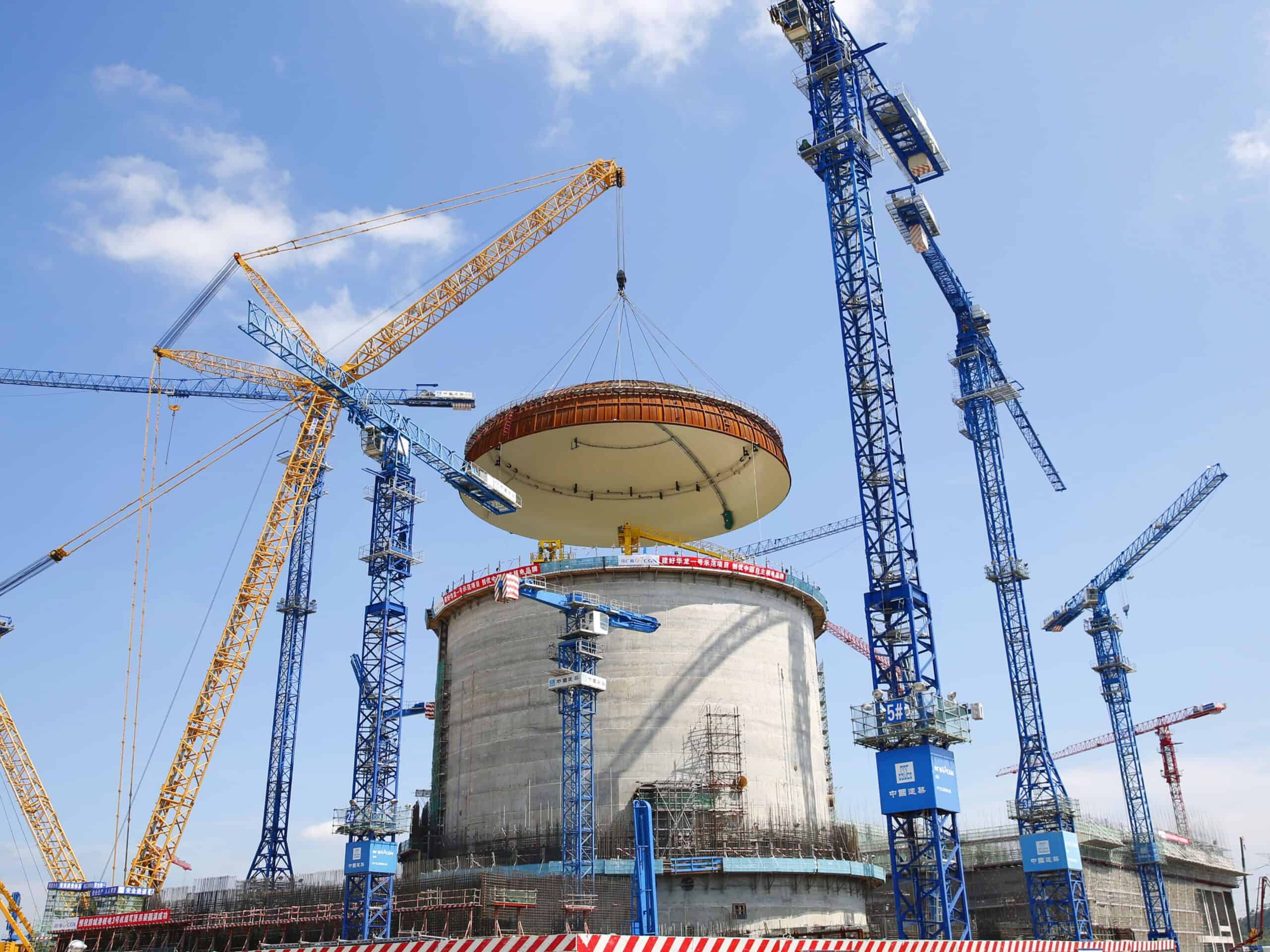
China currently has more nuclear capacity under construction than the rest of the world combined — something like 35-40 reactors going up at once, with a 2030 target of 110 GW that would put it ahead of France and possibly U.S. levels.
I don’t cover nuclear in the book but I recognize that it is a highly contested subject within environmental circles. Some are more open to nuclear power because it doesn’t have GHG emissions, but others are opposed because of waste disposal issues and the high cost and long timeframes of construction compared to solar and wind.
I’m open to some reliance on nuclear power going forward but our efforts should center on abundant resources like wind and solar that are cheaper, less harmful, and faster to build. The argument that nuclear is needed for more reliable baseload energy is being undermined by the rapidly falling cost of batteries paired with intermittent renewables.
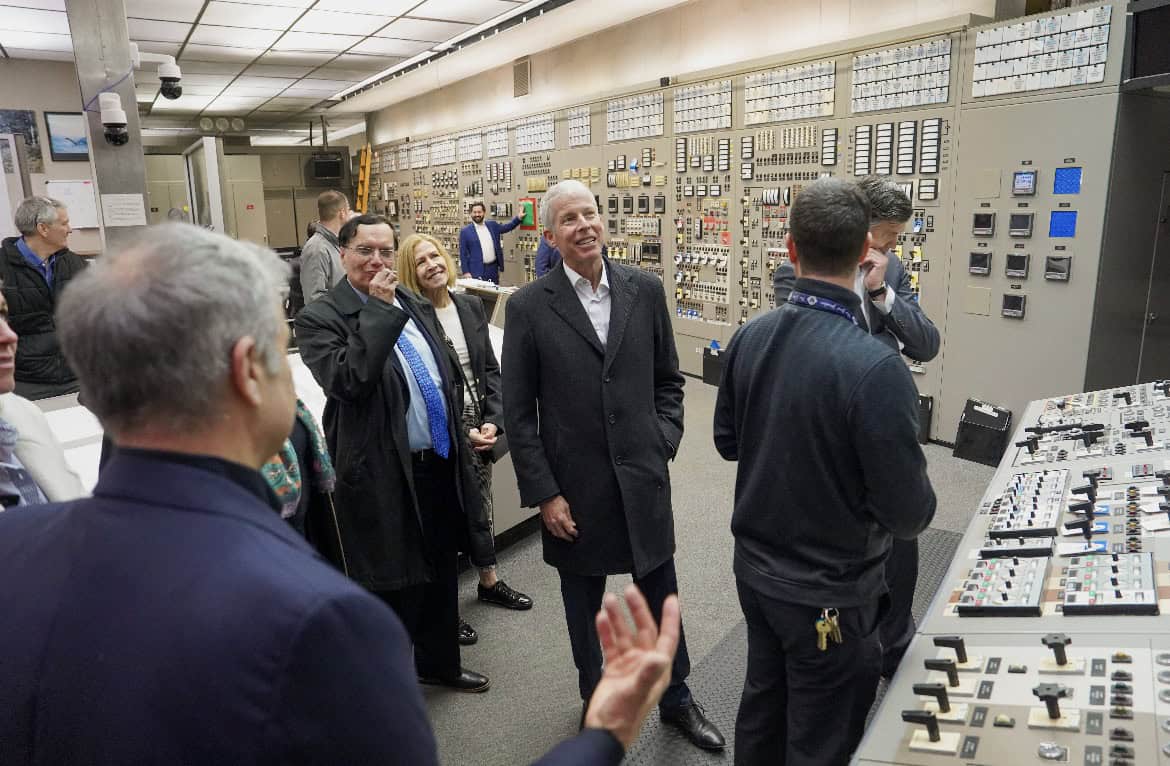
One piece of praise you often hear about China is that when the government decides to do something, they can do it — there aren’t the endless environmental impact assessments that stymie green development in the U.S. Is that fair?
This has gotten a lot of attention lately in the context of American discussions about the Abundance movement and our inability to build things. The author Dan Wang has famously talked about China as an engineering society and the U.S. as a lawyerly one.
The truth, as my colleague James Salzman has pointed out, is that the American environmental movement rose to power by stopping harmful behavior — it never organized itself around building the infrastructure we need to solve environmental problems at speed, scale and affordable cost. Environmental law is good at generating reasons to halt a project under scientific uncertainty — that’s what the precautionary principle is for — but not very good at generating the information we need to move one forward. Another truth, though, is that China’s speed often comes in the face of insufficient information about environmental harms.
Because of inadequate action by China, the world’s largest emitter, and the dramatic backtracking of the U.S., the second largest, we are likely to see the impacts of climate change arriving with greater regularity and severity.
The lesson for the U.S. is that we need to build the green infrastructure — solar and wind farms, grid scale batteries, high-speed rail, high-voltage transmission lines — that climate action requires, with environmental integrity, but at the project level we also need to err toward getting things built when they’re part of a broader effort to mitigate larger climate or environmental harms.
Are there any recent developments in Chinese environmental policy that strike you as very significant?
I’d identify China’s 2035 absolute emissions reduction target — 7 to 10 percent below peak levels by 2035 — as an underappreciated move. The shift from an intensity target to an absolute one is a critical structural change. An intensity target lets emissions keep rising; an absolute one doesn’t. Many outside observers criticized the announcement Xi made in September 2025 as too modest. I’d argue that hitting a target like this for an economy of China’s size, facing all manner of headwinds, is no easy feat. A modest target with room to grow more ambitious as China’s clean technology industries scale and cut costs beats the policy whiplash we’re seeing in the U.S.. If a more achievable target has greater political durability, I’m supportive.
Is net zero by 2060 fast enough?
No — it’s not fast enough. Climate Action Tracker still rates China’s policies and targets as “highly insufficient” against a 1.5-degree celsius pathway. That was true even before the U.S. got downgraded from “insufficient” to “critically insufficient” under Trump.
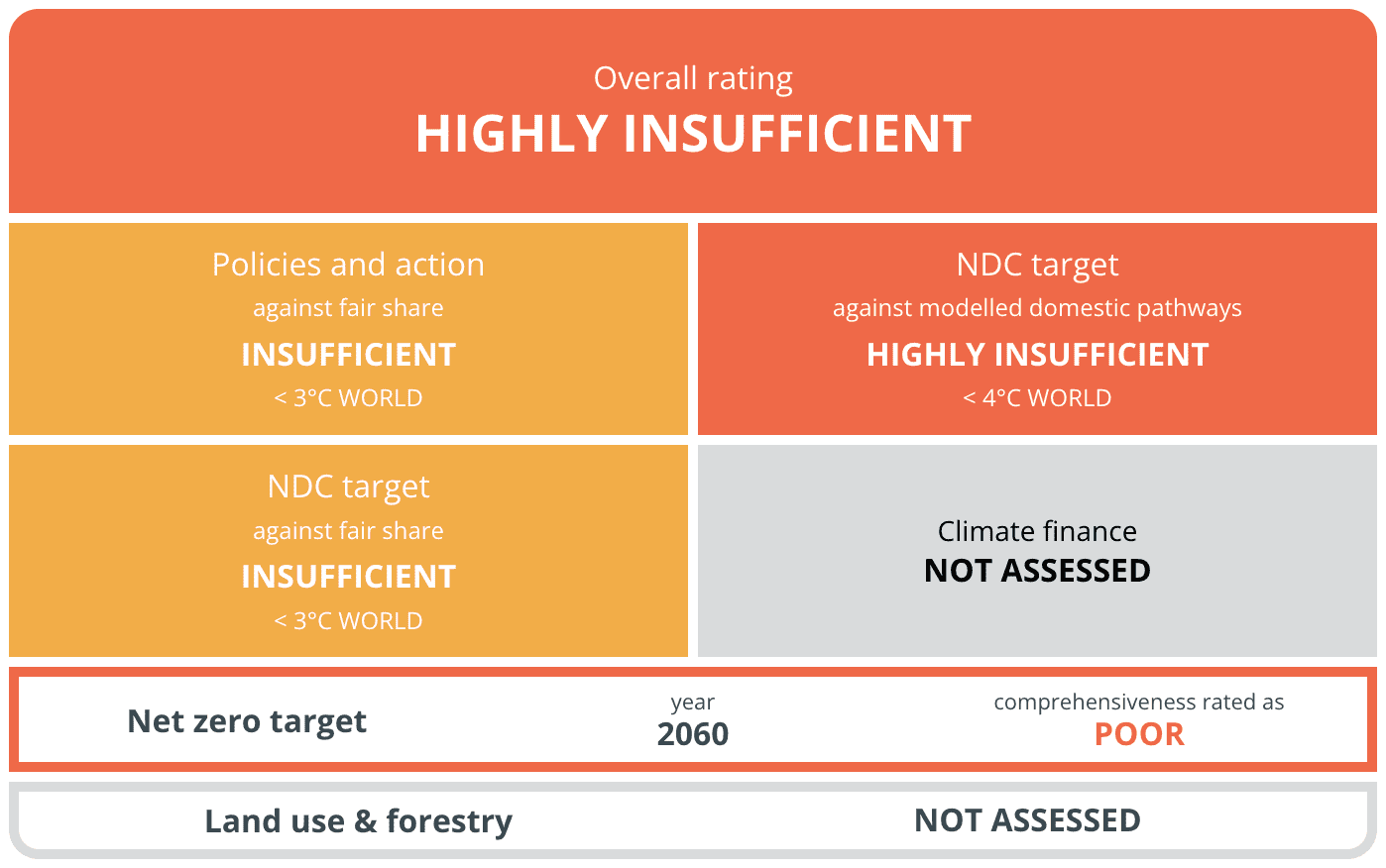
So even though China is moving in the right direction, it still needs to do much more. Because of inadequate action by China, the world’s largest emitter, and the dramatic backtracking of the U.S., the second largest, we are likely to see the impacts of climate change arriving with greater regularity and severity. More wildfires like what we experienced in Los Angeles last year. More extreme heat in southern China. More intense drought, water shortages, rising sea levels, species die-offs.
This will mean a greater premium on adaptation to respond to the inevitable increase in climate impacts. The way things are going — we will need to keep talking about emissions mitigation, but we are almost certainly going to have to grapple with the real world consequences of climate inaction at the same time.

Brent Crane is a journalist based in San Diego. His work has been featured in The New Yorker, The New York Times, The Economist and elsewhere. @bcamcrane