








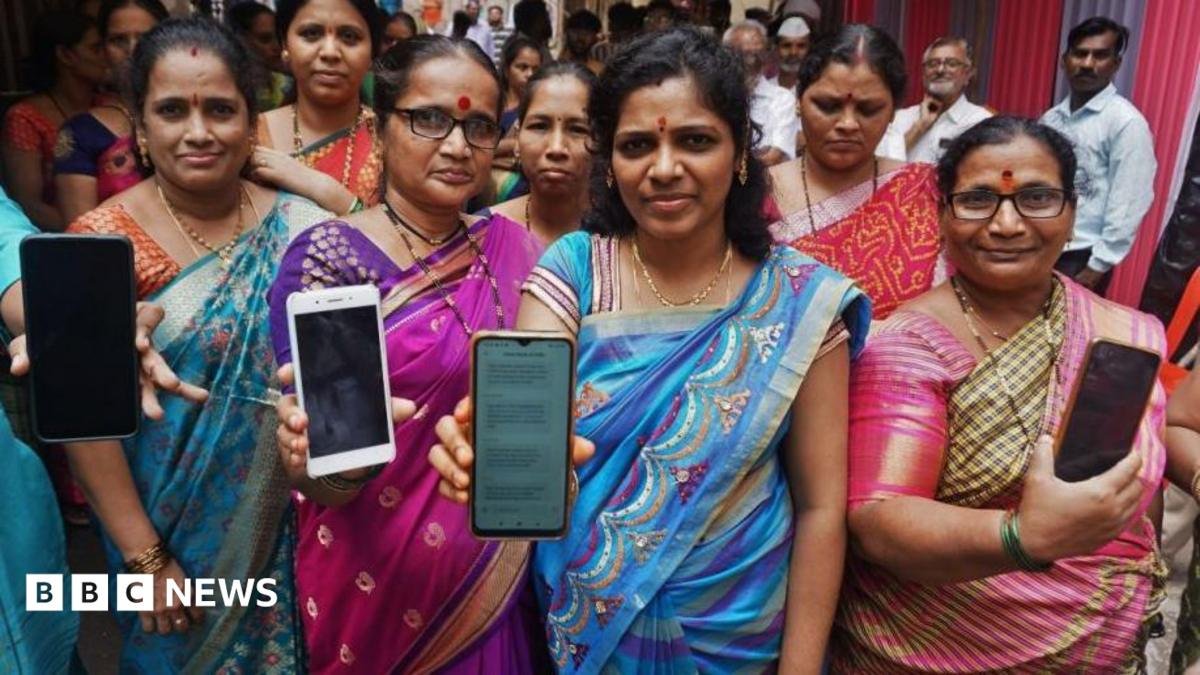
While such transfers have so far mostly been directed towards women and farmers, a growing number of programmes are also focusing on unemployed youth.
According to ProjectDEEP, nearly 10 state governments, including India’s poorest state Bihar, have begun to offer money to young jobless men and women seeking work.
And most of these were launched in just the past three years.
“Unemployment is a particularly big question in India, with the rise of AI and climate shocks making income streams more uncertain. These schemes are typically designed to create bridge income,” Pankhuri Shah, co-founder of ProjectDEEP, told the BBC.
Despite being critical short-term buffers, there are growing anxieties about their growing fiscal cost.
India’s economic survey, an annual document presented by the government ahead of the budget, called them a “key driver” of fiscal stress for the states, saying half of those implementing such programmes have a revenue deficit.
According to Crisil, in fiscal 2026, gross market borrowing by states jumped 15.2% year on year – faster than that of the federal government. And of the states giving cash, 12 recorded double-digit growth in market borrowing.
This not only raises concerns about fiscal sustainability, but also comes with hidden costs.
“Much of the financing for these schemes comes from expenditure switching, and some from higher deficits,” Axis Research found in a 2025 study. Which means higher expenditure on cash transfers comes at the cost of lower spending by states in other areas.
As a result, “the scope for expanding productive capital expenditure [or income-generating assets] becomes increasingly constrained, especially in an environment of limited revenues and elevated deficits”, the Economic Survey pointed out, calling for their regular reassessment.
Shah admits that this is a big missing piece.
Most schemes come without an end date and have been found to largely improve short-term stability rather than enable a sustained exit from poverty.
“Impact assessment is virtually non-existent and that leads to big gaps in design,” she said.
“For instance, if consumption support for the elderly is your goal and the pension transfer amount is only 200 rupees, that does not cut it from an impact perspective, something that needs to be re-looked at,” she added.
The government also needs to assess whether cash can replace in-kind transfers, like poultry or baby kits and other subsidies on things such as energy or tractors, said Shah.
This will reduce “both administrative costs and overlapping benefits to the same person” and make the system much more sustainable.
There is already good precedent.
Liquified petroleum gas (LPG), which was earlier being physically given, was transitioned from a subsidy to a direct cash transfer. And that saved the country $7-8bn, according to ProjectDEEP analysis.