




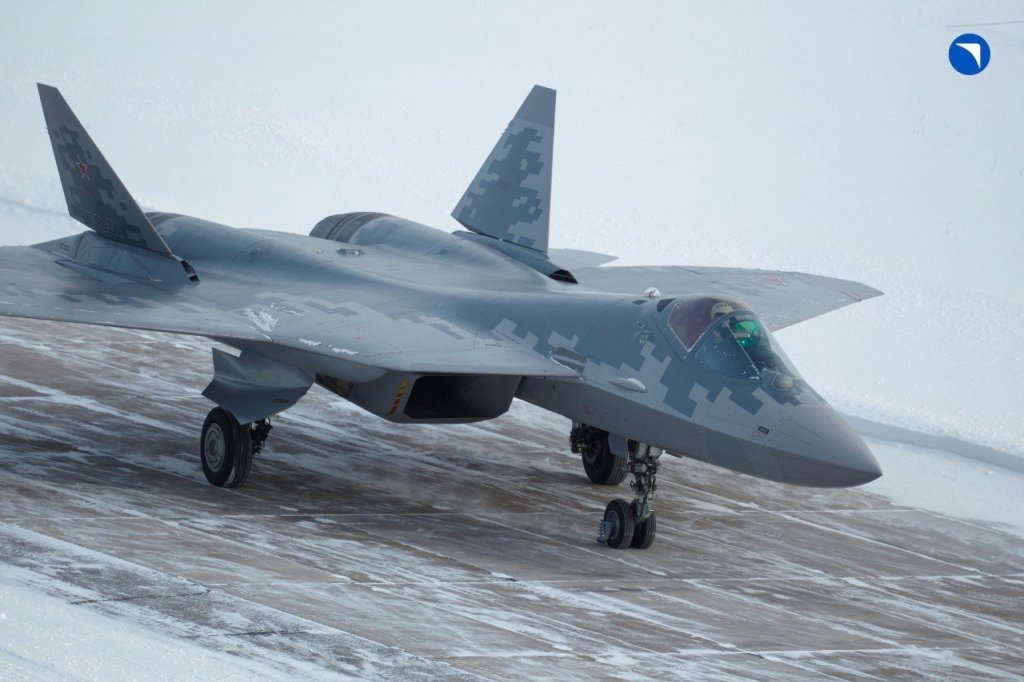
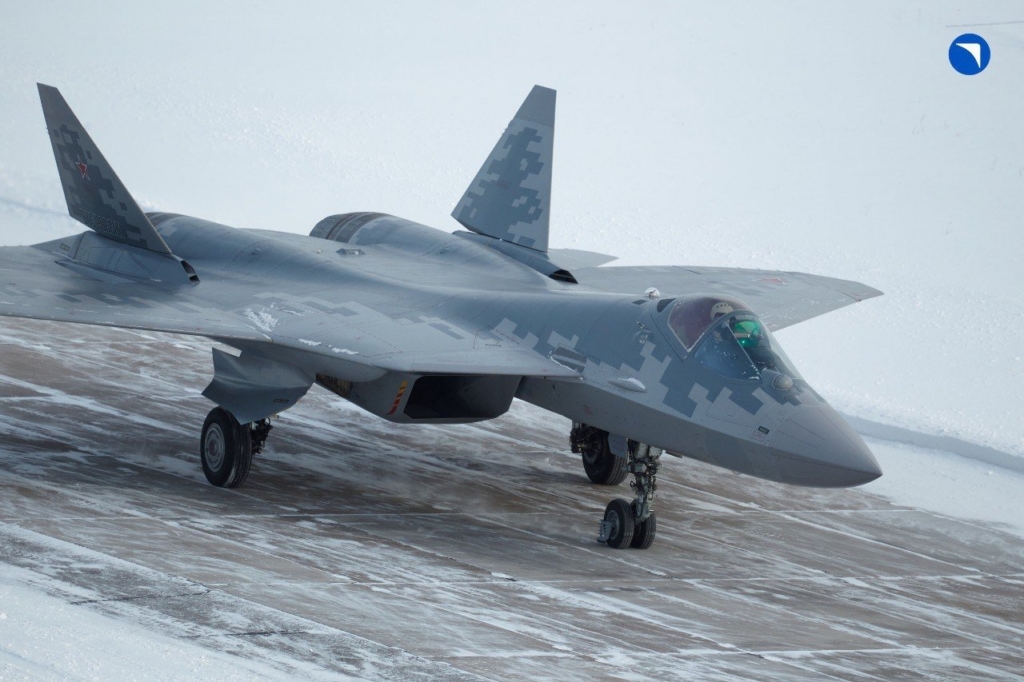
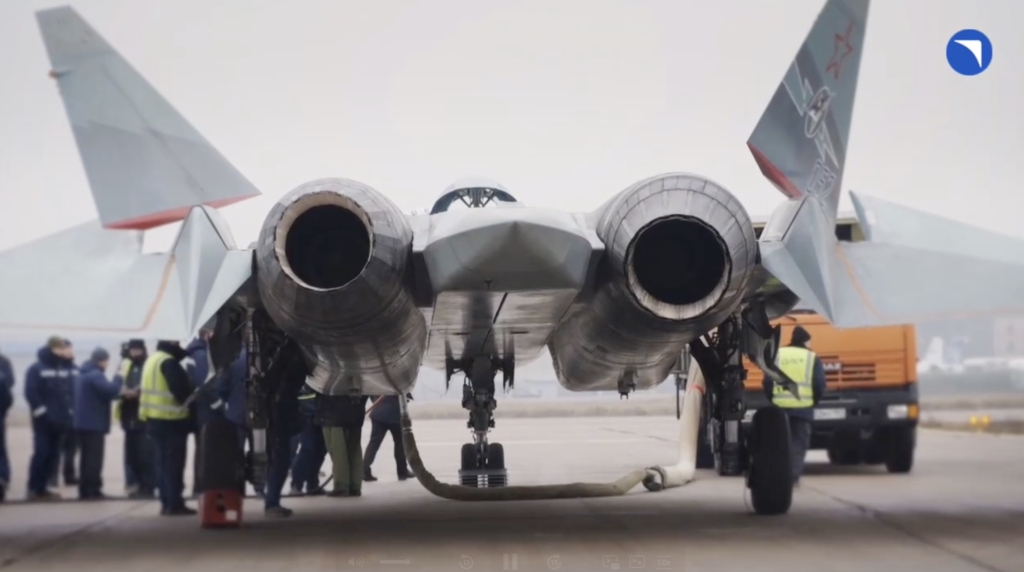
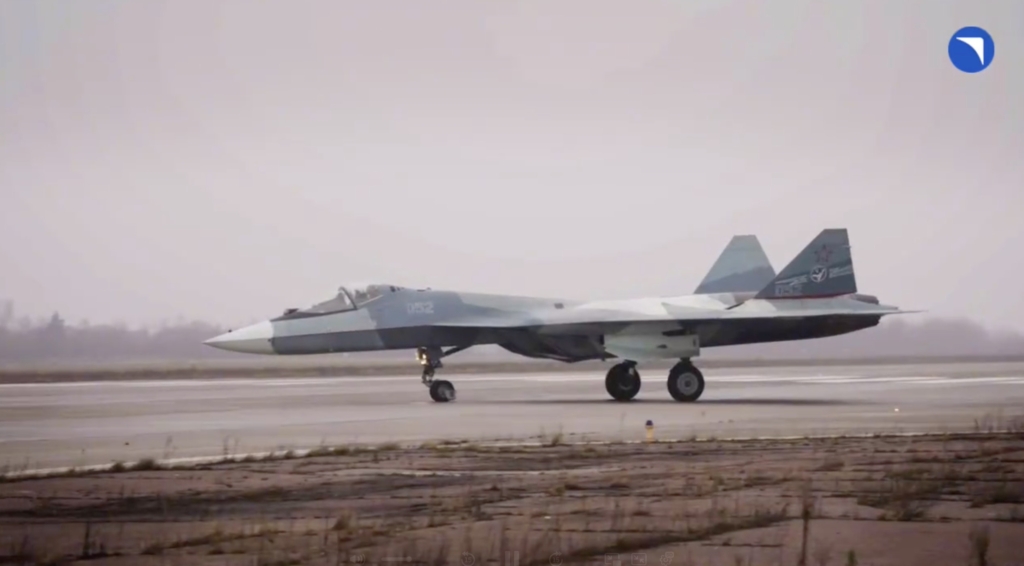
India appears to have ruled out an immediate purchase of Russia’s Sukhoi Su-57 Felon, with the government instead prioritising upgrades to its existing fighter fleet and domestic combat aircraft programmes.
Indian Defence Secretary Rajesh Kumar Singh said the country had no plans to acquire a “new version of the Sukhois”, according to India Today.
Although Singh did not identify the Su-57 by name, his comments appear to rule out the Russian fifth-generation fighter from India’s near-term procurement plans.
India is instead expected to focus on modernising its Su-30MKI fleet, expanding its Rafale programme and advancing the indigenous Advanced Medium Combat Aircraft (AMCA).
The decision leaves Algeria as the only publicly identified export customer for the Su-57E, although Russia has claimed that agreements have been reached with other undisclosed countries.
India turns towards existing fighter programmes
The Su-30MKI remains the backbone of the Indian Air Force’s combat fleet, with approximately 260 aircraft in service.
India is preparing a substantial modernisation programme for the type, commonly known as the Super Sukhoi upgrade. Planned improvements include new avionics, electronic warfare capabilities, weapons and navigation systems intended to keep the aircraft operationally relevant.
The Ministry of Defence has also contracted Hindustan Aeronautics Limited to build an additional 12 Su-30MKI fighter jets to replace those lost from mishaps over the years. The aircraft, ordered for INR135 billion, will contain a reported 62.6% indigenous content and are largely intended to replace aircraft lost through attrition.
Rather than buying a separate Russian fighter type, New Delhi appears intent on extracting greater capability from the sizeable fleet and industrial infrastructure it already operates.
India is also progressing the AMCA, its indigenous fifth-generation fighter programme. The government has approved an execution model allowing both public and private Indian companies to compete to participate in prototype development, while work has begun on a dedicated integration and flight-test centre in Andhra Pradesh.
Rafale manufacturing is also taking root in India. Dassault Aviation and Tata Advanced Systems are establishing a Hyderabad facility to manufacture major Rafale fuselage sections for Indian and international customers, although the first sections are not expected until the 2028 financial year.
Su-57 had been considered as an interim stealth fighter
The Su-57 has repeatedly been discussed as a potential interim option for India while it waits for the AMCA to enter service.
According to India Today, sections of the Indian Air Force had examined the possibility of acquiring two or three Su-57 squadrons. Such a purchase could have provided a limited fifth-generation capability during the transition to the domestically developed aircraft.
However, India has not entered formal negotiations to buy either the Su-57 or the US-built F-35. Singh said in June 2025 that the government’s priority remained the development of the AMCA rather than an imported fifth-generation fighter.
His latest remarks suggest that the possibility of a stopgap Su-57 purchase has now receded further.
India was once a partner in the Su-57 programme
India’s history with the Su-57 stretches back to the aircraft’s early development.
New Delhi originally planned to become a co-development partner through the Fifth Generation Fighter Aircraft programme, an Indian derivative of Russia’s PAK FA project.
Hindustan Aeronautics Limited and Russia’s Rosoboronexport signed a $295 million preliminary design contract in December 2010. India hoped the partnership would deliver both an advanced fighter and access to valuable aerospace technology and industrial expertise.
The proposed collaboration subsequently stalled, and India withdrew from the project in 2018.

Indian concerns reportedly included the aircraft’s stealth characteristics, sensors, electronic warfare equipment and level of technology transfer, alongside rising costs and programme delays.
Russia has continued to court India since then, offering local manufacture of the Su-57 and presenting the aircraft at Aero India. However, New Delhi’s emphasis on domestic control, industrial participation and indigenous intellectual property has made the AMCA a better fit with its long-term defence policy.
India diversifies without abandoning Russian equipment
The decision should not be interpreted as India ending its longstanding defence relationship with Russia.
India continues to operate a large fleet of Russian-designed aircraft, helicopters, submarines, tanks and air defence systems. It is also investing in its Su-30MKI fleet and maintains major joint programmes with Russia, including the BrahMos missile.
However, New Delhi has gradually broadened its defence partnerships and placed greater emphasis on indigenous production.
Its combat aircraft plans now combine the domestically developed Tejas and AMCA with the Su-30MKI, French Rafale and technology sourced from a growing range of Indian, Western, Israeli and Russian suppliers.

Western sanctions on Russia, delays affecting some deliveries and Moscow’s own wartime requirements have added urgency to India’s efforts to make its supply chains more resilient. At the same time, New Delhi remains committed to strategic autonomy rather than aligning its procurement exclusively with either Russia or the West.
Perhaps one of New Delhi’s deeper concerns is Russia’s increasing economic dependence on China, India’s principal strategic rival.
That relationship raises an uncomfortable question. In the event of a conflict with China, would Moscow be willing, or even able, to guarantee India access to the components, weapons and technical support needed to keep its Russian-designed fleet operational?
None of this means India is abandoning Russian military equipment. Its Su-30MKIs will remain central to the Indian Air Force for years, while programmes such as the BrahMos missile continue to bind the two countries’ defence industries together.
Instead, India is trying to reduce the risks created by relying too heavily on any one supplier. Its future fighter fleet is likely to combine upgraded Su-30MKIs with French Rafales, domestically developed Tejas aircraft and, eventually, the fifth-generation AMCA. Those programmes draw on technology and industrial partnerships from India, Russia, France, the US, Israel and elsewhere.
For the Su-57, the door may not be permanently closed. However, it no longer appears to be India’s preferred answer to its near-term fighter gap.
New Delhi has instead chosen to invest in the aircraft it already operates, expand the manufacturing capability it controls and concentrate on developing the fifth-generation fighter it ultimately wants to call its own.