






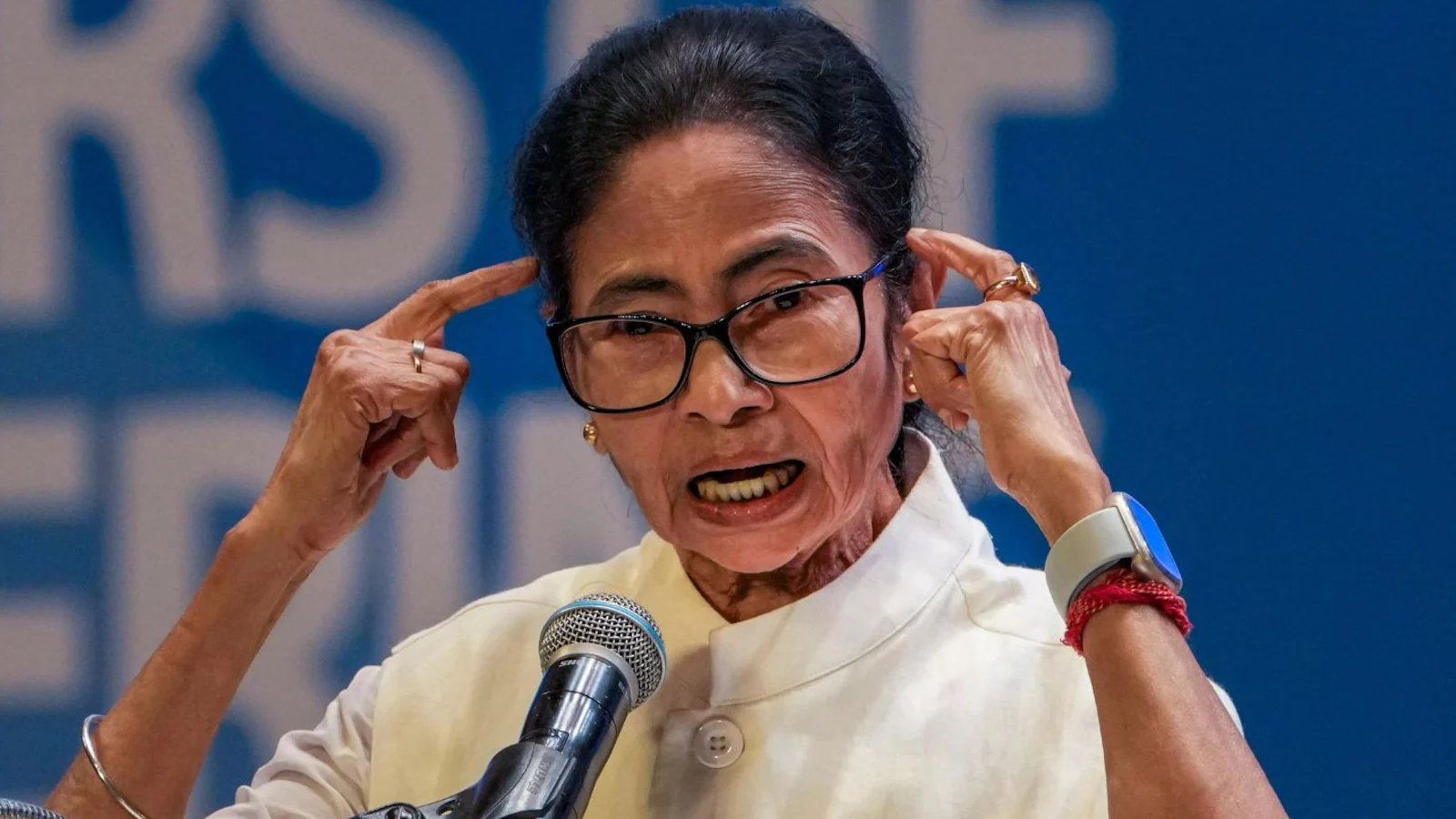
The Political Seesaw: Could a Congress-TMC Alliance Reshape Bengal’s Future?
Kolkata’s political landscape is witnessing a dramatic pivot. Hours after the Trinamool Congress (TMC) formally filed nomination papers for the Nandigram Assembly by-election, the candidate, Sanchita Pradhan Dey, stunned the state by withdrawing from the race following a meeting with BJP leader Suvendu Adhikari. This sudden retreat, followed by Mamata Banerjee’s attempt to pivot support toward Congress candidate Milan Pradhan, has sparked an intense debate: Is the era of a Congress-TMC alliance returning to West Bengal?
A History of Turbulence
The relationship between Mamata Banerjee and the Congress has been one of volatile oscillation. Founded on January 1, 1998, as a splinter group of the Congress, the TMC emerged from Mamata’s frustration with the party’s handling of the Left Front. Since then, the two parties have occupied a space best described as “Kabhi Khush Kabhi Gham.”
Their electoral history is a mosaic of failed experiments and historic successes. The 2001 “Mahajot” failed to unseat the Communists, but the 2009 Lok Sabha arrangement and the subsequent 2011 Assembly victory marked the zenith of their partnership, effectively ending three decades of Left rule in Bengal. However, the honeymoon was short-lived; by 2012, Mamata walked out of the UPA-II government over policy disagreements, leading to a long-standing state-level cold war.
A New Existential Reality
The current context, however, is fundamentally different. Mamata Banerjee’s party is no longer the monolithic force it once was. With a significant split in its ranks—partly driven by the factions of Ritabrata Banerjee and Arup Roy—and the freezing of its name and symbol by the Election Commission, the TMC faces an existential crisis.
For the Congress, the dilemma is equally complex. While Rahul Gandhi has signaled a desire to maintain the INDIA bloc’s unity at the national level, the state leadership, particularly veteran figures like Adhir Ranjan Chowdhury, remains deeply skeptical. The local Congress brass argues that aligning with a weakened Mamata would be a tactical blunder, potentially costing them the chance to occupy the primary opposition space against the BJP.
The National vs. State Dichotomy
The disconnect between the Congress’s national strategy and its state-level realities creates a political void. While the Congress high command views regional allies as essential to challenging the BJP in 2029, their state units in West Bengal are wary of the “liability” associated with both the TMC and their historical rivals, the Left.
Despite this, the pressure for a “grand alliance” is mounting. Mamata’s recent outreach to Rahul Gandhi suggests that she understands the stakes. If the Congress can successfully forge regional alliances in states like Uttar Pradesh, the party’s central leadership may view a similar arrangement in Bengal as a prerequisite for national consolidation.
Closing the Circle
As Bengal looks toward upcoming municipal and panchayat elections, the question of a formal reconciliation remains open. Should the Congress and the TMC bridge their differences, it would signal a profound shift in the state’s power dynamics. However, such an alliance faces the immense hurdle of entrenched anti-incumbency and deep-seated local distrust. Whether this “full circle” moment leads to a new political synthesis or further fragmentation will depend on how both parties balance their immediate electoral survival against their long-term national objectives. For now, the shifting loyalties in Nandigram serve as a microcosm of a larger, looming transformation in Indian politics.
Disclaimer: This content is auto-generated for informational purposes only.
Source: Read Original News