



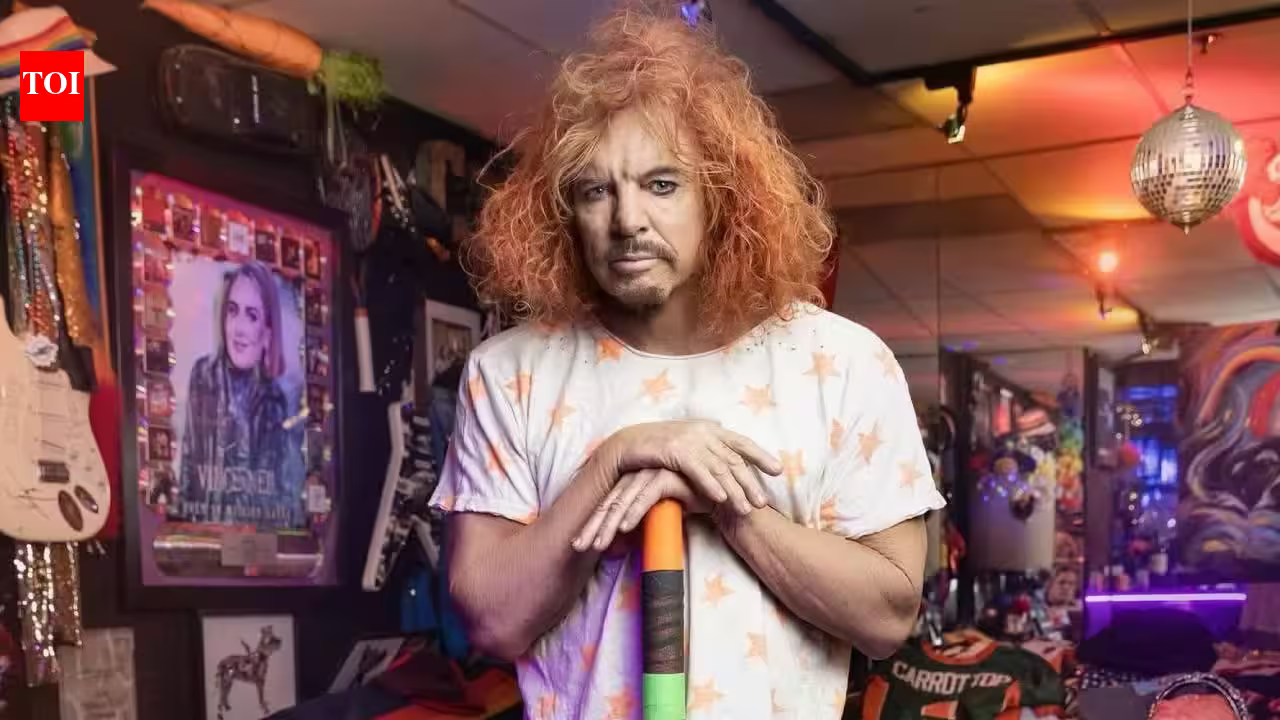



The Las Vegas Strip, a neon-drenched landscape built on the promise of perpetual entertainment, felt a rare moment of stillness this weekend. Scott Thompson, known to the world as the prop-obsessed, flame-haired comic powerhouse Carrot Top, has been hospitalized following a reported suicide attempt. The news, which broke late Friday, has sent a shockwave through the comedy community and left one of the most recognizable faces in Sin City currently off-stage and in recovery.
The 61-year-old comedian was rushed to a local hospital on Friday, September 18, an emergency that necessitated the immediate cancellation of his headline show at the Luxor Hotel and Casino. For a man who has made a career out of high-octane physical comedy and relentless touring, the silence from the Atrium Showroom—his home base for nearly two decades—was a jarring departure from the norm.
A Career Defined by Resilience and Props
To understand the gravity of this moment, one must look at what Carrot Top represents in the modern American comedy landscape. Emerging in the early 1990s, Thompson carved out a niche that was entirely his own. While his peers were often focused on observational irony or blue-collar storytelling, Thompson leaned into the absurd. With a trunk full of bizarre, DIY contraptions, he invited audiences into a surrealist version of reality.
From his early breakout successes on Comic Strip Live and Star Search to his ubiquitous presence on The Tonight Show with Jay Leno, he became a pop-culture icon—even if he was often the target of satirical jabs. Yet, beneath the red hair and the frenetic energy, there was always a seasoned professional. Since 2005, he has maintained a residency at the Luxor, a feat of longevity that few performers in any genre ever achieve. He hasn’t just survived in Las Vegas; he has thrived, performing hundreds of shows annually and proving himself as a quintessential Vegas act.
The Quiet Behind the Chaos
When the news surfaced on Friday, it wasn’t just the cancellation of a show that troubled fans; it was the human element behind the curtain. Jami Schlicher, Thompson’s representative, issued a statement confirming that the comedian is currently under medical care. “Mr. Thompson is recovering in the hospital and is receiving the care and support he needs,” Schlicher told TMZ. “His family and those closest to him are deeply grateful for the concern, prayers and respectfully ask for privacy.”
The brevity of the statement is understandable, yet it underscores the private pain that often exists behind the public persona of a clown. In the world of show business, comedians are often expected to be “on” at all times—to be the person who can laugh at themselves and provide a distraction for others, regardless of the internal reality they face when the house lights go down. Seeing the police presence reported at his Las Vegas residence, as noted by outlets like TMZ, provided a somber reality check: for one night, the man who has brought joy to thousands needed the community to step in and hold him up.
The Comedic Community Rallies
In the wake of the news, the outpouring of support on social media has been swift. Fans who have attended his shows over the last twenty years are sharing photos and anecdotes of their encounters with the performer, painting a picture of a man who is consistently kind and professional behind the scenes.
The industry, too, has been quiet but attentive. Comedy is a small, tight-knit fraternity, and the news of a peer struggling with mental health issues strikes a chord of empathy among those who know the grueling nature of the road and the stage. While there has been no word yet on when—or if—his residency will resume, the immediate concern from the Luxor management and the broader Vegas entertainment circuit is solely on his recovery.
Addressing the Stigma
This incident serves as a painful reminder of the mental health crisis affecting the entertainment industry. The pressure of maintaining a brand, the isolation of living out of hotel rooms, and the expectation of constant cheer can create a volatile environment for even the most successful performers.
The conversation around suicide in the comedy world is often hidden, overshadowed by the very nature of the job. However, the willingness of Thompson’s team to acknowledge the situation—rather than hiding it behind vague “exhaustion” or “medical emergency” excuses—is a small, necessary step in normalizing the need for help. It highlights the critical truth that no level of success, fame, or longevity in a residency makes one immune to the depths of human despair.
Looking Ahead
For now, the Strip will continue to churn, but there is a clear sense that one of its most persistent and hardworking fixtures is in need of space and support. The Luxor show, a staple of Las Vegas nightlife for nineteen years, will be dark for the foreseeable future. That is as it should be. The work can wait. The health of a performer—and a person—comes first.
As the industry waits for further updates, the primary sentiment remains one of hope. Scott Thompson has spent his life trying to make people laugh, often at his own expense. Now, the collective hope is that he finds the same compassion and light that he has extended to his audiences for so many years.
If you or someone you know is struggling with suicidal thoughts or is in crisis, help is available. In the United States, you can call or text 988 to reach the Suicide & Crisis Lifeline, available 24 hours a day, 7 days a week. This service is free, confidential, and available to everyone. If you believe someone is in immediate danger, please contact local emergency services or visit the nearest emergency department.
Disclaimer: This content is auto-generated for informational purposes only.
Source: Read Original News