









A 15-year-old boy and a 55-year-old woman died in separate incidents this weekend – meaning seven people have died in open water during the recent warm snap

Cowbury Reservoir, pictured a day after a boy died in the water
A teenage boy has become the latest victim of a drowning crisis as the death toll from the recent record-breaking heatwave climbed to seven.
Police issued an urgent warning for people to exercise caution around open water after recovering the body of a 15-year-old boy from Cowbury Reservoir in Stalybridge, Tameside, following a rescue operation at 6.30pm on Saturday. In an unrelated incident, a 55-year-old woman passed away after entering a pool at Sandwell Valley Country Park, West Bromwich, at 4.30pm on the same day.
The twin tragedies mean seven people have lost their lives within a single week in the UK, as crowds flocked to open water to seek relief from the scorching heatwave gripping the UK. Following the 15-year-old boy’s death, Greater Manchester Police Chief Insp Helen Baxter said: “Saturday’s events are nothing short of devastating and my thoughts are with the family and loved ones of the young boy who sadly lost his life in such awful circumstances.
“We are confident that there are no suspicious circumstances and that this is such a sad reminder of the dangers of entering open water. We remind the public to please avoid being tempted to cool off in reservoirs, rivers, canals or ponds. We all want to enjoy the warm weather; please make sure you do so in a safe way.”
Among the other victims was Brody Leach, whose body was retrieved from the River Severn in Shrewsbury on Saturday morning. The 22-year-old was last spotted swimming in the river on Friday, when he is believed to have got into difficulty, reports the Mirror.
This follows the heartbreaking loss of Hayden Jones-Powell, 13, whose parents said they wanted their son remembered for his “big smile” after he tragically died following an incident at a lake in Syston, Leicestershire, on Thursday afternoon at 1.30pm. Emergency services were alerted to Meynell Lake, located off Fosse Way, at 1.30pm, though divers later retrieved the teenager’s body from the water that same day.
In a separate incident, Hampshire Police discovered a body while searching for a missing 15-year-old boy last spotted in the water at Testwood Lakes near Southampton. A force spokesperson confirmed: “The boy’s family have been informed and formal identification has taken place.”
Essex Police have also reported the death of a 69-year-old man in Clacton. Emergency crews responded to a medical incident shortly after 11am on Friday following reports of a man in distress.
The force stated: “Officers, paramedics, the fire service and coastguard all attended. Sadly, despite colleagues’ best efforts, a 69-year-old man died at the scene.”
Additionally, a 50-year-old man was declared dead at Aberavon beach in Neath Port Talbot, Wales, at approximately 4.25pm on Wednesday. He required medical help in the water after encountering difficulties while swimming in the sea off the south coast of Wales.
The rising toll of drownings has spurred The Mirror to launch the Save Lives for Sam campaign, aimed at highlighting the perils associated with water.
Samantha Hughes serves as the National Water Safety Partner at the RNLI. She explained: “It’s important to remember that the water is still cold. Entering it unexpectedly can lead to cold water shock, causing a sudden increase in breathing and heart rate, which may trigger panic.
“If you find yourself struggling in the water, remember to Float to Live: tilt your head back so your ears are submerged, relax and control your breathing. You may need to gently use your hands to help you stay afloat, and it’s ok if your legs sink-everyone floats differently.”
Temperatures nationwide are expected to drop considerably and settle around typical levels heading into next week.
This marks the conclusion of a heatwave that repeatedly shattered the UK’s June temperature record, delivering blistering days and restless nights for countless people.
Heat records were broken on three consecutive days from Wednesday, hitting a provisional high of 37.3C in Santon Downham, Suffolk, on Friday, while Saturday recorded 32.3C at the same spot.
The Met Office’s final extreme heat warning expired at 9am on Sunday as the heatwave draws to a close. Temperatures are anticipated to fall by approximately 5C or 6C today, bringing highs of 25C to 26C along the eastern coastline and around the mid-to-low 20Cs across other areas.
Met Office meteorologist Liam Eslick said: “We are starting to see some fresh air come in over the next couple of days.”
A swathe of cloud and sporadic rain in the north will drive the humidity eastwards on Sunday afternoon, he added. It will be a “bright sunny day for most people and it will actually feel like a typical summer’s day. He said: “(It) will feel a lot more comfortable compared to what we saw at the end of last week.”
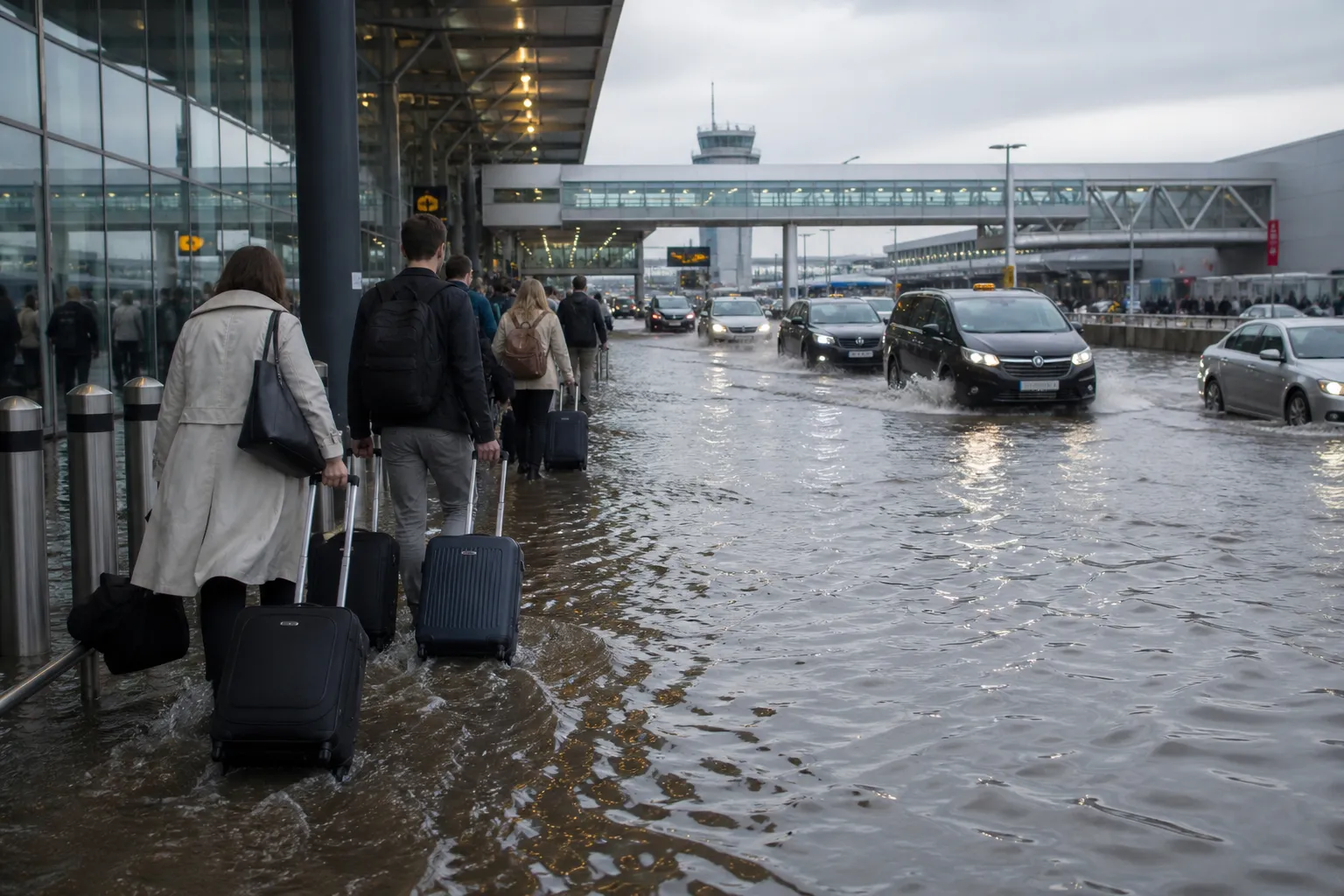
Heat and moisture caused thunderstorms to form which led to flight disruption on Saturday. A total of 484 arriving and departing flights were delayed across Gatwick and Heathrow airports by the evening, according to the FlightAware tracker.
Meanwhile, early on Saturday morning, Kent Fire and Rescue Service were responding to three house fires caused by lightning strikes. The heatwave shattered the longstanding record for June heat, which dates back to the summer of 1976, by more than 1C, which is significant given such records were usually broken only by a fraction of a degree in the past.
Scientists have cautioned that the heatwave would have been nearly impossible half a century ago, with climate change caused by human activity driving more severe and regular extreme temperature episodes.
Health authorities highlighted the strain the conditions placed on services throughout the week as they dealt with a substantially higher volume of life-threatening emergency calls.
Numerous schools and nurseries were compelled to shut their doors, while a hosepipe ban was implemented across Kent due to soaring demand.
Multiple hospitals declared critical incidents, with University Hospital Southampton having to postpone several scheduled operations and certain outpatient appointments.
The heatwave resulted from a “heat-dome” – a high-pressure system that becomes stationary over an area and captures heat – which settled across western Europe, delivering extreme weather throughout the continent.
Temperatures nationwide are expected to drop considerably and return to typical levels heading into next week.
Want to see more of the stories you love from Belfast Live? Making us your preferred source on Google means you’ll get more of our exclusives… To add Belfast Live as a preferred source, simply click here.