










Israeli wildlife photographer Matan Sharon’s journey to northeastern India began with a punishing baptism by jungle.
When he and his fellow photographers arrived at Manas National Park in the state of Assam, they were met by heavy monsoon rains, temperatures of 36 degrees Celsius and extreme humidity. Their goal was as ambitious as it was uncertain: to capture, through the camera lens, a rare black leopardess that had given birth to two cubs near the edge of the reserve, inside the local tea plantations.
A black leopard cub spotted in India’s Manas Reserve
(Video: Matan Sharon)


“We found them there, in an area that turned out to be perfect for the cubs’ survival,” Sharon said. “Tea plants need shade, so giant trees grow inside the plantations. The leopards use them to climb when there is danger or to observe while hunting, completely hidden among the bushes.”
According to Sharon, the location gave the leopards an unusual strategic advantage. Living near humans and agricultural land helped protect them from the tigers that roam deeper inside the reserve, while still allowing them to slip back into the jungle whenever farmers arrived to tend the tea plants.
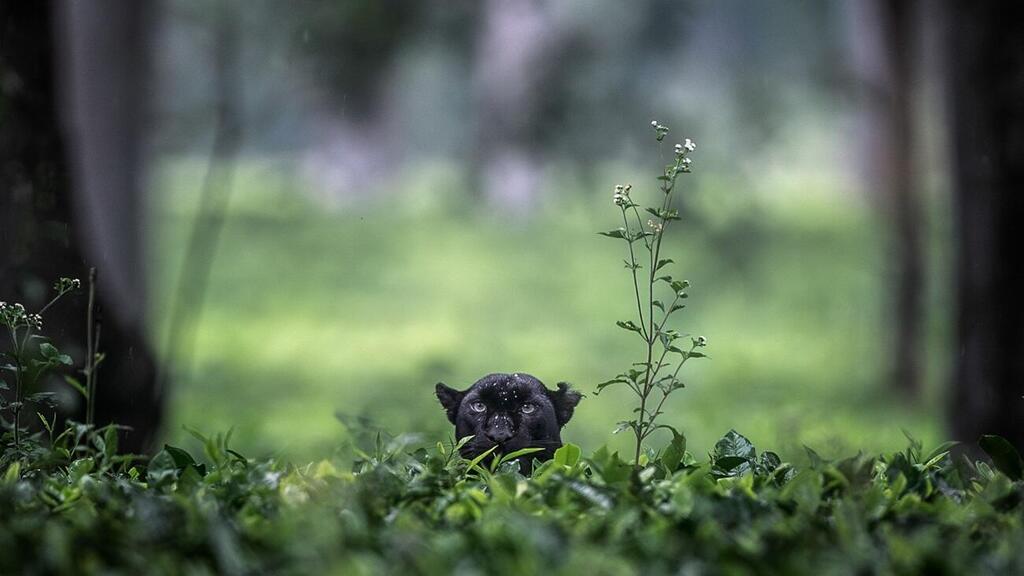
The black leopard emerges through the jungle brush
(Photo: Matan Sharon)
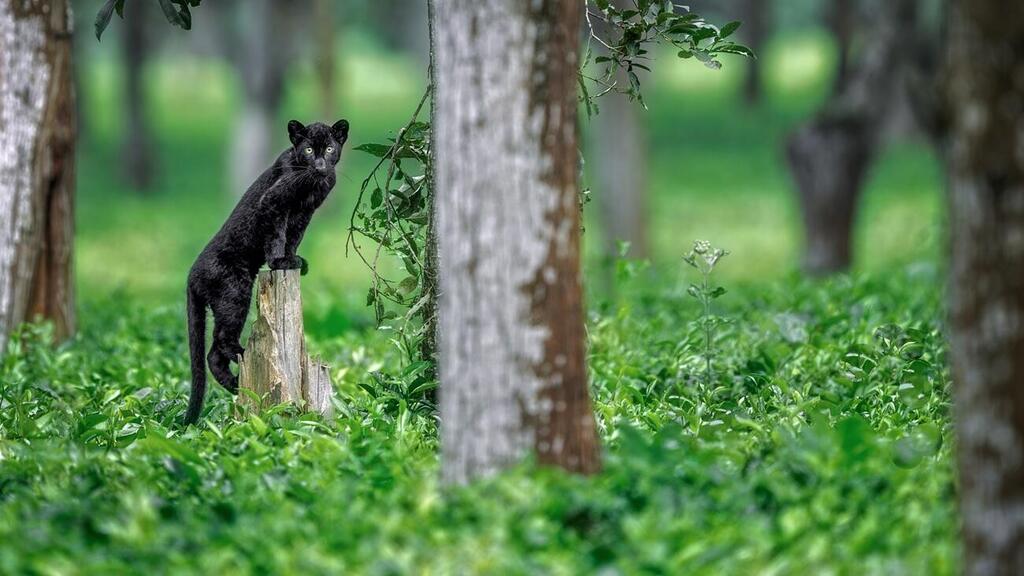
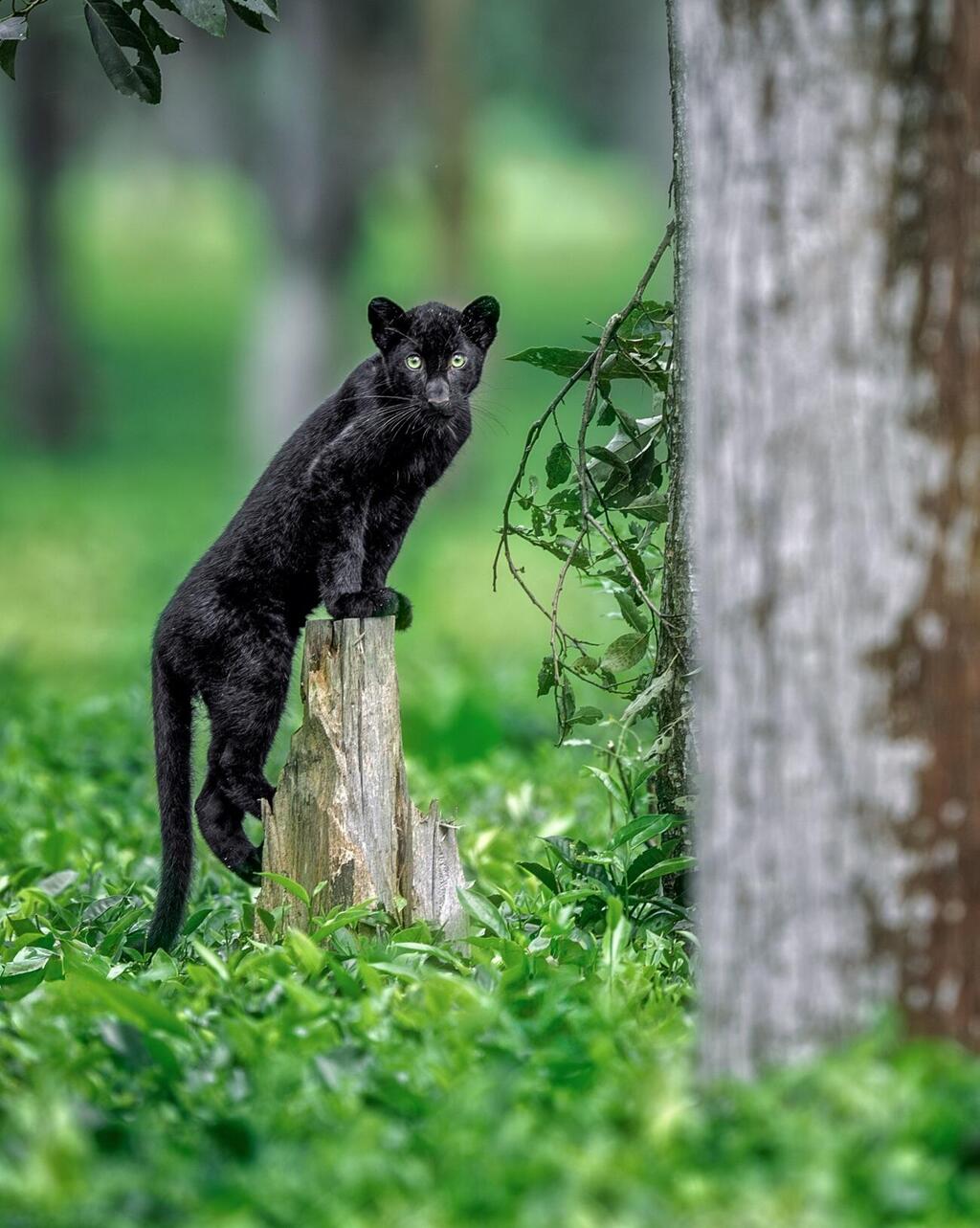
A black leopard cub sits on a tree trunk
(Photo: Matan Sharon)
Sharon and the other members of the MW Photo Tours expedition, Esti Yarkoni, Matan Yogev and Israel Drori, knew they were facing long, exhausting days in one of India’s most demanding wildlife environments.
“The jungle of Manas is dense, wild, and the light barely penetrates the forest canopy,” Sharon said. “Around us there was only rich tropical vegetation, a wide variety of insects, reptiles and birds singing in sounds unlike anything familiar to nature lovers elsewhere. With a local guide, an armed ranger and Umesh, the skilled driver of our safari jeep, we knew we were looking for a needle in a green haystack.”
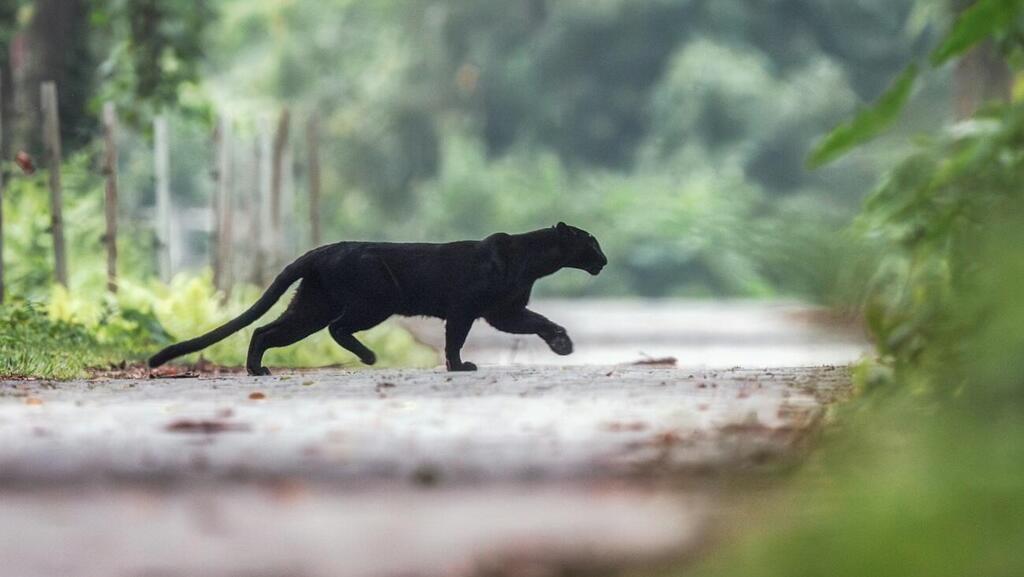
The black leopard crosses deep in the jungle
(Photo: Matan Sharon)
A black leopard is not a separate species, but a leopard with a rare genetic mutation known as melanism. The excess dark pigment gives its fur a coal-black appearance, though under the right light and at close range, the leopard’s familiar rosette markings can still be seen.
Only six black leopards are currently known to live in the entire Manas reserve, Sharon said, making any encounter with one a rare event on a global scale. For a wildlife photographer, seeing even a single black leopard in the jungle is the fulfillment of a dream.
“To see a black mother with her two cubs, and even to encounter the father, a huge and impressive black male, was something I did not even dare to dream of,” Sharon said.
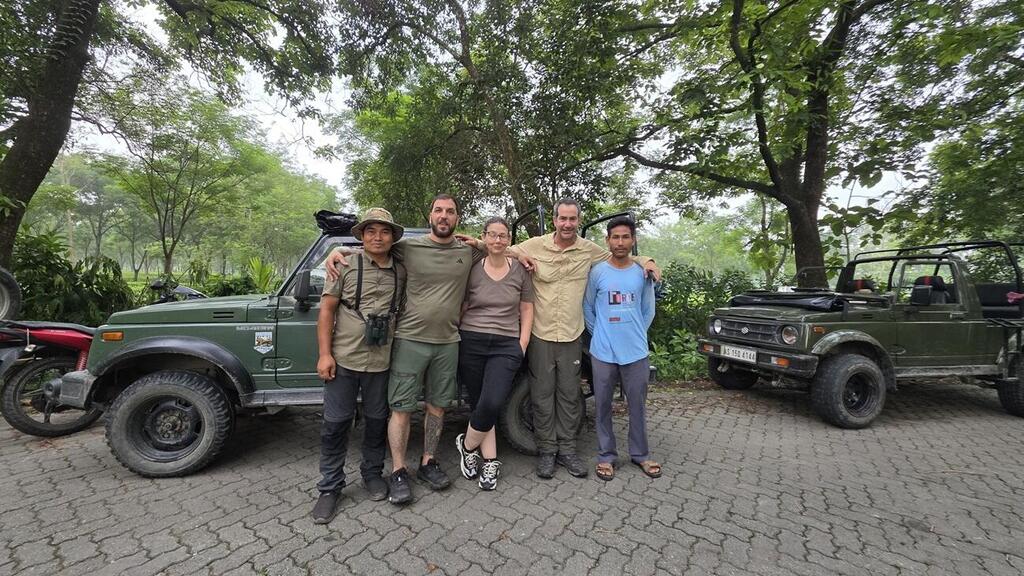
Matan Sharon, second from left, and his expedition team at Manas Reserve
(Photo: Matan Sharon)
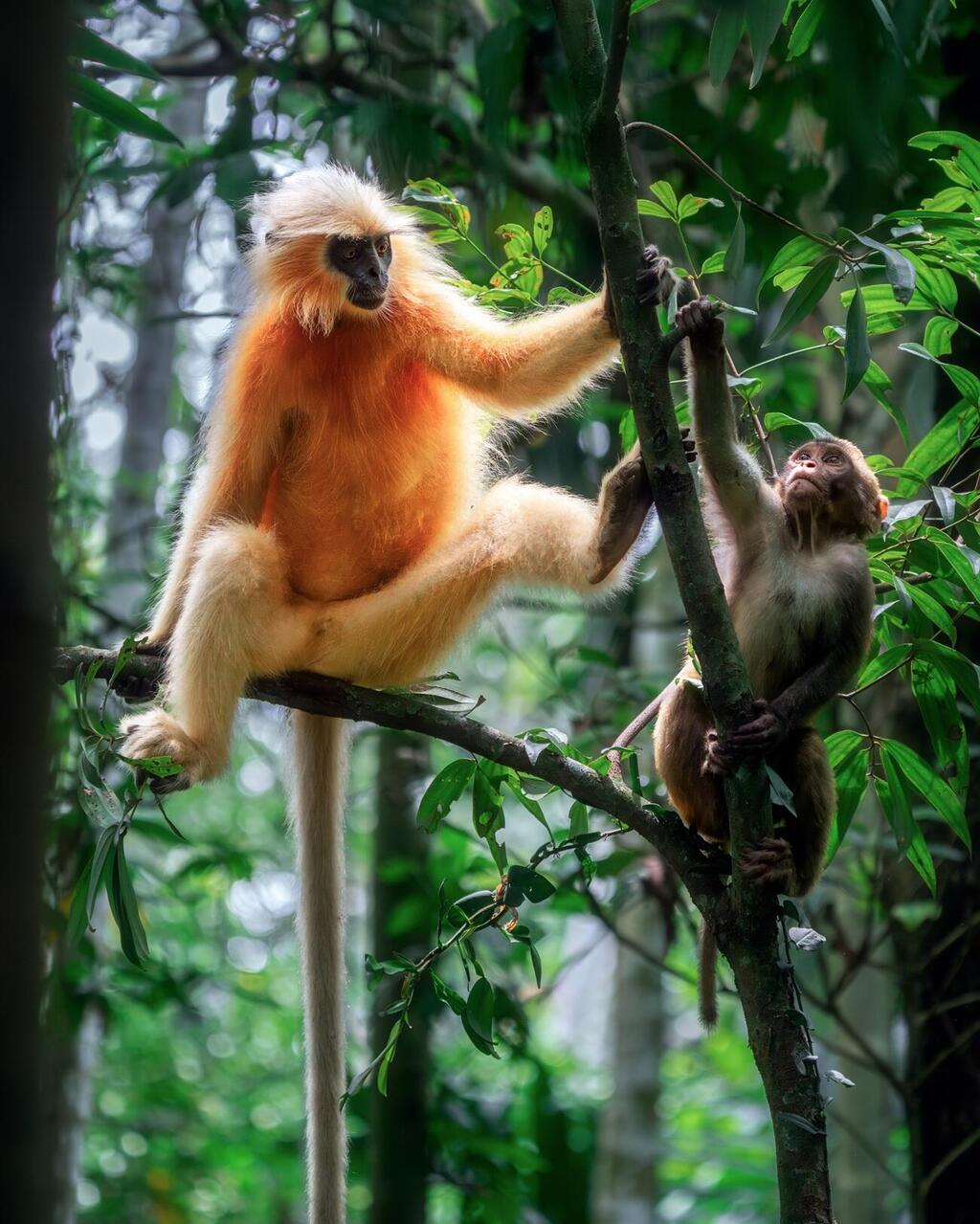
Golden langur
(Photo: Matan Sharon)
For days, the team carried out tense observations and filmed the animals crossing paths, playing and climbing trees. Sharon described the moment when the yellow eyes of the black panther stared into the lens from between the tea bushes as one in which the pressure, heat and suffocating humidity of the monsoon seemed to disappear.
“We returned from India with memory cards full of historic frames,” he said, “but mainly with the understanding that we had been privileged to witness one of the rarest and most moving moments in nature seen in recent years.”
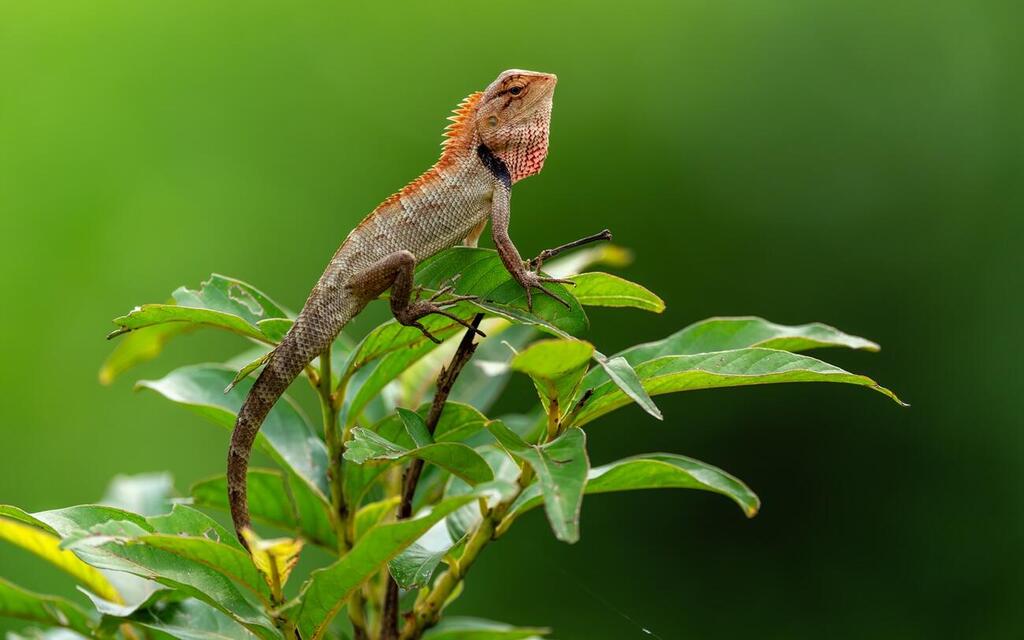
Oriental garden lizard
(Photo: Matan Sharon)
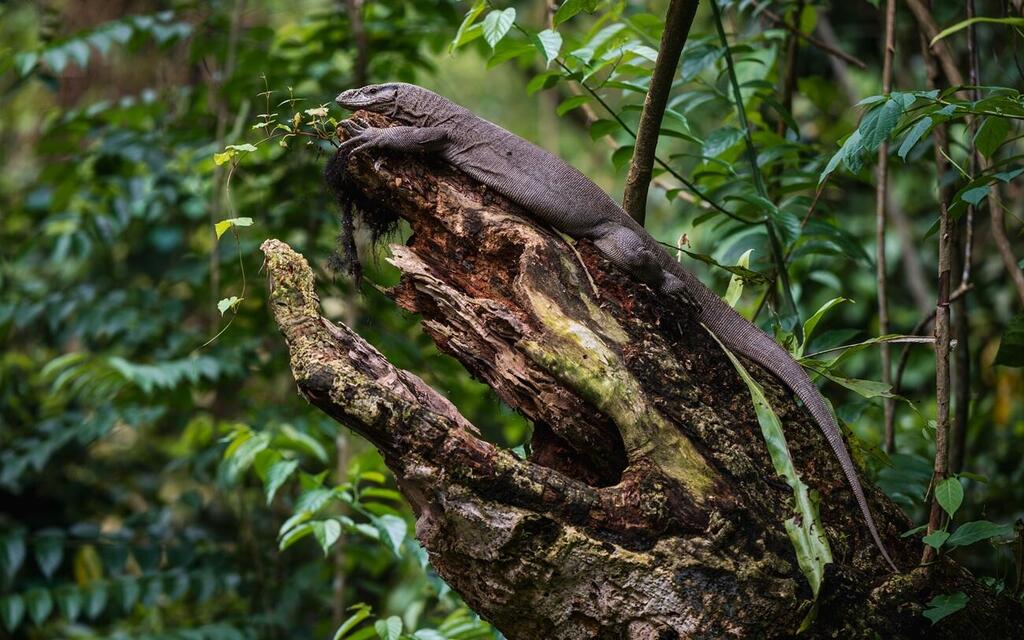
A giant Bengal monitor
(Photo: Matan Sharon)
Manas, located in Assam in northeastern India, is a national park, biosphere reserve and UNESCO World Heritage Site. It is known for its rich biodiversity and serves as a habitat for rare and endangered species, including the golden langur, pygmy hog and wild water buffalo.
Alongside the search for the black leopard family, the reserve offered the Israeli team close encounters with other remarkable animals.
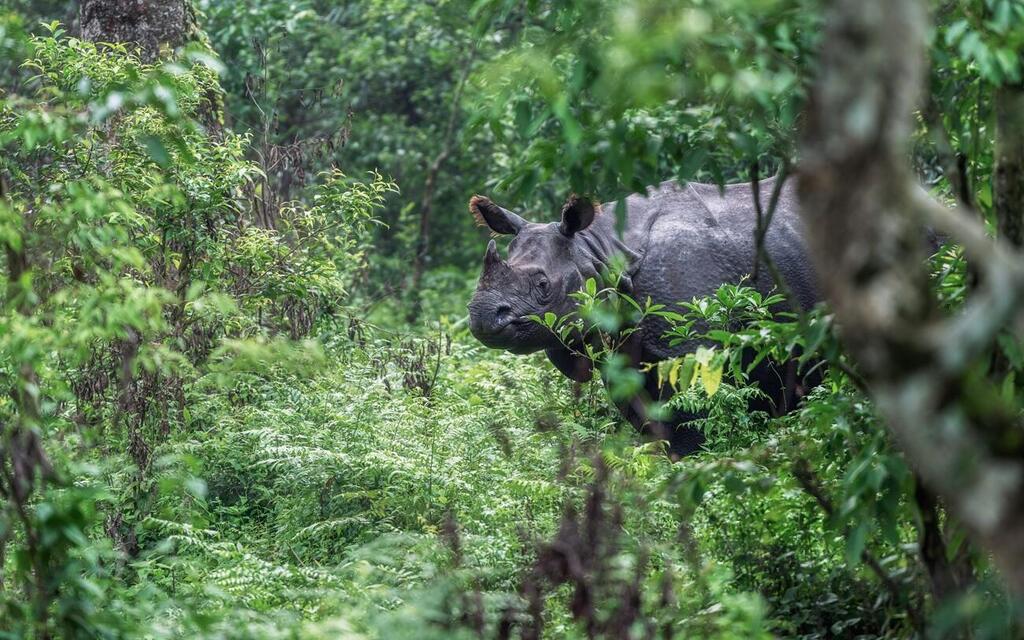
Indian rhinoceros
(Photo: Matan Sharon)
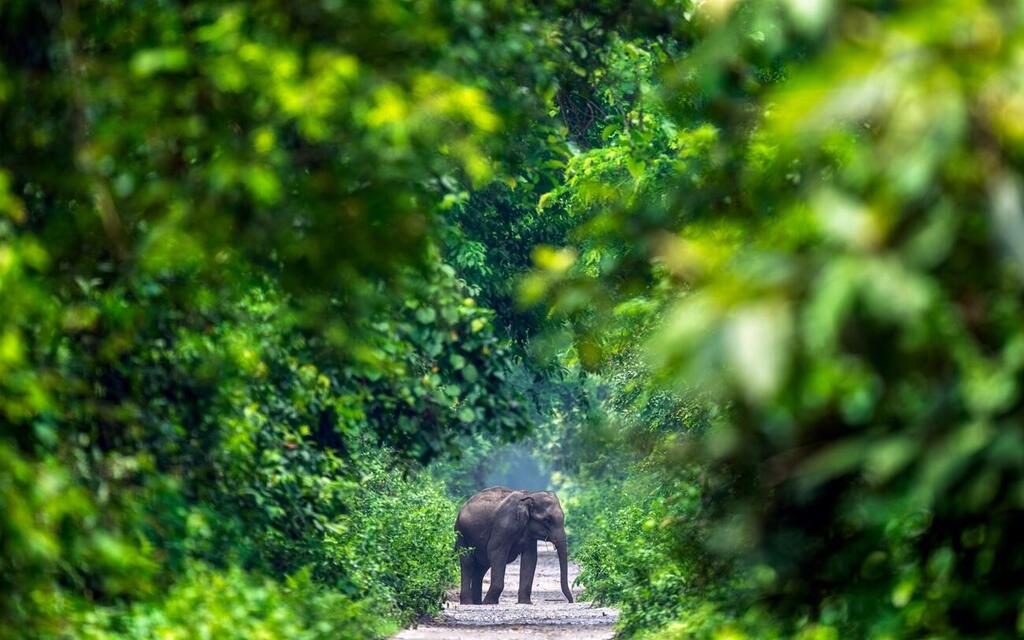
An Asian elephant spotted amid dense vegetation
(Photo: Matan Sharon)
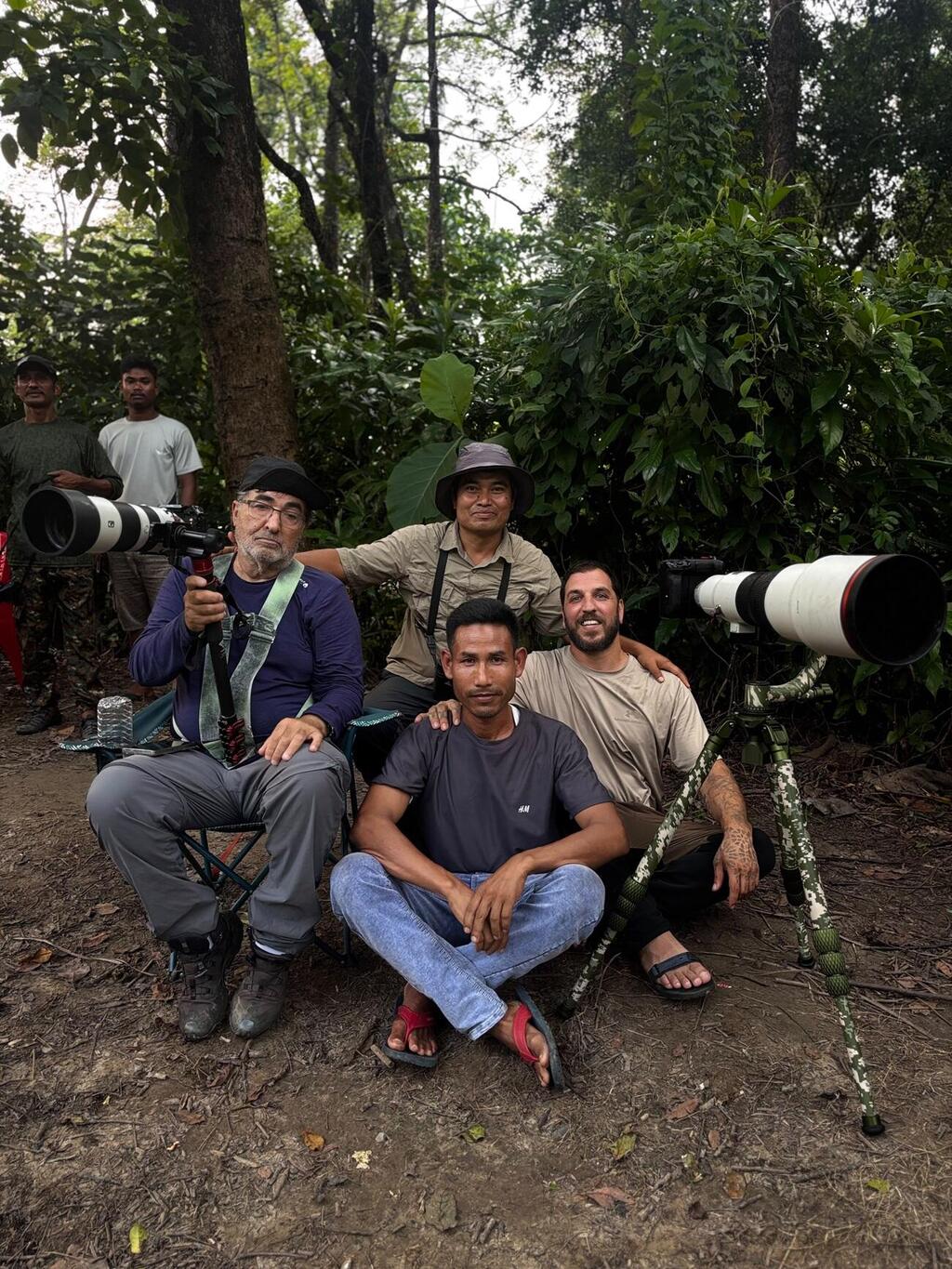
Matan Sharon, seated right, and his expedition team at Manas Reserve
(Photo: Matan Sharon)
“We followed and documented Asian elephants and enormous Indian rhinoceroses up close, alongside impressive reptiles such as the Bengal monitor, dozens of birds and colorful oriental garden lizards moving among the tree branches,” Sharon said.
But among the reserve’s other wildlife, he said, the highlight was the golden langur, one of the world’s rarest and most threatened primates.
The species is endemic to the Bhutan region, with only a limited population living in Assam. Sharon said the striking monkeys live on the seam between jungle and human settlements. To help them survive alongside people, local residents have built special hanging bridges over roads, allowing the langurs to cross safely above traffic.