


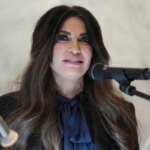





Technology entrepreneur Teemu Arina’s approach to biohacking appears to be more sustainable than the more intense, radical routines of American biohacking evangelists such as Bryan Johnson and Dave Asprey. “Of course, these American influencers get a lot of views and eyeballs doing crazy experiments, but that approach is not for everyone. You don’t need to spend hundreds of thousands of dollars like these guys. Just get the basics done,” says Teemu.
Also read: Biohacking and the race to become superhuman
His new book, The Optimised Human: A Beginner’s Guide to Biohacking (Hachette India), co-authored with Dr Olli Sovijärvi and Jaakko Halmetoja, eloquently lays out these basics: adequate sleep, a sustainable, individualised diet, the right dose of exercise, stress management, work-life and mind-body balance. “This is ‘natural’ biohacking,” says Olli, who believes that this is rooted in the culture that all the authors share. “The Finnish way is an antidote to all those extreme things. It stems from natural habits and way of living,” he says, pointing out biohacking also involves understanding what works best for an individual. “We are all unique: different ethnic backgrounds, genders, and ages, all of which play into the equation.”

A sustainable, individualised diet is key to living better
| Photo Credit:
Getty Images
Teemu thinks of The Optimised Human as a foundational book on biohacking and health optimisation, the groundwork for which spans a decade of learning how to optimise sleep, exercise, nutrition, mind and work. “The book came to be when the authors—Olli, Jaakko and I—came together from different fields,” he says. Olli is a medical doctor focused on longevity; Teemu’s area of expertise is technology, using wearables and biomarkers to optimise health; and Jaakko is a nutritionist, explains Teemu.
The book is based on well-researched meta-studies, Teemu says. “There are a lot of insights that have already been investigated in medical and nutritional journals. We are not inventing any new theories, just popularising science and making it accessible to all.”

The cover of the book
| Photo Credit:
Special Arrangement
An interesting point that Olli makes is how the gap between lifespan, the actual length of time someone lives, and healthspan, the number of years one lives without being affected by chronic age-linked diseases, has been increasing. “In Finland, for example, it is 13 years on average: 13 of the last years of their life with multiple illnesses and medications. They are kept alive, but they are not really living their life in good health or enjoying themselves.” That, says Teemu, is hopefully one of the book’s biggest contributions. “A lot of the things in the book help you prevent these illnesses, 10 to 20 years ahead of time, when your biomarkers are still okay. Because once you get cardiovascular disease, diabetes or neurocognitive decline, it is very hard to fix that with biohacking.”
Also read:Ozempic, Mounjaro and weight loss: What GLP-1 drugs mean for body positivity

Inadequate sleep has negative consequences on your body
| Photo Credit:
Getty Images/iStockphoto
While genetics, which, not surprisingly, plays a significant role in our predisposition to certain diseases, they are not our destiny, believes Olli. “Yes, genetics matter quite a bit, putting you at a higher risk for certain diseases, like diabetes, but that does not mean that you will develop that; it just means that you have to take more control of your lifestyle,” he says. In his opinion, “you can have the worst genes, but not get any sicknessif you fine-tune your lifestyle.”
Also read:Why dermatologists are warning against salon botox, fillers, lasers and IV Drips
Referencing a study by Steven A Schroeder, published in The New England Journal of Medicine in 2007, which states that premature death is influenced by factors in five domains — genetic predisposition, social circumstances, healthcare, environmental exposure and a behavioural patterns — with each carrying a different weight in its influence on premature death: 30%, 15%, 10%, 5%, and a whopping 40%, respectively, Teemu says. “Of course, if you live exactly like how your parents and grandparents did, there is a high chance of you getting diabetes or cardiovascular disease, if it is in the family, but behaviour can play a substantial role in preventing this inevitability. You can be the last generation with these issues,’ says Teemu.
The focus on preventative health and longevity has been increasing over the last few years, a trend partially catalysed by COVID, Teemu believes. The wellness economy is today one of the world’s largest industries — about 60% of human healthcare — making it even bigger than the pharmaceutical industry, with biohacking and health optimisation among the fastest-growing segments within it, he says, claiming that it is currently a $ 25 trillion market and is growing 19% annually. “We are entering an exponential trajectory because of artificial intelligence and new studies that have come out on humans.”

Dr Olli Sovijärvi
| Photo Credit:
Special Arrangement
The authors are especially hopeful about the impact of AI on public health, given its ubiquity, accessibility, and rapidly improving diagnostic accuracy. In fact, it is already being used at Hololife, a preventive health company focused on health optimisation, resilience, and longevity, co-founded by Teemu and Dr Olli. “When models first came out, they often hallucinated information, but they are getting better,” says Teemu. He cites a 2025 Microsoft study in which 21 general practitioners, given a $3,000 diagnostic budget, achieved 21% diagnostic accuracy. Then they gave the same context, lab results and information to the top AI models of that time, recalls Teemu. “The AI beat all those doctors by over three times more accuracy with the same diagnostic budget, which means AI is better than the average doctor.”

Teemu Arina
| Photo Credit:
Special Arrangement
This does not mean that AI should be handling human health, of course, but he believes that by “combining human intelligence with computation and neural networks and machine intelligence, we can build systems that are much more in service of humanity.” In a similar vein, Olli, being a medical doctor himself, compares AI to “a microscope or telescope, which were significant inventions at the time they came out…it is able to achieve complexity at a level that the previous tools were not able to. The best bang for your buck comes if a super-educated person, whether it be a doctor or a nutritionist, works with AI,” he says.
Published – June 30, 2026 07:04 pm IST