








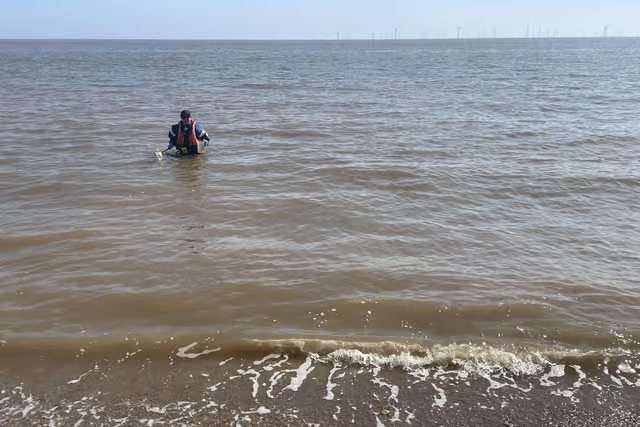
The bathing water season is here, and there’s real cause for celebration.
Every single one of the bathing waters in Lincolnshire and Rutland is classified as ‘Excellent’ or ‘Good’, the highest ratings available. That’s not something to gloss over. It’s the result of years of hard work from a lot of people and a range of organisations, all involved in managing water quality.
In our part of the country, we’re fortunate to have 11 designated bathing waters in total: nine stretching along the Lincolnshire coast, and two inland at the beautiful Rutland Water. From May 15 through to September 30, Environment Agency field monitoring officers are out on the beaches and waterways, regularly testing for bacteria that can indicate faecal contamination and the risk of illness.
Some of our sites go above and beyond; Mablethorpe, Skegness, Sutton-on-Sea and Rutland Water Sykes Lane all hold Blue Flag status, an internationally recognised award that signals a beach is not just clean, but well-managed, and environmentally sound. Think of it as a gold standard badge, earned rather than given. Our communities should wear that with pride.


Official designation is about more than recognition. When Defra (the Department for Environment, Food and Rural Affairs) designates a bathing water, the Environment Agency is legally required to monitor quality throughout the season and to provide water quality related health and safety information to the public at every site.
Samples are tested in our laboratories and the results published on our Swimfo website, so that swimmers can make genuinely informed decisions about where and when to take a dip. It’s a framework that creates real accountability, bringing together the Environment Agency, water companies, local councils and communities to tackle pollution and drive up standards.
That said, it is important to note that designation doesn’t mean the water quality is always safe. Swimming in rivers, lakes and the sea always carries risks. Heavy rainfall can temporarily affect water quality at even our best-rated sites. Nature doesn’t follow a schedule.
Also, physical conditions can change quickly, and hazards such as cold water, currents and unseen obstacles remain whether a site is designated or not. Sadly, each year there are incidents and fatalities associated with open water swimming across the UK, which is a reminder that these environments must be treated with care and respect. Organisations such as the Outdoor Swimming Society have played an important role in encouraging people to enjoy these places responsibly, and their Outdoor Swimmer’s Code sets out clear expectations around caring for the environment, respecting others and taking responsibility for your own safety.

So if you’re planning a trip to the coast or a day out by the water this summer – and I hope you are – please take a moment to check Swimfo before you go. Swimfo provides daily forecasts to help you plan and decide whether to bathe or not.
While you’re there, remember that everyone has a role to play. Check your local bathing water allows dogs during the bathing water season and if they do make sure you tidy up after them. Take your litter home. And please, never flush wet wipes down the loo. Small actions, but collectively they make a real difference to the waters we all share.
This column has been provided by Leigh Edlin, area director at the Environment Agency for Lincolnshire and Northamptonshire