







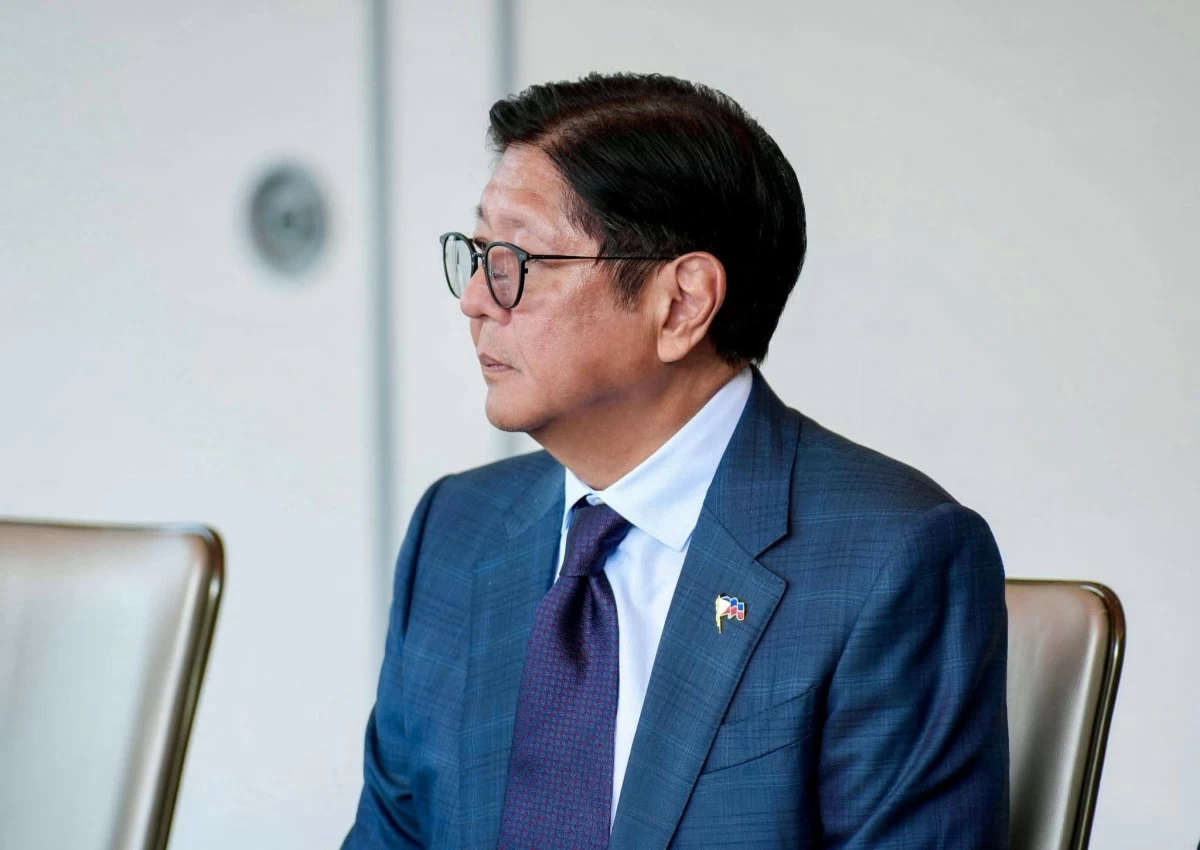
Nearly a year after challenging those behind anomalous flood control projects to “have some shame” during his State of the Nation Address (SONA) last year, President Marcos said one thing has become painfully clear: Some of them simply did not.
In a press briefing during his official visit to Canada on Sunday, July 5 (Manila time), Marcos said the administration’s investigation into alleged corruption in flood control projects uncovered a culture in government where kickbacks had become normalized and even viewed as an entitlement.
“Ang sinabi ko, ‘Mahiya naman kayo,’ pag tinanong mo sa akin, nahiya ba sila? Yung iba hindi (When I said, ‘Have some shame,’ if you ask me now whether they were ashamed, some were not),” he said.
“Akala nila karapatan nila yung ginagawa nila. Wala kaming ginagawang mali, ganyan talaga ang patakbo dito (They thought what they were doing was their right. They believed they were doing nothing wrong and that this was simply how things worked),” he added.
Marcos said changing that mindset may prove more difficult than changing laws or government procedures.
“That’s the hardest part to change — the culture within government,” he said.
“Kasi naglalagay sila ng kung anu-anong magandang salita — rebate, incentive — pero kickback ‘yan. Walang ibang tunay na salita, kickback ‘yan (They put all kinds of nice words to it — rebate, incentive — but it’s a kickback. There is no other proper word for it—it’s a kickback),” he added.
From ‘Mahiya naman kayo’ to investigations
During his fourth SONA in July last year, Marcos publicly called out those behind allegedly substandard and ghost flood control projects following the devastation caused by successive typhoons and monsoon rains.
“Mahiya naman kayo (Have shame),” the President said at the time, warning officials and contractors that the government would pursue accountability regardless of political affiliation.
The remarks became one of the defining lines of the speech and marked the beginning of what has since evolved into one of the administration’s largest anti-corruption investigations.
Nearly a year later, Marcos said authorities are still uncovering new irregularities.
“I cannot say that we have done enough because we are not done yet,” he said.
“Unfortunately, the more we look, the more we find,” he added.
According to the President, the alleged anomalies stretch back beyond his administration.
“It is going already back beyond my administration, beyond my term,” Marcos said.
He pointed to allegations raised years earlier involving questionable flood control projects and noted that former president Rodrigo Duterte himself had acknowledged the existence of ghost projects during his term but did not do anything about it.
“Having acknowledged it, he did not find accountability in anybody,” Marcos said, referring to Duterte.
“So I guess that was left up to me to do,” he added.
The President particularly noted that the former House deputy speaker Rolando Andaya Jr. had already raised concerns about questionable flood control projects as early as 2018.
Accounts frozen, cases filed
President Marcos reiterated that the investigation was handled by the Independent Commission for Infrastructure, tasked to follow the evidence wherever it leads.
“From the time that we formed the independent commission, I said we’ll just follow the evidence, and we’ll continue to do that,” he said.
The President said the government has already completed an inventory of contractors and flood control projects found to have possible irregularities.
“We have the inventory, not only of the contractors but also the projects themselves that are problematic,” he said.
According to Marcos, cases have already been filed against some of the personalities involved, while financial assets linked to them have been frozen as investigations continue.
“Those that were investigated and where problems were found already have cases filed against them and their accounts have been frozen,” he said.
The administration earlier disclosed that investigators had focused on a relatively small group of contractors that cornered a large share of flood control contracts nationwide.
Some contractors initially flagged during the review were later cleared after authorities found no evidence of wrongdoing despite the size of their government projects, Marcos said.
Individuals linked
The flood control investigation has since reached some of the country’s most powerful politicians, businessmen, and public officials, although authorities have repeatedly stressed that being mentioned in testimonies does not automatically mean criminal liability.
Among the highest-profile personalities linked to the controversy are construction magnates Curlee and Sarah Discaya, who triggered a major shift in the investigation when they named lawmakers and public officials who allegedly demanded commissions in exchange for project approvals.
The couple, who have been in government custody since late 2025 due to separate criminal charges of graft, malversation, and tax evasion, have provided extensive testimony and sworn affidavits to the Senate Blue Ribbon Committee. While they have expressed a desire to be utilized as state witnesses, they remain primary defendants in multiple ongoing cases related to the flood control program
Former Department of Public Works and Highways (DPWH) Secretary Manuel Bonoan has denied knowledge of alleged irregularities during his tenure and has since indicated his willingness to cooperate with investigators. President Marcos said the decision on whether Bonoan would eventually become a state witness rests entirely with the Office of the Ombudsman.
Former Ako Bicol representative Zaldy Co remains a fugitive following his departure from the Philippines amid a widening corruption investigation. While Co was detained briefly in the Czech Republic in April 2026 for immigration irregularities, he was subsequently released and is reportedly seeking political asylum in France.
As of July 2026, the Sandiganbayan has archived Co’s graft and malversation cases due to his continued absence, though Malacañang has emphasized that this is a temporary procedural step and that authorities continue to pursue his arrest to ensure he faces charges in Philippine courts. Co has consistently denied the allegations, characterizing them as politically motivated
Former House Speaker Martin Romualdez has been tagged by the Office of the Ombudsman as the alleged ‘mastermind’ behind the multibillion-peso flood control scandal. While the Ombudsman is currently building a case against him—utilizing testimonies from former DPWH Secretary Manuel Bonoan and former aides of Zaldy Co—Romualdez has strongly denied all allegations. His legal counsel has dismissed the claims as unsupported by evidence and politically motivated, noting that no formal criminal charges have been filed against the lawmaker to date.
Several incumbent and former senators were likewise mentioned during hearings and whistleblower testimonies, although authorities have not publicly disclosed the identities of all those being investigated as the Ombudsman and the independent commission continue to gather evidence. Most of those publicly linked to the case have denied any involvement in anomalies involving flood control projects.
Government data released earlier this year showed that criminal complaints had already been filed against dozens of politicians, contractors, and company executives, while authorities froze approximately P6.3 billion worth of bank deposits, investments, and other financial assets believed to be connected to anomalous projects. Luxury vehicles and other high-value assets were likewise seized as part of ongoing recovery efforts.
Marcos has repeatedly maintained that neither allies nor political opponents would be spared by the investigation.
‘Ako ang naglantad nito’
The President has also pushed back against allegations linking his administration to the scandal, arguing that the issue would not even be under public scrutiny had he not raised it himself.
“Ako ang naglantad ng lahat ng ito (I’m the one who exposed all of this),” he said.
“At ako lang ang nagsimulang gumawa ng hakbang laban dito (And I’m the only one who started doing something about it),” he added.
Marcos said previous administrations did not lift a finger to resolve the issue.
“Bakit ang mga nakaraang pangulo, nakita pa kayong ginawang gano’n? Meron ba silang kinulong? Meron ba silang pina-freeze na account? Meron ba silang mga imbestigasyon na ginawa? Wala. Sa akin lang (Did previous presidents do the same? Did they jail anyone? Did they freeze any accounts? Did they conduct investigations? None. It only happened under my administration),” he said.
“Tapos sasabihin, ako daw ang may kagagawan. Eh kung talagang racket ko ‘yun, ba’t ko sisiraan ‘yung racket ko (And yet they say I am responsible for it. If it were really my racket, why would I destroy my own racket)?” he added.
“‘Di ba (Right)? That makes absolutely no sense.”
Marcos said the investigation will continue as his administration prepares for its fifth SONA later this month, signaling that accountability for flood control anomalies remains one of the government’s major governance priorities heading into the second half of his term.
For Malacañang, the challenge now goes beyond identifying anomalous projects and prosecuting those involved — it is dismantling a culture that, as the President put it, had convinced some officials that taking a share of public funds was simply “how things worked.”