









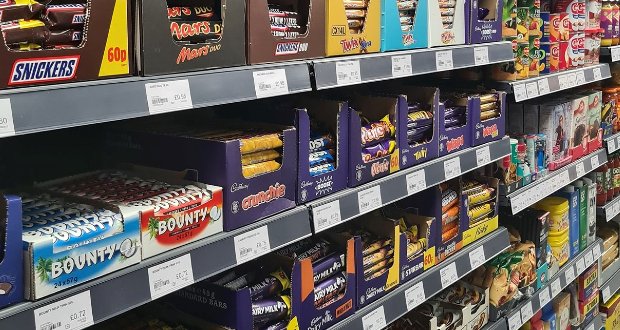
The government must prioritise preventing obesity in future generations over the interests of the food and drink industry, MPs say, as they make recommendations to better regulate advertising, promotions and labelling of food, as well as making it easier for people to access healthier options.
Proposals in the cross-party committee’s new report aim to “fix a food environment that pushes consumers towards high fat, sugar and salt (HFSS) products” which are typically cheaper than nutritious foods.
The committee urges ministers to quickly bring in mandatory reporting and targets for supermarkets, backed up with penalties, on the amount of healthy food they sell.
MPs challenge the government to be more courageous in the face of industry lobbying against restrictions, which has meant that attempts to tackle obesity through food policy have continually failed.
This report comes from the committee’s food and weight management inquiry. A second report, focusing on weight treatment and medication, will be published later this year.
Health and Social Care Committee chair Layla Moran MP said: “When we say the ‘food environment’, we mean the constant bombardment of promotions and adverts we see and hear in our daily lives – on our screens, on children’s journeys home from school, as we set foot in shops and queue for the checkout.
“The central message of this report is that we need to tackle England’s escalating obesity crisis through prevention. That means bearing down on environmental factors that push people to eat unhealthily – that coerce struggling families to buy their children products that fill them up without nourishing them. That is why the government’s food policy needs an overhaul. Perversely, the worst options are the cheapest while the healthiest are harder to access.”
January 2026 saw the implementation of a ban on TV and online adverts for HFSS food and drink products between 5.30am and 9pm. This policy was announced in 2021 but faced delays. However, the ban does not stop brands or ranges from being advertised, so long as a product is not presented.
This would allow McDonald’s to advertise the words ‘Happy Meal’ between those hours. Experts also told the Committee the ban fails to capture an industry shift towards social media and outdoor advertising – on billboards, the sides of buses, on street furniture and sponsoring events.
Recommendations:
- Brand and range advertising must be brought within scope of the existing ban.
- The government said it will review the success of these restrictions in 2031 – it must do so as soon as possible.
- It should consult on restrictions to other forms of advertising including social media and outdoor spaces.
The retail environment
The Centre for Food Policy found that strategies that combine increased availability and prominent positioning of healthy foods (aisle ends, entrance, check-outs) plus reduced prominence of unhealthy foods show moderately consistent results at producing healthier sales patterns. The product placement research found “modest, but important benefits”
Recommendation: the Food (Promotion and Placement) (England) Regulations 2021 should be updated no later than January 2027 to:
a) include a requirement to place fruits and vegetables in prominent instore locations like checkouts and store entrances;
b) extend the definition of a prominent location on a website to include ‘special offers’ pages.
In its 10-Year Health Plan the government proposed a mandatory system for supermarkets to report on the amount of healthy food products they sell, and to hit targets. This was promised by spring 2026 but has yet to be announced.
Recommendation:
- The healthy sales reporting policy should be launched as soon as possible, with targets for major supermarkets set within the next 12 months, and for the wider food industry within this Parliament. If the government is committed to this policy it should be accompanied by a strict enforcement regime overseen by the Food Standards Agency with, for example, penalties on a sliding scale that could include fines. We would encourage government to use such revenue to make healthy food cheaper.
- As part of the sales reporting, retailers should also be required to report on the number of promotions – such as buy one get one free – offered on HFSS foods compared with foods like fruit and vegetables.