









Private companies are reshaping India’s space ambitions, building rockets and satellites as the country pushes to capture a bigger share of the global space economy.
Since opening the sector to private players in 2020, India has become home to more than 400 space startups, attracting upwards of $500 million in investment, including $150 million in the last year alone.
For entrepreneurs such as Skyroot Aerospace co-founder Pawan Chandana, the transformation is reaching a critical moment.
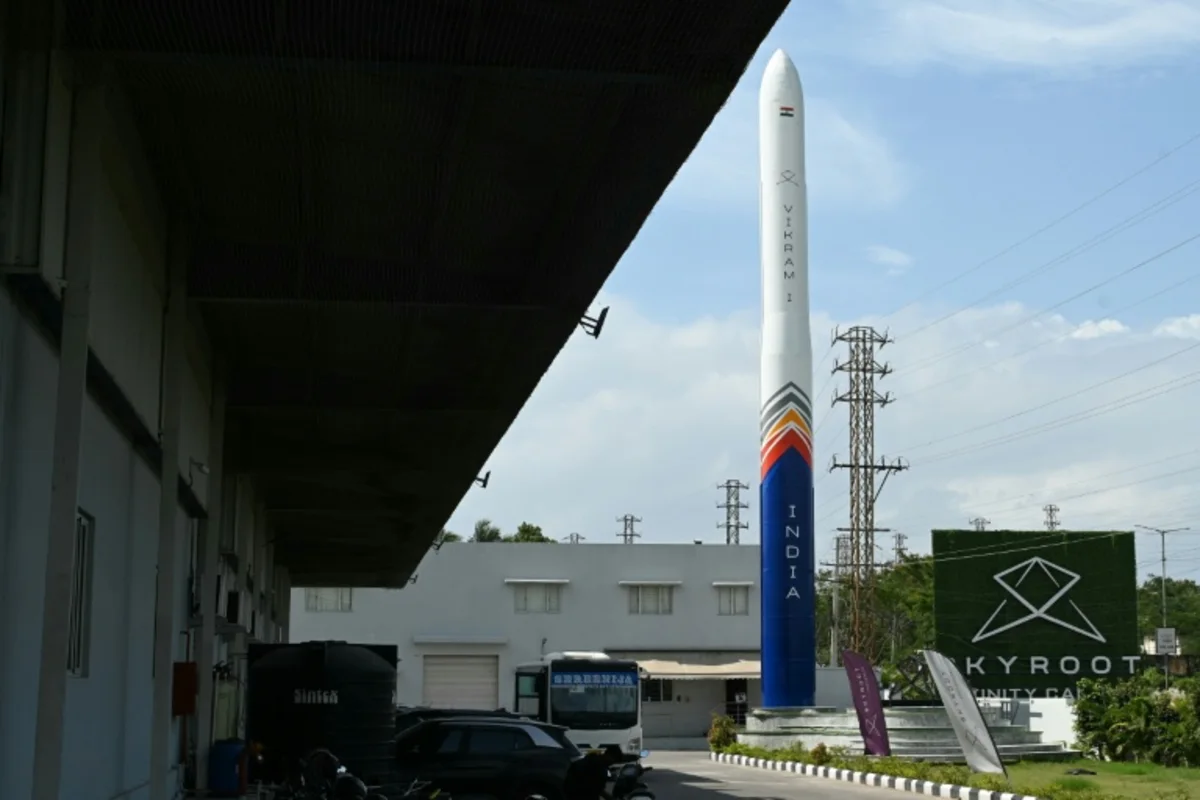
Skyroot plans to launch India’s first privately developed orbital-class rocket before August 4, signalling the country’s arrival as a serious commercial space contender.
“It’s a milestone for Skyroot and for India,” Chandana told AFP.
India currently values its space economy at $8.4 billion, about three percent of the global market, but aims to increase that figure fivefold within seven years.
The country’s ambitions are built on decades of investment by the Indian Space Research Organisation (ISRO), whose low-cost missions have earned global recognition.
India became the first Asian nation to place a spacecraft into Mars orbit in 2014 and in 2023 achieved a soft landing on the Moon — only the fourth nation to do so.
Private companies say that legacy has provided the foundation for startups to boom.
“We are standing on the shoulders of what has been built for 60 years,” said 35-year-old Chandana, who left a secure job at ISRO to co-found Skyroot in 2018.
– Thriving startups –
Skyroot became the first startup to partner with ISRO and in 2022 launched India’s first privately built sub-orbital rocket.
Its sprawling “Infinity” campus in Telangana has the capacity to build one orbital rocket every month, reflecting how rapidly the private ecosystem has expanded.
Chandana credits the country’s “fundamental foundational elements” and well-established launchpads as key elements for Skyroot’s success.
“It is the most convenient atmosphere to have like over a thousand thriving startups do various things,” he said.
The private ecosystem extends well beyond launch vehicles.
In Bengaluru, Pixxel Space is building hyperspectral imaging satellites that provide Earth observation data to commercial customers and government agencies in India, Europe and the United States.
Backed by investors including Google, Pixxel uses its data for applications such as monitoring soil health and mining sites.
Founder and chief executive Awais Ahmed said opening the sector allows ISRO to focus on research and exploration while private firms pursue commercial opportunities.