









The Environment Agency is urging everyone to do their bit and use water more wisely
The Environment Agency has placed Devon, Cornwall and the Isles of Scilly into a state of prolonged dry weather following England’s warmest spring on record and a series of summer heatwaves, warning that rivers, wildlife and water supplies are increasingly coming under pressure.
The agency says it is closely monitoring conditions and is prepared to respond to environmental incidents, while continuing to balance the needs of water users with protecting the natural environment.
Joanne Laeger, Environment Planning & Engagement Manager at the Environment Agency, said: “Devon, Cornwall and the Isles of Scilly is the third Environment Agency area to move into a state of prolonged dry weather this year.
“Following the warmest spring on record and the third heatwave of the year, we could see a summer of environmental incidents ranging from fish in distress to algal blooms.
“The Environment Agency urges everyone to do their bit and use water more wisely. The more water we use, the less there is available for the environment. Our climate is changing. We are already seeing wetter winters and hotter, drier summers. In our area, prolonged dry weather is occurring more frequently.”
Although 2026 began with wet weather, rainfall between March and May was significantly below average across the region.
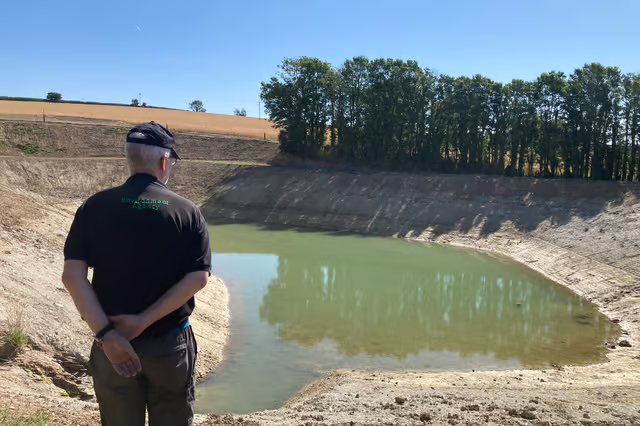
Heavy rain during early June was insufficient to replenish water levels, leaving soils much drier than normal and contributing to exceptionally low river flows.
The agency says private water supplies fed by boreholes are already beginning to struggle in some areas.
Officials are warning that prolonged dry weather increases the likelihood of environmental incidents including fish becoming stranded in shrinking waterways, reduced water quality and harmful algal blooms.
The National Drought Group, which includes the Met Office, government departments, water companies, the National Farmers’ Union, conservation organisations and other experts, continues to monitor conditions across England and is due to meet again on 20 July.
The Environment Agency has stressed that the declaration does not mean the region is officially in drought, but indicates that environmental conditions are deteriorating and require closer monitoring.
The Environment Agency uses four stages to monitor and manage dry conditions:
- Prolonged dry weather – dry conditions are affecting rivers, groundwater, lakes and reservoirs.
- Drought – impacts become more widespread, affecting agriculture, businesses and communities.
- Severe drought – major water shortages begin disrupting daily life and causing significant environmental damage.
- Recovering from drought – conditions gradually return towards seasonal norms.
The agency monitors a wide range of indicators including rainfall, river flows, groundwater levels, reservoir storage, ecology and public water supplies before deciding whether to change an area’s status.
The Environment Agency says climate change is making prolonged dry spells more common, with hotter, drier summers and wetter winters increasing the likelihood of both droughts and flooding.
Residents are being encouraged to reduce water use wherever possible to help protect rivers and wildlife during the dry spell.
- taking shorter showers;
- fixing leaking taps and pipes;
- using a bucket or watering can instead of a hosepipe;
- using a washing-up bowl rather than running taps continuously; and
- selecting eco settings on washing machines and dishwashers.
The Environment Agency continues to regulate water abstraction, oversee water company drought plans, support farmers, respond to environmental incidents such as fish rescues and manage water resources to help reduce the impacts of prolonged dry weather.
Officials say everyone has a role to play in helping conserve water while conditions remain dry, with every litre saved helping to protect the region’s rivers, wildlife and water supplies.