








By Helen Dennis, Wigan Council’s assistant director for environmental services and operational development
Every July, millions of people around the world take part in Plastic Free July, a global movement that encourages individuals, communities and organisations to reduce their reliance on single-use plastics.


What began as a small initiative in Australia has grown into an international campaign, inspiring people across the world and right here in Wigan borough to make simple but meaningful changes that help protect the environment.
Single-use plastics are among the most significant environmental challenges of our time.
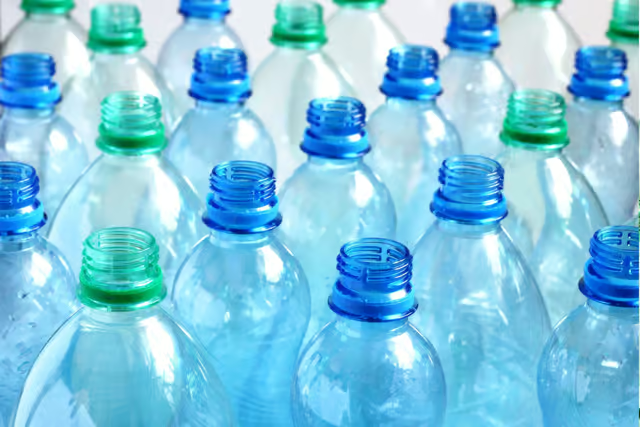
Items such as plastic bags, bottles, straws, cutlery and food packaging are designed for convenience and often used for only a few minutes before being discarded.
However, these products can remain in the environment for hundreds of years.
Their widespread use and improper disposal have resulted in vast amounts of pollution, particularly in oceans and waterways, where they threaten wildlife and damage fragile ecosystems.
Beyond the visible pollution, plastic production itself comes at a significant environmental cost.
Most plastics are made from fossil fuels, and their manufacture requires large amounts of energy, generating greenhouse gas emissions that contribute to climate change.
As demand for disposable products continues to grow, so does the pressure on natural resources and the environment.
The good news is that reducing plastic waste does not require dramatic lifestyle changes.
Simple actions can make a meaningful difference.
Carrying a reusable shopping bag, using a refillable water bottle, bringing a reusable coffee cup, and refusing plastic cutlery with takeaway meals are all easy habits that significantly reduce waste over time.
Many shops now offer refill stations for household cleaning products, toiletries and personal care items, allowing customers to reuse containers rather than purchase new plastic packaging.
The refill movement is also gaining momentum within the beauty and cosmetics industry.
Increasingly, brands are offering refillable skincare products, make-up palettes and reusable containers designed to minimise waste.
Likewise, many consumers are choosing to buy dry foods such as rice, lentils, pasta and spices in bulk, storing them in reusable jars at home and refilling them as needed.
These practices help reduce demand for unnecessary packaging and support the growth of a circular economy.
However, sustainable choices extend beyond plastic packaging.
Using synthetic fabrics such as polyester and acrylic, fast fashion also contributes to plastic pollution as microscopic plastic fibres are released during washing, which eventually make their way into rivers and oceans.
Therefore, choosing second-hand clothing, repairing damaged garments or upcycling existing items are other important choices that can significantly reduce waste while saving money.
By moving away from a disposable mindset and making the most of what we already own, we can challenge the throwaway culture that has become commonplace in modern society.
Plastic Free July highlights that small actions, when multiplied across millions of people, can create lasting change.
Here in Wigan borough, we can make a difference in our area by transitioning away from single-use plastics, adopting more sustainable habits and encouraging organisations to provide greener alternatives and invest in innovative solutions.