







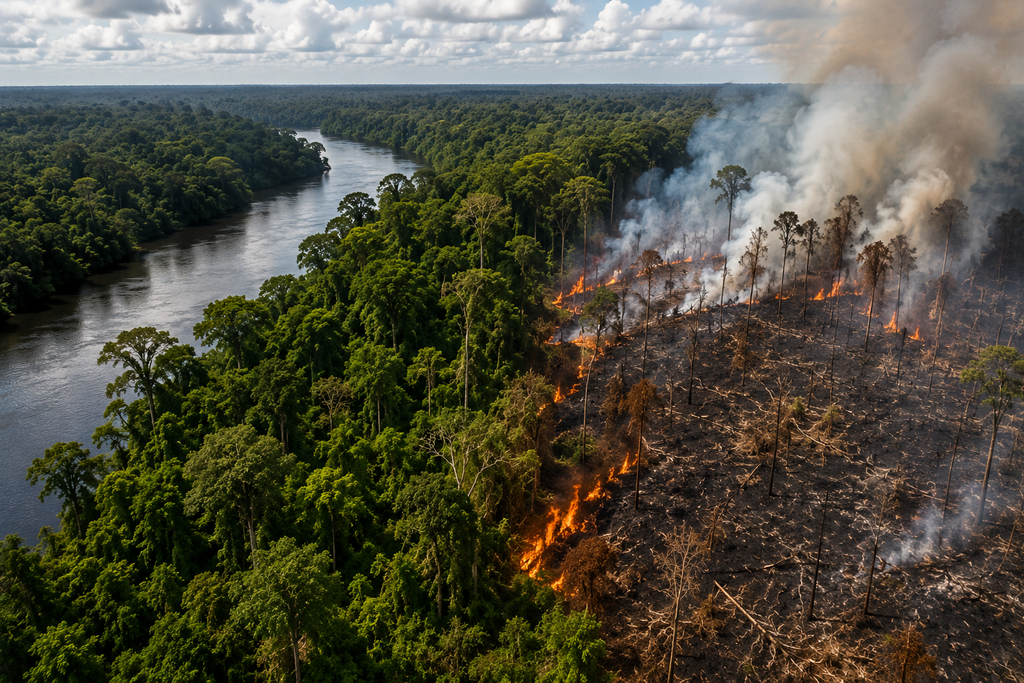
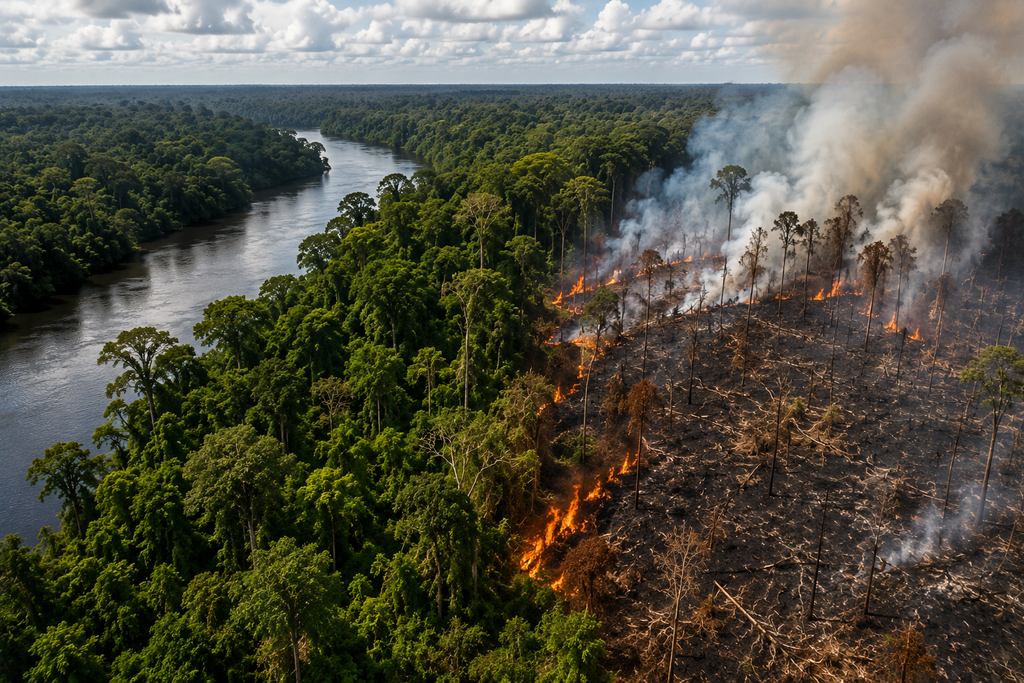
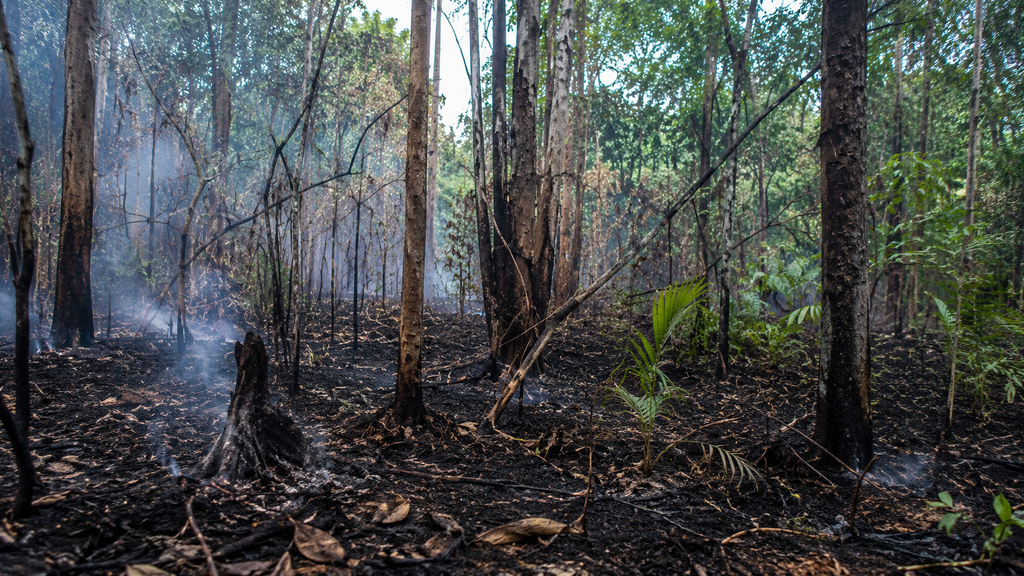
About 15.8 million hectares of Brazil’s Amazon burned in 2024, which according to the Copernicus Climate Change Service was the worst fire season in over two decades.
That was driven by what the agency described as “climate extremes and human activity”, with the scale of it raising real questions about whether the damage to the world’s largest rainforest was getting beyond manageable.
The preceding year looked very different though. Deforestation monitoring group MapBiomas has reported that around 3.1 million hectares of Brazil’s Amazon burned last year, which the organisation says is the smallest area it has recorded since it began tracking 30 years ago in 1985.
Across the whole of Brazil the total came to about 12.7 million hectares, which according to MapBiomas is down almost two thirds from 30 million the year before.
Weather played a part but researchers urge caution
So what caused this significant drop?
The researchers believe that the shift from El Niño to La Niña conditions accounts for some of the improvement, because the cooler and wetter weather that La Niña brings made it harder for fires to take hold and spread the way they did in 2024. MapBiomas warned, however, that El Niño could return and extend this year’s dry season, which would push fire risk back up.
Vera Arruda, a researcher at the Amazon Environmental Research Institute and coordinator at MapBiomas, told the BBC that while the numbers were encouraging they didn’t prove anything permanent had changed.
“The 31% drop compared to the historical average – driven primarily by the lowest number of fires recorded in the Amazon in 41 years – is positive news, but it does not yet allow us to conclude that this is an established trend or to scale back prevention efforts,” she said.
Lula’s record under the spotlight
The figures are useful in a political sense for Brazil’s current president Luiz Inácio Lula da Silva, who has a re-election campaign coming in October and pledged to reverse the deforestation that accelerated under his predecessor, Jair Bolsonaro.
Under Bolsonaro the rate of tree felling in the Amazon rose by 75% over three years, according to monitoring data, and Lula promised zero deforestation on his first day back in office in January 2023.
His record hasn’t been completely clean on this front though. Approving oil exploration at the mouth of the Amazon river drew heavy criticism from conservation groups who had supported his deforestation pledges, and campaigners have repeatedly pointed to a gap between what the president says about protecting the rainforest and some of the economic decisions his government has actually made.
Scientists have long stated how the Amazon absorbs huge volumes of CO2 when it’s intact and is home to millions of species, but decades of deliberate land clearance for farming and logging combined with climate conditions that favour larger fires are working against it.
As a result, conservation groups are keen to point out Arruda’s warning about not scaling back prevention on the back of one good year of reduced fires.
News reference
BBC News. (2026). Brazil’s Amazon sees sharp decline in size of area burned in 2025.