






After Min Aung Hlaing was confirmed as president in April 2026, most analysts following Myanmar’s diplomacy assumed his first foreign visit would be to Beijing. The logic seemed obvious. China had been the regime’s indispensable supporter through five years of international isolation, Foreign Minister Wang Yi had visited Naypyidaw in April in what read clearly as preparatory groundwork for a presidential summit, and the China-Myanmar Economic Corridor remained the centerpiece of Naypyidaw’s economic survival calculus. Then India arrived first, and China came second.
The reason for the sequencing was circumstantial rather than strategic, at least in its origins. An invitation had been extended for an International Big Cat Alliance conference that India was hosting, and when the conference was canceled, the occasion was converted into a full official visit rather than dropped. That left New Delhi locked into the first slot before Beijing’s schedule, occupied through May by the Trump and Putin visits, could accommodate Min Aung Hlaing. Naypyidaw chose not to renegotiate the order, converting an accident of scheduling into a signal: the new administration could manage its external relationships on its own terms rather than on Beijing’s implicit timeline.
The two visits that followed reflected fundamentally different diplomatic framings, and the distinction carries more analytical weight than protocol convention alone. An official visit, extended at the invitation of a head of government, signals a working relationship between administrations: agenda-driven, program-focused, and operating at the level of policy coordination. A state visit, extended at the invitation of a head of state, confers the highest available sovereign recognition: it affirms the legitimacy of the government being received and places the bilateral relationship on the most formal institutional footing a country can offer. For Myanmar’s new administration, still navigating contested international legitimacy, that difference mattered. India offered a working engagement. China offered full sovereign recognition.
The India engagement, formally designated an Official Visit at the invitation of Prime Minister Modi, ran from May 30 to June 3. It carried a working program register, a government-to-government agenda focused on border management, connectivity, and security cooperation. The China engagement, formally designated a State Visit at the invitation of President Xi Jinping, ran from June 15 to 19 and carried the full weight of sovereign protocol: reception at the Diaoyutai State Guesthouse, sequential meetings with Xi, Premier Li Qiang, and National People’s Congress Standing Committee Chairman, and the elevation of the bilateral relationship to a “Community with a Shared Future,” China’s highest bilateral designation. The protocol difference is not ceremonial decoration. It reflects how each capital chose to frame the relationship before a single agenda item was discussed.
What the two trips reveal, taken together, is more analytically significant than the individual communiqués. Both powers wanted written commitments over infrastructure corridors that Myanmar’s government does not fully control yet, endorsed by a head of state making his first foreign visits in office. Both received those commitments. Which relationship can make those commitments functional depends on whose networks become operational. On that measure, the two relationships operated from fundamentally different institutional positions. The difference is not in diplomatic ambition. It is in commercial architecture, institutional depth, and the deliberate sequencing of what each power demanded before it would give anything in return.
The Civilizational Frame and What It Signals
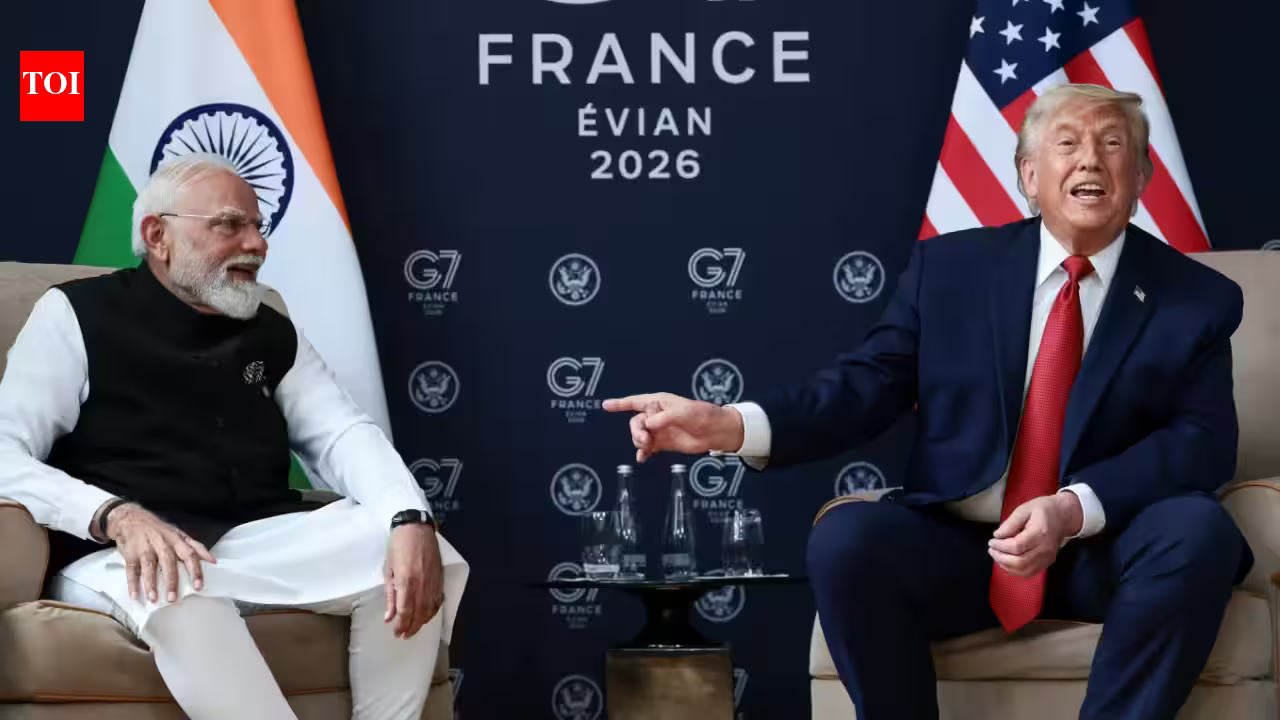
Both capitals arrived with a civilizational story prepared. India opened the sequence in Bodh Gaya, where Min Aung Hlaing meditated under the Bodhi Tree at the Mahabodhi Temple and paid obeisance at the Sujata Mandir before traveling to New Delhi for the official program. The visit’s first image was not of a president at a working table but of a Buddhist head of state at the most sacred site in the Buddhist world, positioning the relationship as older and deeper than any treaty and grounded in shared civilization rather than strategic calculation.
China’s equivalent is Pauk-Phaw, the Burmese term for fraternal kinship that Beijing has invoked since the early 1950s to characterize the bilateral bond. The June state visit closed with that bond’s formal elevation to a “Community with a Shared Future,” drawing explicitly on 76 years of Pauk-Phaw lineage. Both framings assert that the relationship is foundational rather than contingent, and therefore not subject to the conditionality that governs dealings with a government under international sanctions. The difference lies in what each civilizational frame is then used to justify. India’s Bodh Gaya opening preceded a working official agenda on border management, connectivity, security cooperation, and critical minerals. China’s Pauk-Phaw elevation, conducted at state visit level, preceded the endorsement of four global governance frameworks and a mutual security clause with legal force. Each power uses history to create political space for the operational arrangement it actually needs.
India: An Official Visit for Reconnecting the Routes
The connectivity agenda that structured the New Delhi discussions runs through territory the administration does not fully control. The Kaladan corridor terminates at Sittwe, which had berthed more than 300 vessels by mid-May 2026 yet sits in territory surrounded by areas which the Arakan Army effectively governs. The road linking Paletwa to the Indian border also remains incomplete, and the current conflict environment makes its completion unlikely in the near term. The Trilateral Highway’s most contested section, the Kalay-Tamu stretch in Sagaing, has been closed since 2021 and is held by different non-state actors. The talks at Hyderabad House, the stop at the NETRA energy research complex, and the Business Conclave in New Delhi were organized around those two stalled corridors, because what India needs from Myanmar cannot be obtained through diplomacy alone.
Modi foregrounded cooperation on rare earths and critical minerals in his social media post following the June 1 talks, and Foreign Secretary Misri confirmed at the post-visit briefing that both governments committed to maintaining close engagement in those areas going forward.
Myanmar’s own official account of the same meetings made no mention of critical minerals. This omission reflected several practical and political constraints. First, the administration does not fully control the territories where the principal rare earth deposits are located. Second, Myanmar has yet to establish a clear legal and regulatory framework, including mining guidelines and a broader policy strategy, for critical minerals and rare earth elements. Third, the administration has sought to avoid positioning Myanmar as an arena for strategic competition between India and China, while recognizing that China remains the dominant partner with established midstream and downstream processing capabilities. Most importantly, Naypyitaw had little incentive to risk undermining its relationship with Beijing at a time when Chinese political recognition remained its overriding diplomatic priority.
Pro-military accounts on Telegram were explicit about the reasoning: the administration could not be seen trading its most sensitive resource file with a new partner at the moment when Beijing’s recognition was its overriding diplomatic priority. The structural problem runs deeper than political caution. The heavy rare earth deposits India wants are concentrated in Kachin State, under the de facto jurisdiction of armed organizations that extract and export through networks the central government does not control. India raised a resource cooperation arrangement with the one party in Myanmar least positioned to deliver it, and the asymmetry in how each side reported the same meeting shows exactly where the limit of the official visit’s deliverables lies.
What the official visit produced instead was something less legible in the communiqué but more consequential on the ground. In an interview with Doordarshan during the visit, Min Aung Hlaing stated that the military was trying its best to reopen the Kalay-Tamu road and restore border trade. Within days of returning to Naypyidaw, the administration launched a three-pronged offensive on Khampat, deploying columns from Kalay in the south and Tamu in the north simultaneously to dislodge the People’s Defense Forces that have held that stretch since November 2023. The strategic logic was stated plainly by analysts close to the administration: control of the Kalay-Tamu route reopens the Indian trade gateway, but it also opens an access route into Chin State and from there toward northern Rakhine, the western axis where every major connectivity interest in the region converges Within a fortnight of the visit, the central administration launched a military operation along the Kalay-Tamu axis, a development that several analysts close to the administration interpreted as consistent with the strategic priorities discussed during the visit.
The difference in protocols is not a ceremonial decoration. India invited a government to work. China received a state.
On the commercial side, the official visit format itself reflects something structurally true about how India and Myanmar do business. The conclave in New Delhi and the engagements in Mumbai brought together significant names: a small circle of Myanmar’s most prominent business figures attended alongside Indian industry counterparts, with 26 Indian companies present. By the conventions of Indian business diplomacy this was a serious gathering, and the individuals involved carry real commercial weight. The structural problem is that the India-Myanmar commercial relationship has always operated this way: anchored in a small number of influential figures who engage at high altitude and infrequently, without the sectoral working groups, continuously active chamber-level mechanisms, or multi-tier coordination structures that would convert summit-level intent into functional commercial flows between encounters. The meetings at the top are real; the architecture below those meetings is thin. Bilateral trade reached $2.15 billion in 2024–25 and slipped to approximately $1.95 billion in 2025–26, against a $5 billion target by 2030 described in phased terms with $3 billion as an interim step. Near-term traction is confined to pharmaceuticals and pulses precisely because those two sectors have the regularly operating channels that the broader relationship lacks.
India’s true value to Naypyidaw is concentrated in the security register, where continued military-to-military engagement, intelligence and border security cooperation, and practical coordination against insurgent groups along the western frontier, without attaching political conditions, earns institutional trust at the working level of the Myanmar Armed Forces. The administrative tier reads the same relationship as commercially thin. Both assessments are accurate, and the gap between them is the gap between what India currently offers and what Myanmar most needs.
China: A State Visit That Delivered Architecture
The significance of Min Aung Hlaing’s June 2026 state visit to China becomes clearer when compared with Xi Jinping’s January 2020 state visit to Myanmar under the National League for Democracy administration. The comparison reveals how China sequenced its engagement across two very different political contexts. In 2020 the two governments signed 33 documents, 13 of them infrastructure instruments: the binding Kyaukphyu Special Economic Zone (SEZ) concession, the Muse-Mandalay Railway feasibility handover, highway and expressway feasibility studies, the New Yangon City letter of intent, an LNG power project, a power interconnection feasibility study, and implementation agreements for railway coaches and the Kunlong Bridge.
Infrastructure represented 39 percent of the 2020 package. The June 2026 state visit produced 18 state-level MOUs with no infrastructure instrument of any consequence. The only logistics-adjacent document was a cross-border transport facilitation MOU that names no specific corridor. The Belt and Road Initiative (BRI) cooperation plan itself remains unsigned, the Joint Statement recording only readiness to finalize it in due course. Commercial conditionality language referencing viability and financial sustainability entered the bilateral statement for the first time.
The fall from 33 documents to 18, and from 13 infrastructure instruments to zero, is not a weakening of the relationship. It is the clearest available evidence that Beijing made a deliberate decision to extract political endorsements, a security commitment, and institutional alignment from the new administration at the state visit level before releasing any new infrastructure instruments. The flagship assets of 2020, the Kyaukphyu SEZ at a scaled first-phase cost of $1.3 billion with Myanmar’s stake at 30 percent, the Muse-Mandalay railway, and the New Yangon City development, remain on Chinese planning documents. What makes them impossible to advance is corridor reality.
China-Myanmar bilateral trade reached $19.4 billion in 2025, yet Muse, Chinshwehaw, and Lwegel, the three highest-value crossings, sit under ethnic armed organization control and together account for roughly nine-tenths of that commerce, with only the Muse-Ruili checkpoint currently operating under central government authority. Even where both sides want movement, the pathway is blocked at multiple levels. The mediation between ethnic armed organizations and the central government over reopening northern trade routes, conducted through what both sides refer to as the Haigen negotiations, remains stalled over unresolved taxation disputes at the crossing points, with no agreement in sight. Separately, the central government’s own strict import licensing regime has suppressed trade volumes independently of the security situation, and those restrictions are structurally embedded in revenue-protection arrangements that the administration has neither the incentive nor the institutional capacity to dismantle in the near term. Beijing adjusted its model accordingly, and the 2026 state visit package is the result.
Beijing’s first requirement was political endorsement from the new administration, delivered through the simultaneous signing of MOUs for all four Xi-era global governance frameworks at the highest available diplomatic level. The Global Development Initiative (GDI), the Global Security Initiative (GSI), the Global Civilization Initiative (GCI), and the Global Governance Initiative (GGI) proposed at the SCO Plus meeting in Tianjin in September 2025, a summit the Myanmar president attended, were endorsed together in a single state visit ceremony that no other ASEAN member has matched. Each framework addresses a distinct domain: the GSI covers collective security and conflict prevention, the GDI orients development financing toward sovereignty-respecting models, the GCI promotes pluralism in values and cultural exchange, and the GGI, as the most recently proposed layer, advances a vision of multilateral governance built around non-interference and equal participation among states. Endorsing all four simultaneously signals the administration’s alignment with this multilateral architecture and creates an institutional record that would shape the diplomatic options of any future government seeking to recalibrate Myanmar’s external relationships.
There is a historical parallel that illuminates the structural logic. When the Nationwide Ceasefire Agreement was signed in 2015, some northern armed groups were excluded from the signing process, while others declined to participate because the monitoring frameworks and development instruments attached to the agreement were widely understood as Western-led, carrying conditionality and external oversight they were unwilling to accept. China’s four Initiatives create an equivalent institutional attachment pointing in the opposite direction, with the same long-term binding consequence. The state visit ceremony was the vehicle through which that attachment was formalized.
The second requirement was a security commitment with legal force. The Joint Statement’s mutual security clause, under which neither country permits its territory to be used against the other’s security interests, gives Beijing a bilateral instrument applicable to externally funded activity along the borders it most wants stabilized, including activities supported through U.S. assistance authorities and programs related to Myanmar. The third was the relationship designation itself. Elevating the bilateral relationship to “Community with a Shared Future” during a full state visit creates an institutional sunk cost that any successor administration seeking reorientation must actively price and publicly negotiate rather than simply ignore. China collected all three commitments, political, security, and institutional, at the highest available diplomatic level before any infrastructure discussion could reopen.
The commercial architecture that accompanied the state ceremony operates on a logic that India’s official visit format neither attempted nor could replicate at short notice. The engagement involved three distinct and purposefully structured business delegation tracks. The first comprised business leaders in Beijing for the state ceremony. The second was a substantially larger commercial delegation in Shanghai, where the president joined by train after the Beijing meetings to sign approximately 70 business-level instruments drawn from between 250 and 300 prepared. The selection, preparation, and sequencing of those instruments represent months of continuous bilateral coordination at the working level, running through the chamber networks, provincial government relationships, and sectoral working groups that have been active between the two countries continuously regardless of whether a summit was scheduled. The third track, smaller and anchored more personally to Min Aung Hlaing, proceeded to Hangzhou to engage younger Myanmar entrepreneurs in electric vehicles, technology, and reportedly rare earth processing and battery production. Beijing for the ceremony, Shanghai for the commercial volume, Hangzhou for the strategic-sector inner circle: the three-city sequence maps the relationship’s actual architecture, each city corresponding to a different tier of engagement and a different time horizon for the cooperation being seeded.
This structure exists, and has no equivalent on the Indian side, because China has been systematically decentralizing its Myanmar engagement toward provincial governments and private capital over a period of years. Kunming, Guangxi, Shanghai, and Hangzhou municipal and provincial authorities now engage Myanmar’s business sector directly and independently, absorbing the political risk that central-state capital committed to fixed assets cannot. The commercial channels built through that provincial engagement are not new constructions activated for this state visit. They are continuously operating networks, chamber-to-chamber, logistics corridor by logistics corridor, that provided the relational infrastructure onto which the formal state visit commitments were grafted. When a state visit arrives, it activates an already-functioning commercial ecosystem at every tier simultaneously. When India’s official visit arrived, it convened significant figures at the top and largely dispersed between encounters at the level below. That structural difference, continuous multilevel engagement against high-level episodic contact, is the commercial gap the two visits make visible.
The sectoral evolution with China between 2020 and 2026 reinforces the same point. The 2020 agricultural package centered on rice, cattle, and cocoon protocols. The 2026 instruments cover medicinal herbs, bananas, and edible aquatic animals, extending a phytosanitary framework in continuous operation since 2018. Two new regulatory instruments, an Intellectual Property Rights MOU and a Competition Policy MOU, signal the anticipated depth of commercial integration to come. Health sector cooperation and emergency humanitarian technical assistance for earthquake disasters, absent from 2020, reflect both the March 2025 earthquake and a deliberate Chinese positioning as Myanmar’s primary disaster response partner, extending dependency into humanitarian as well as commercial and security registers. And at the retail layer, direct Chinese e-commerce logistics applications routing goods into Myanmar’s market while bypassing traditional import intermediaries are already operational, building commercial dependencies in sectors that generate returns without requiring the security stabilization that the infrastructure instruments await. China’s model for the current period is to construct the networks, deepen the dependencies across every available register, and return to fixed-asset infrastructure when the corridor ground is secured.
The Ground Neither Power Controls
The corridor geography that both visits organized around converges on the same contested coast. China’s Kyaukphyu terminus in Rakhine State and India’s Sittwe node both sit within territory the Arakan Army governs, and both powers are managing separate accommodation arrangements with the same armed actor over the same Bay of Bengal coastline without a framework for coordinating those arrangements between them.
What the June sequence ultimately demonstrates is that both powers have reached the same structural conclusion and are executing on it through fundamentally different instruments. China used a full state visit to extract the deepest available political commitments, declined to release new infrastructure instruments until corridor conditions improve, and has already built the commercial architecture that will carry the relationship through that waiting period. India used an official visit to deepen a working security partnership and has a high-level business engagement model whose real constraint is structural rather than personal. Myanmar’s administration is navigating the gap between those two models deliberately, drawing on India’s non-conditional operational backing and China’s comprehensive commercial network while avoiding any move that would force a choice between them.
The state visit in Beijing shows what China needed before it would move on infrastructure. And the distance between what was signed in both capitals and what either power can operationally guarantee across Myanmar’s contested terrain is where everything that matters about Myanmar’s new diplomacy will ultimately be decided.
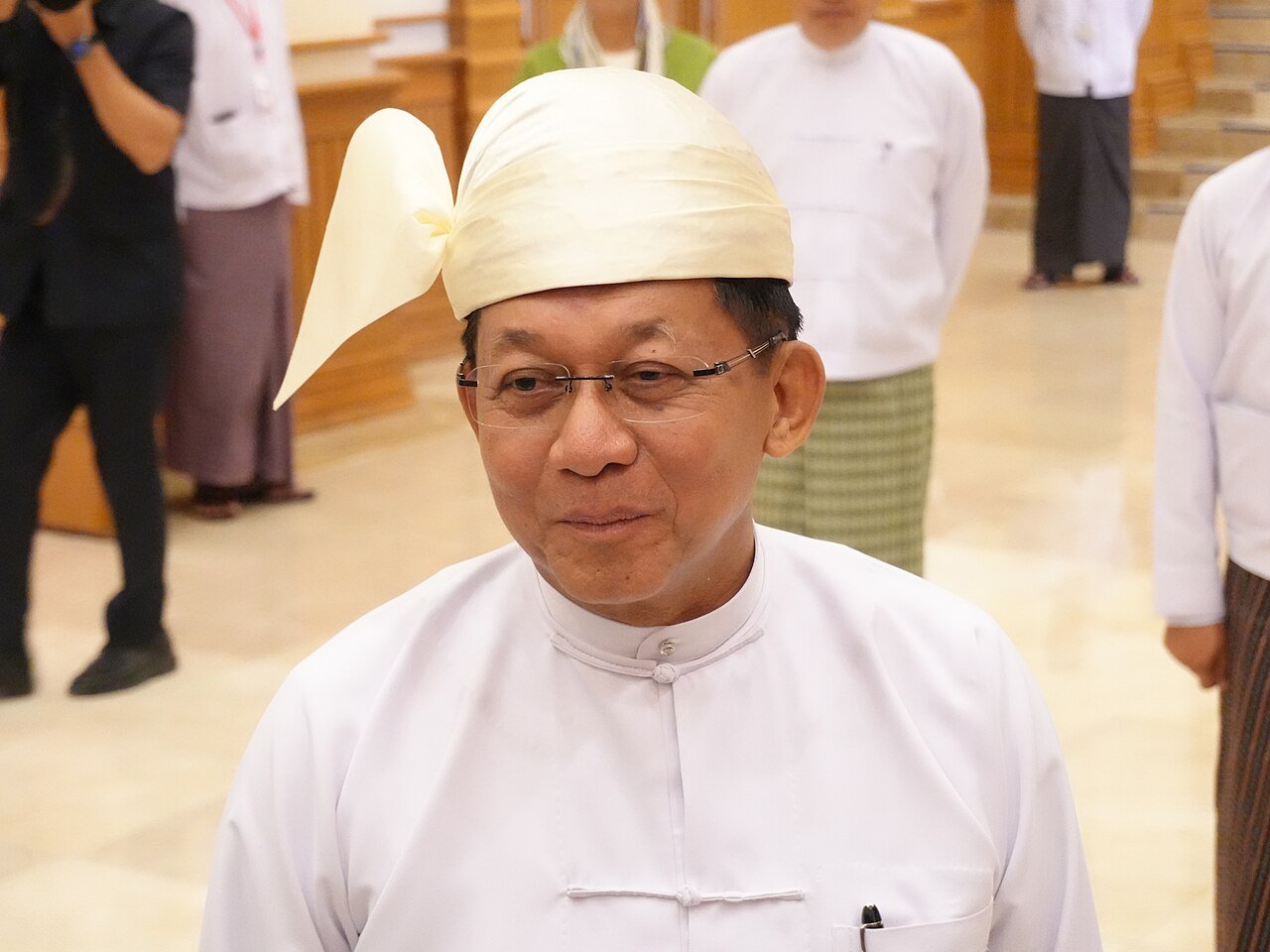
Header image: Burmese: President Min Aung Hlaing (2026). By Zawzawaungthwin