




Ramayana is the latest entrant in one of Hindi cinema’s most ambitious genres, a storytelling legacy that traces back 113 years to the exact moment a moving camera first set foot on Indian soil.
In December 1910, a young Dhundiraj Govind “Dadasaheb” Phalke sat inside the America-India Picture Palace in Bombay, watching a silent French film titled The Life of Christ. While the audience around him marvelled at the novel medium, Phalke was struck by a single, visionary thought: Could Indian gods be shown on screen the same way?
Obsessed with using visual trickery to bring sacred lore to life, Phalke pawned his wife’s jewellery, secured a loan, travelled to London to acquire a camera, and returned to Bombay to make history. In 1913, he released Raja Harishchandra, India’s first full-length silent feature film, telling the legendary tale of a righteous king tested by the gods.
The film was a cultural phenomenon. Reports from the era recount viewers taking off their footwear before entering theatre halls, bowing to the screen as if stepping into a temple. Phalke followed it with Lanka Dahan (1917), where actor Anna Salunke famously played both Lord Rama and Sita, utilising early double-exposure techniques.
When talkies arrived, and mainstream Hindi cinema in the 1950s and ’60s shifted toward social realism, romance, and patriotic dramas, full-scale mythological films were gradually pushed to the margins. They became the domain of a low-budget niche of devotional cinema.
Also Read: A tale of two Partitions: As ‘Batwara 1947’ revisits history, where are Bengal’s stories?
Films like Sampoorna Ramayana (1961) and Jai Santoshi Maa (1975) operated far outside the star-studded A-list system. Yet, Jai Santoshi Maa shattered box-office records on pocket-change budgets, proving that the audience’s reverence for on-screen spirituality remained boundless.
By the late 1980s, the genre migrated off the big screen entirely. Ramanand Sagar’s Ramayan (1987) and B.R. Chopra’s Mahabharat (1988) brought entire cities to a standstill every Sunday morning.
For decades following the TV boom, mainstream Bollywood avoided direct adaptations of the epics, fearing high production risks or potential public backlash. Instead, filmmakers engaged with mythology through subtle modern allegories—like Mani Ratnam’s Raavan (2010)—or wove epic themes into contemporary action dramas.
The turning point came when visual effects technology finally caught up with directorial ambition.
First came Brahmāstra: Part One – Shiva (2022), which re-imagined ancient weapons lore (astras) through a modern fantasy-superhero framework. Then came Nag Ashwin’s Kalki 2898 AD (2024), which blended dystopian sci-fi with the prophecies of the Mahabharata.
Direct adaptations also made a rocky return with Om Raut’s Adipurush (2023). While intended as a modern visual spectacle, the film faced severe backlash over its character designs, dialogue, and CGI, proving just how precarious adapting sacred texts.
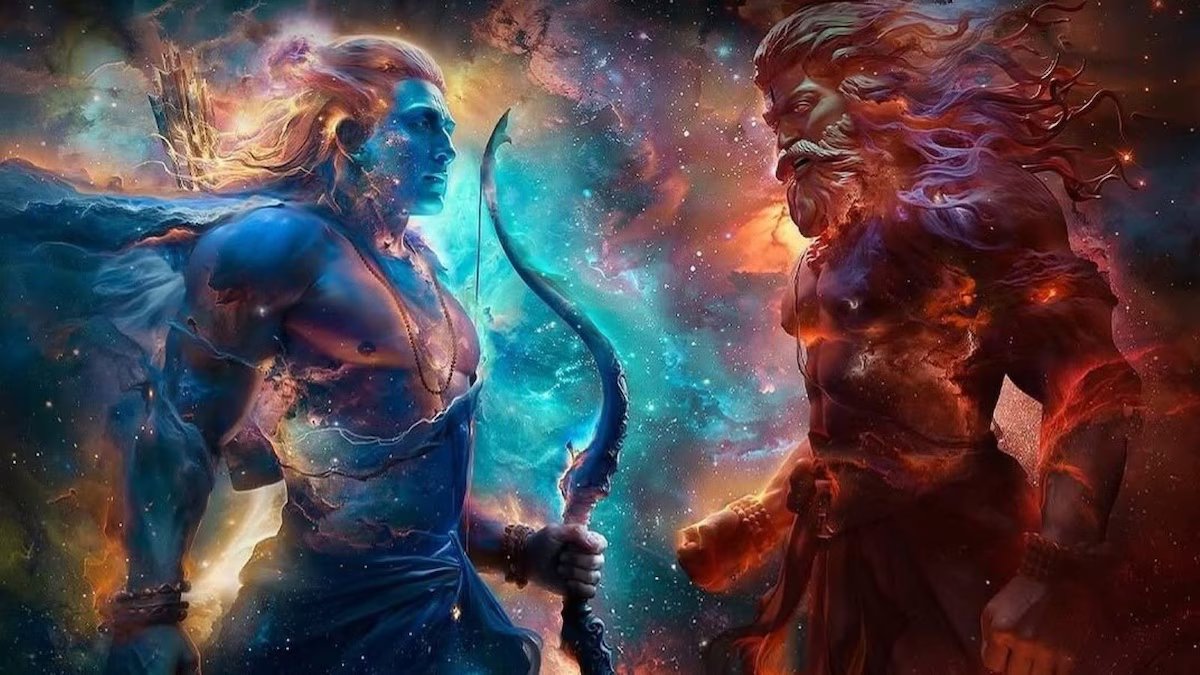
Now, with Nitesh Tiwari’s Ramayana, the wheel has turned completely. Armed with global VFX houses, meticulous world-building, and an ensemble cast, Bollywood is again returning straight to where Dadasaheb Phalke started in 1913: a direct, grand adaptation of an epic text itself.
First Published: Jul 30, 2026 4:20 AM IST