








More than 100 farmers in the Hampshire Avon catchment have launched a groundbreaking Environmental Transition Plan, working together to reverse biodiversity decline, improve water quality and reduce greenhouse gas emissions.
Co-ordinated by the Environmental Farmers Group (EFG) and working to plans drawn up by the Game & Wildlife Conservation Trust (GWCT), the farmers believe they can meet, and potentially beat, the government’s targets in these areas.
See also: Game Changers – Rob Shepherd, the ecosystems innovator
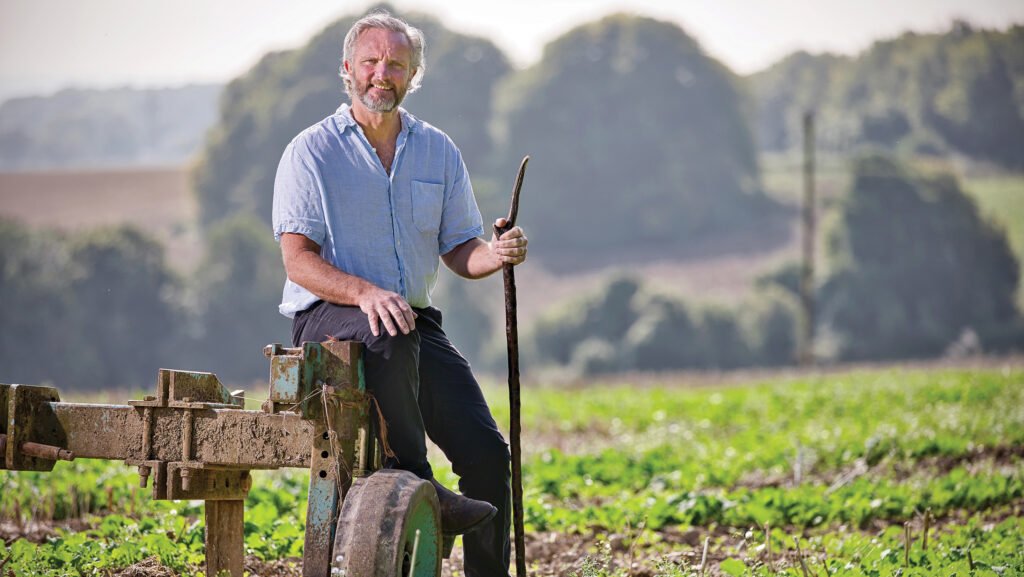
“This plan is not another ‘top-down’ desktop wish list, but a commitment by the farmers themselves who care passionately about their local environment, and want to step up to maintain and improve the iconic habitats, wildlife and water systems on their land,” said EFG chairman Rob Shepherd.
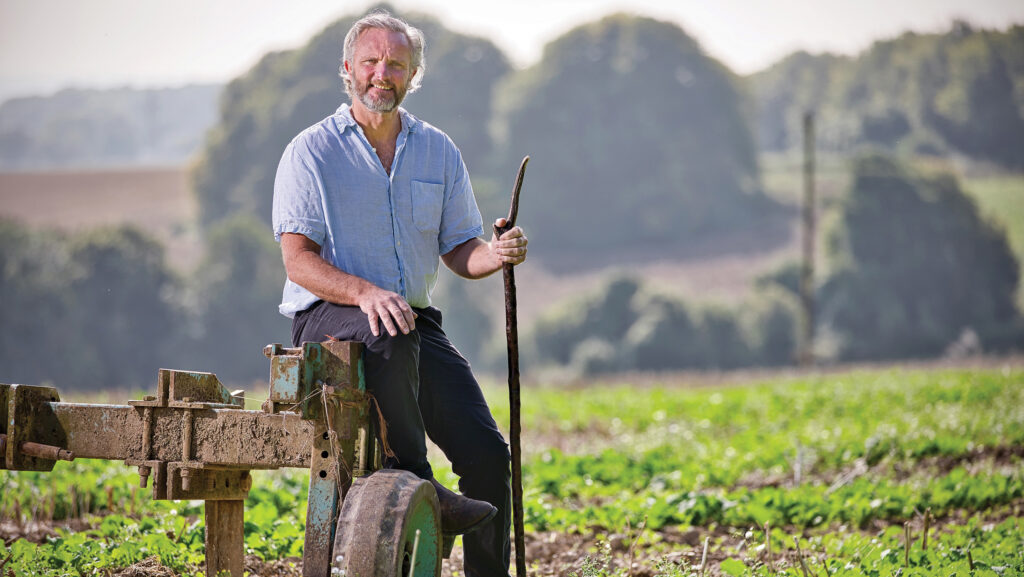
Rob Shepherd © Richard Stanton
Nature recovery
Based on Individual Farm Plans already undertaken, the farmers, who together manage 26% of the Hampshire Avon catchment, have indicated a willingness to allocate an average of 5.5% of their land for nature recovery – over and above what they already have in existing agri-environment schemes.
By delivering a network of different habitats at scale, they believe they can meet or beat 11 of the government’s 13 targets for biodiversity recovery.
These include:
- Increasing indicator species by 10% by 2042
- Creating an additional 1,761ha of habitat by 2030
- Extending tree cover to 577ha by 2030
- Planting and restoring 633km of hedgerows by 2037.
GWCT chief executive Nick von Westenholz said: “We believe the plan can work because the farmers already have an impressive track record of success in the region achieved through the Farmer Cluster structure, developed by GWCT back in 2013.”
However, the document also emphasises the need for financial assistance – both public and private – noting that “none of this will happen without paid professional advisory support and suitable investment for farmers to create new and restore existing wildlife-friendly habitats”.
Water quality
The second work area is improving water quality in the largest chalk stream catchment in England, with more than 200km of river classified as being of national and international importance.
On this, the Environmental Transition Plan sets out to achieve an 18% reduction in pollution from agriculture by 2030, and 40% by 2038 – in line with Defra’s own targets for the River Avon.
Work is already under way and, since 2023, farmers have started their own water quality testing on the Wylye, Nadder and Ebble tributaries, together with a stretch of the Lower Avon, and will expand this to the Bourne in 2026.
Tim Palmer, farmer and EFG board water lead, said: “We are monitoring nitrogen, phosphorus and sediment pollution using an on-farm laboratory.
“The aim is for farmers to inform themselves whether and how their farming operations might be contributing to nitrate, phosphates or sediment in the river, so that, if needed, they can take steps to reduce that.”
Last December, the farmers also agreed to create a farmer-led water group for each of the 40 water bodies in the catchment, together with a programme of river improvement work.
GHG emissions
As part of the Environmental Transition Plan, the EFG is also adopting the NFU’s goal, set out in 2019, of reaching net-zero greenhouse gas emissions from agriculture by 2040.
A four-step plan is designed to help farmers improve productive efficiency, reduce inputs, and increase carbon storage through bigger hedgerows, extended woodland, and more carbon-rich soil, drawing on funding from natural capital markets.
Christopher Sparrow, managing director of Natural Capital Advisory, who brokers environmental trades for EFG members, says such funding through natural capital markets is already flowing.
“But there is a long way to go,” he said.
“We hope Defra will recognise the innovation and potential of this large-scale, farmer-led approach, which is now being replicated across England, and support its development with start-up funding.”