









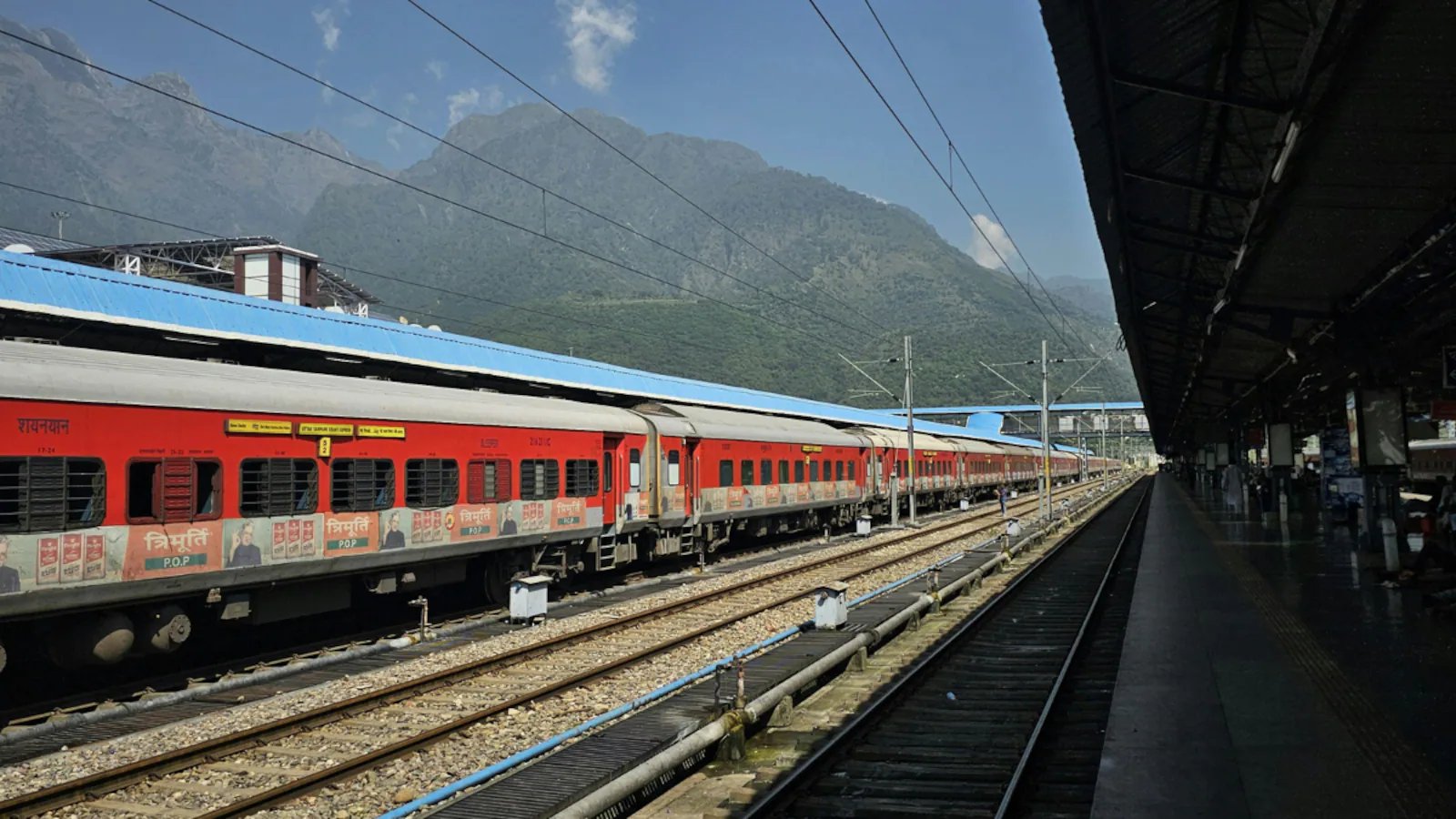
Russia has put forth a proposition to explore a railway route that could ultimately link the nation to the Indian Ocean, thereby facilitating access to India.
This strategic concept was articulated by Russian Deputy Prime Minister Marat Khusnullin during an interview with TASS. He emphasized the necessity for Russia to investigate alternative transportation corridors to mitigate vulnerabilities associated with critical maritime routes, specifically citing the Bosphorus and the Strait of Hormuz.
Should this ambitious project materialize, it could pave the way for an unprecedented long-distance train journey connecting Russia and India.
Russia’s Railway Route Proposal: A Detailed Look
Khusnullin advocated for Russia to investigate the feasibility of constructing a railway line extending to the Indian Ocean.
One potential itinerary outlined involves a route commencing in Russia, traversing Turkmenistan, Iran, Afghanistan, and Pakistan, before culminating in India.
He underscored that Russia is open to considering any viable option that provides access to India. However, it is crucial to note that this remains a preliminary proposal. There are currently no confirmed plans for a Russia-India passenger train, a designated route, established ticket pricing, or an official launch date.
Also Read: After Fuel Crisis, Air India To Restore Most Suspended Flights From September 1
Strategic Rationale Behind Russia’s Railway Initiative
Photo: Canva
The core objective of this proposal is to establish an alternative to existing vital sea lanes. The Strait of Hormuz, in particular, represents one of the world’s most critical shipping arteries, through which approximately 25% of global oil trade and around 20% of liquefied natural gas (LNG) shipments transit.
Khusnullin articulated that growing concerns surrounding the Bosphorus and the Strait of Hormuz accentuate the strategic importance of developing alternative land-based routes.
A railway connection extending towards India would furnish Russia with an additional conduit for transporting goods to the Indian Ocean, thereby reducing its sole dependence on maritime pathways.
Implications for India
For India, the materialization of such a railway corridor holds the potential to significantly enhance overland connectivity with Russia and other nations across Central and South Asia.
Furthermore, it could carry substantial implications for tourism. Should passenger train services be introduced in the future, travelers might gain an innovative avenue for exploring multiple countries during a single extended journey, as an alternative to inter-destination air travel.
Nevertheless, it is important to reiterate that this is not yet a confirmed tourist route.
Also Read: Japan Turns Public Toilet Into A $670,000 Tourist Attraction, Locals Question Price Tag
The paramount significance of this proposal lies in Russia’s active consideration of a land-based connectivity solution directed towards India.