





The Urban Forager’s Dilemma: Balancing Resourcefulness with Conservation in a Growing Trend
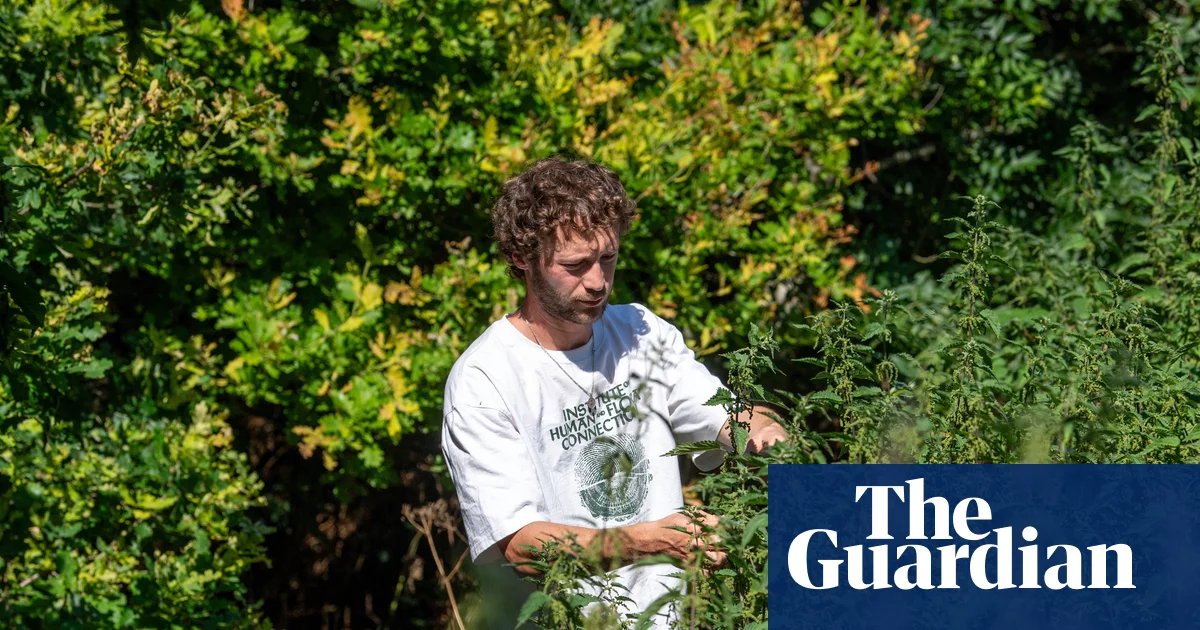
LONDON – As a heatwave-accelerated blackberry crop hints at ecological shifts, a burgeoning movement of urban foragers like Angus Morton is challenging conventional notions of food sourcing and environmental interaction. Crouching behind a London cricket pavilion, Morton, a regenerative gardener, meticulously snips stinging nettles – a weekly ritual that not only supplements his diet but also offers a profound connection to the natural world. This practice, however, sits at the heart of a complex debate concerning sustainability and biodiversity in our increasingly urbanised landscapes.
Morton’s foraging expeditions are far from a casual hobby. He estimates shaving “hundreds of pounds off his food bill each month” by transforming foraged ingredients into staples, from nettle pesto to fermented pine needle beverages. His online posts showcase a diverse bounty, including wild mushrooms for dinner and even ivy for homemade soap. Yet, despite the clear economic and culinary benefits, Morton, like many seasoned foragers, advocates for a cautious approach. “It’s important for this to thrive naturally,” he states, emphasizing a philosophy of taking “only what you need – about 10% of what’s there – so it has the chance to grow back. If you take more than you need, you’re going to ruin it.”
This growing interest in wild foods has, however, sparked considerable concern among conservation groups. Fears of over-harvesting, particularly of delicate fungi, flowers, and fruits, leading to habitat degradation and reduced food sources for wildlife, are mounting. Organisations like the Woodland Trust issue guidelines, urging foragers to take minimal quantities and steer clear of rare species. Some wildlife trusts, including Surrey Wildlife Trust and London Wildlife Trust at Walthamstow Wetlands, have implemented outright bans on foraging to safeguard vulnerable ecosystems.
Yet, a counter-argument is gaining traction: responsible foraging, when properly managed, can be a powerful tool for biodiversity conservation. John Rensten, a foraging teacher and author of “The Edible City: A Year of Wild Food,” champions foraging as a “biodiversity booster.” He posits that direct interaction with the landscape fosters a sense of ownership and a desire to protect it. “You feel connected towards it and you feel ownership of it and a desire to want to protect it and nurture it,” Rensten explains. His courses frequently elicit transformative responses, with participants expressing a newfound appreciation for their local green spaces.
This notion is supported by ecological studies, which indicate a direct correlation between knowledge of local flora and fauna and a commitment to environmental protection. Dr. Ingo Kowarik, formerly an urban ecologist at the Technical University of Berlin, highlights a “silent extinction of experience crisis,” where decreasing engagement with nature among younger generations threatens future conservation efforts. “Nature connectedness is positively linked to environmental behaviour,” he asserts.
The benefits of incorporating edible plants into urban design extend beyond attitudinal shifts. Mallika Sardeshpande, an ecologist who studied urban foraging in South African cities, points to a “trickle-down effect.” Planting herbs and flowers in public spaces that encourage picking can attract essential pollinators like bees, thereby bolstering local biodiversity. “Planting fruit trees, flowering herbs and other edible species in urban areas can provide food for people while creating habitat for insects and birds,” she explains, arguing that “in some ways, foraging is enhancing biodiversity because it is bringing back the species that have systematically been excluded from urban green spaces.”
Back in London, Morton’s foraged nettles represent more than just a meal; they symbolise a vital connection to local ecosystems, regardless of their grand architectural or developmental context. The message from foragers like Morton is clear: understanding and consciously engaging with our natural surroundings is paramount. “People should learn about foraging and know the problems with it and the benefits as well,” Morton concludes. “I try to incorporate foraging with my meals every week. But I try to be conscious of what I’m doing. If I was to go here every week, there wouldn’t be any left.” This delicate balance between resourcefulness and respect is crucial for the future of both urban foragers and the green spaces they cherish.