






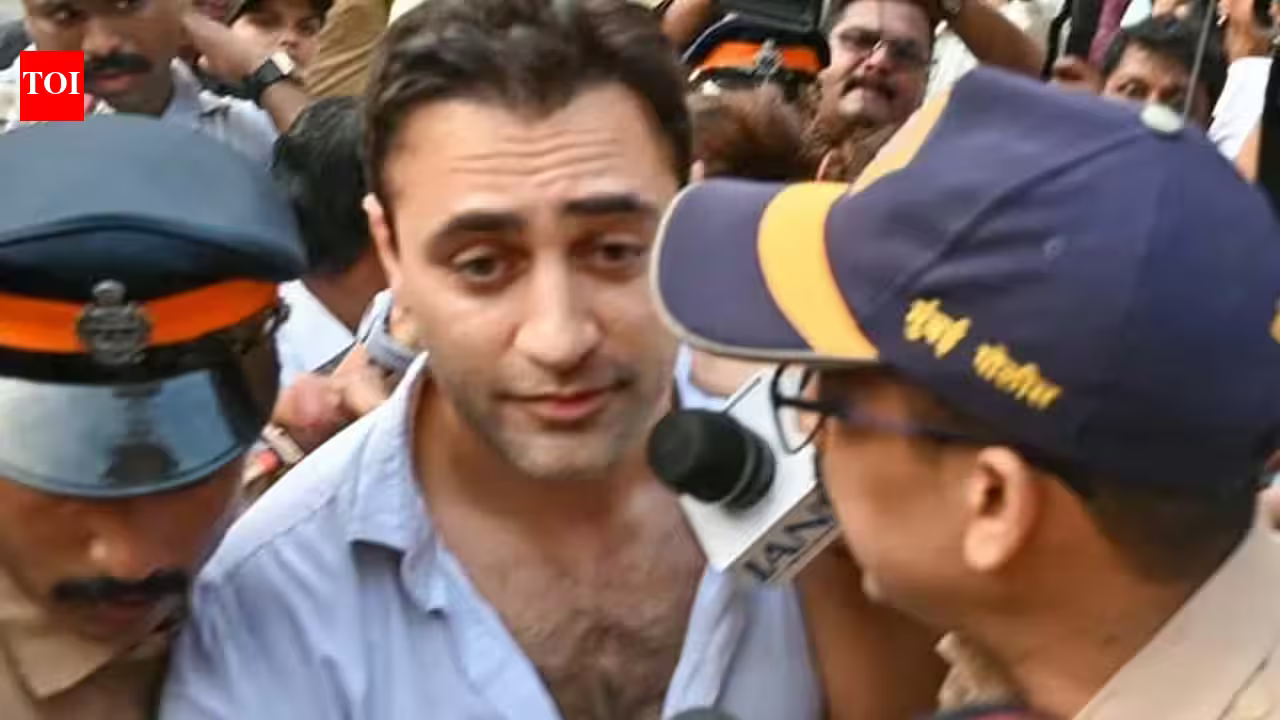
The corridors of the Bombay High Court are about to witness a high-stakes legal showdown that merges the worlds of Bollywood celebrity and constitutional immigration law. Imran Khan, the 43-year-old actor whose screen presence once captivated millions, now finds himself at the center of an administrative firestorm. With a ticking clock hanging over his head—a formal notice from the Foreigners Regional Registration Office (FRRO) demanding he exit Indian soil by October 28—the actor is gearing up to challenge the state’s directive in a battle that could set a significant precedent for the rights of Overseas Citizens of India (OCI).
## A Protagonist in a Political Plot
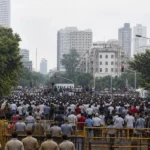
The roots of this controversy trace back to October 10, when the grounds of Mumbai’s historic August Kranti Maidan—a site synonymous with the spirit of Indian protest—became the stage for a demonstration against Chief Election Commissioner Gyanesh Kumar. Among the crowd of activists and concerned citizens stood Imran Khan. While his presence was intended as an expression of civic concern, it quickly attracted the attention of those who view his status through a strictly legal lens.
The aftermath was swift. Following the demonstration, BJP leader Kirit Somaiya lodged a formal complaint, arguing that by participating in a political demonstration, Khan had breached the terms of his stay as a foreign national. The Mumbai Police acted on the complaint, referring the matter to the FRRO. Within days, the actor, who holds a US passport and enjoys the privileges of an OCI card, received a directive that felt more like a script twist than a routine administrative letter: leave the country by October 28, or face the consequences.
## The Legal Heavyweights Enter the Fray
The gravity of the situation is reflected in the team Khan has assembled to fight his corner. He has retained the services of MZM Legal LLP, with a powerhouse legal quartet—advocates Zulfiquar Memon, Parvez Memon, and Chirag Naik—leading the defense. The team is reportedly preparing a petition for the Bombay High Court that is expected to be filed by Friday or Monday.
The core of their argument is expected to challenge the very legality of the FRRO’s notice. Sources close to the legal strategy indicate that the defense will label the expulsion order as “drastic” and legally unfounded. The fundamental question they intend to put before the bench is simple yet profound: Does being an OCI cardholder strip an individual of their right to engage in peaceful protest? The defense team is pushing for an urgent hearing before a division bench comprising Chief Justice Mahesh Chandra Tripathi and Justice Advait Sethna, hoping to secure a stay on the removal order before the October 28 deadline expires.
## Decoding the OCI Paradox
To understand why this case has sparked such intense debate, one must look at the fine print of the OCI status. Since its inception, the OCI program has been a bridge for the Indian diaspora, allowing foreign nationals of Indian origin to live, work, and reside in the country indefinitely. It is often touted as a way to maintain an ancestral bond, offering a range of long-term privileges that make life in India seamless for non-citizens.
However, the “fine print” is where the conflict lies. OCI status does not grant Indian citizenship, and with that come clear limitations. OCI cardholders are explicitly barred from political rights—they cannot vote, they cannot contest elections, and they cannot hold constitutional posts. The state’s argument, spurred by the complaint, is that participating in a political protest constitutes an exercise of a political right, which they argue is a violation of the “foreign” status conferred by the OCI program. Khan’s team, conversely, will likely argue that freedom of expression and the right to peaceful assembly are human rights enshrined in the Constitution, which do not inherently constitute the “political rights” restricted under the OCI rules.
## Setting a Legal Precedent
The outcome of this case will likely ripple far beyond Imran Khan’s personal situation. Thousands of OCI cardholders live in India, contributing to the economy, the arts, and social movements. If the court upholds the government’s interpretation—that protest activity is a grounds for the cancellation of an OCI holder’s stay—it could signal a fundamental shift in how the state monitors the behavior of foreign nationals who have deep ties to India.
Conversely, if the court sides with the actor, it could affirm that while OCI holders may not have the ballot, they still possess the voice of a resident. The argument will hinge on whether an act of civil protest can be conflated with political activity that warrants deportation. It is a classic clash between administrative authority and individual liberty, played out under the glare of public scrutiny.
## The Clock is Ticking
As the October 28 deadline looms, the air in Mumbai’s legal circles is thick with anticipation. For Imran Khan, this is no longer about the films he has starred in or the celebrity status he maintains; it is a desperate attempt to retain his right to remain in the country he calls home.
Whether the High Court grants a stay or the case drags on through lengthy litigation, the saga of the actor’s notice has highlighted the complexities of identity in a globalized world. As he prepares to step into the courtroom, the nation watches, waiting to see if the law will be applied as a rigid rule of borders or interpreted through the lens of modern democratic participation. For now, the actor’s legal team remains confident that the judiciary will see the “drastic” nature of the notice for what it is—a challenge that will undoubtedly redefine the boundaries of the Overseas Citizen of India experience for years to come.
Disclaimer: This content is auto-generated for informational purposes only.
Source: Read Original News