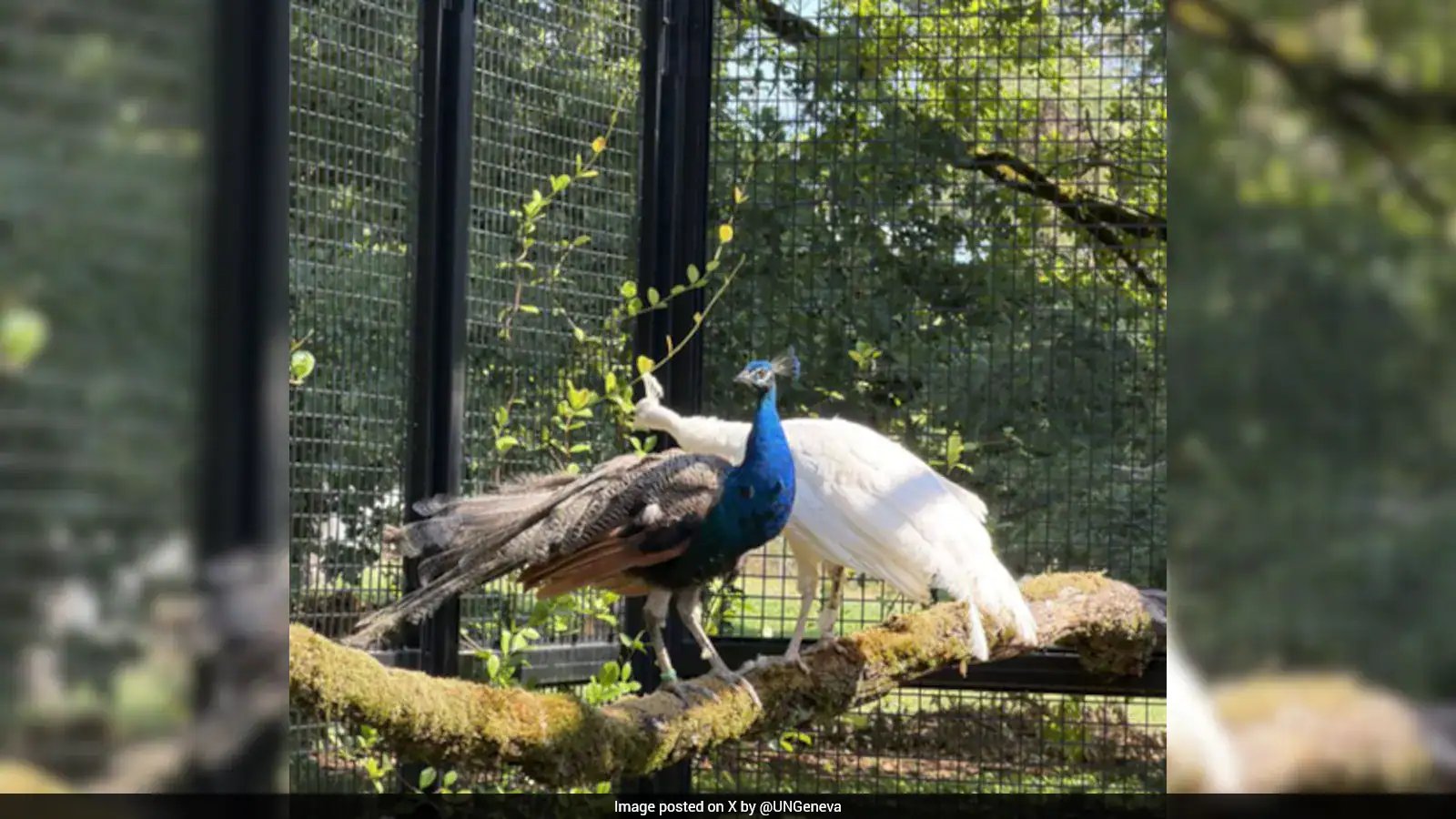
Geneva, Switzerland – India has revitalized a long-standing tradition by donating five Indian peacocks, including a rare white-feathered variety, to the United Nations Office at Geneva (UNOG). This gesture highlights India’s rich natural heritage and its dedication to multilateralism.
During a special ceremony on Friday, India’s Permanent Representative to the UN in Geneva, Arindam Bagchi, formally presented the peacocks to UNOG Director-General Tatiana Valovaya. The five young peacocks include four blue peafowl and one white-feathered male, chosen to reflect the United Nations’ signature blue and white colors.
This marks the second time India has gifted peacocks to UNOG, with the first instance occurring in 1981 when then-Prime Minister Indira Gandhi sent a breeding pair from the Delhi Zoo.
The Indian mission stated that “The Indian Peacock, a symbol of grace, beauty and resilience, represents India’s enduring commitment to the conservation of biodiversity and environmental stewardship.”
Valovaya expressed her gratitude to the Indian government for the donation, according to a statement released by the Permanent Mission of India in Geneva.
Tobias Blaha, Director of Geneva Bioparc zoo, which will manage the birds’ care alongside UN staff, remarked, “It’s really a dream habitat for them.” The peacocks will initially reside in an enclosed habitat for approximately three months before being released to roam freely within Ariana Park, the location of the UN’s European headquarters.
Ariana Park, a sprawling 46-hectare expanse, is one of Geneva’s most prestigious parks. The City of Geneva initially provided the park to the League of Nations and subsequently to the United Nations for its offices for the duration of the UN’s existence.
Peacocks have been a presence in Ariana Park for over a century, a tradition that predates both the League of Nations and the United Nations. This tradition traces back to Swiss archaeologist and art collector Gustave Revilliod, who bequeathed the estate where the UN complex now stands to the city of Geneva in 1890.
Currently, most peacocks seen by visitors at UNOG were donated by a Japanese zoo in 1997.
India’s recent contribution not only enhances the biodiversity of the UN premises but also showcases the country’s natural heritage and cultural ethos, according to the Indian mission. The donation further underscores India’s enduring partnership with the UN and reaffirms its commitment to multilateralism and international cooperation.