









Rejuvenating British Democracy: A Call to Action for the Burnham Government
London, UK – Prime Minister Andy Burnham’s declaration of an urgent need to fix a “broken politics” resonates profoundly across the UK, particularly concerning the disengagement of younger generations. New data paints a stark picture of declining youth participation, posing a significant challenge to the health of British democracy. Addressing this democratic deficit, especially among young people from lower socio-economic backgrounds, is poised to be a defining test for the new government.
A Crisis of Participation: Younger Generations Disengaged
The 2024 General Election saw a worrying trend: less than 40% (37%) of 18–24-year-olds cast their votes. Alarmingly, participation dropped to a mere 22% among young people from the lowest (DE) socio-economic group, sharply contrasting with an overall turnout of 60% across all age groups. This represents the lowest level of youth electoral participation since records began in the 1960s, falling significantly behind counterparts in Germany (78%, 2025) and Sweden (84%, 2022).
This widespread disillusionment is not accidental. It has been fueled by a series of repeated failures of public policy to adequately meet the needs of young people through successive crises. From the financial crash and austerity of the 2010s, which saw cuts of 74% to youth services in England between 2010 and 2021, to the educational disruption of the Covid-19 pandemic, and the current cost of living crisis coupled with rising youth unemployment identified in the Milburn Review, young people have consistently borne the brunt. Those from less privileged backgrounds have been particularly impacted, exacerbating social mobility issues and deepening their cynicism towards democratic politics.
Centralisation and the Democratic Divide
Another significant barrier is the UK’s highly centralised system of government. The limited autonomy afforded to local and civic authorities has resulted in comparatively low levels of youth contact with politicians and public officials. This distance often reduces efforts to involve young people in policy co-creation to mere tokenism, further weakening democracy and creating fertile ground for populism and misinformation. The quality of governance inevitably suffers.
Reasons for Optimism: A New Agenda for Youth Engagement
Despite the challenges, there is genuine cause for optimism. Young people are not inherently apathetic; they are interested in politics and eager for greater involvement in local decision-making. This aligns perfectly with Prime Minister Burnham’s ambition to devolve power through community empowerment. Evidence supports this: there has been a 41% increase in students taking undergraduate politics degrees between 2011 and 2023, and research shows that around half of 18–24-year-olds wish to become more involved in local decision-making.
The new Labour Government’s policy agenda offers a crucial opportunity. Proposals such as “Votes at 16,” a National Youth Strategy focusing on youth voice, and the strengthening of citizenship education within the new National Curriculum for England, could be transformative. Their success, however, hinges on building upon existing evidence of effective youth civic and political engagement.
A Two-Pronged Approach: Demand and Supply Side Reforms
Addressing the deficit in youth participation requires a dual strategy, tackling both the ‘demand’ and ‘supply’ sides of democracy:
- Demand Side: Empowering Young Citizens (Internal Efficacy)
Young people must be equipped with the knowledge, skills, and confidence to participate effectively – fostering ‘internal efficacy.’ This can be achieved through robust citizenship education in schools, particularly effective for young people from less privileged backgrounds. This requires substantial investment in specialist teacher training and Ofsted inspections that prioritise citizenship education. - Supply Side: Creating Meaningful Opportunities (External Efficacy)
Democratic institutions must create high-quality opportunities for young people from diverse backgrounds to influence decision-making – developing ‘external efficacy.’ This means expanding inclusive and meaningful participation in policy co-creation, especially at the local level.
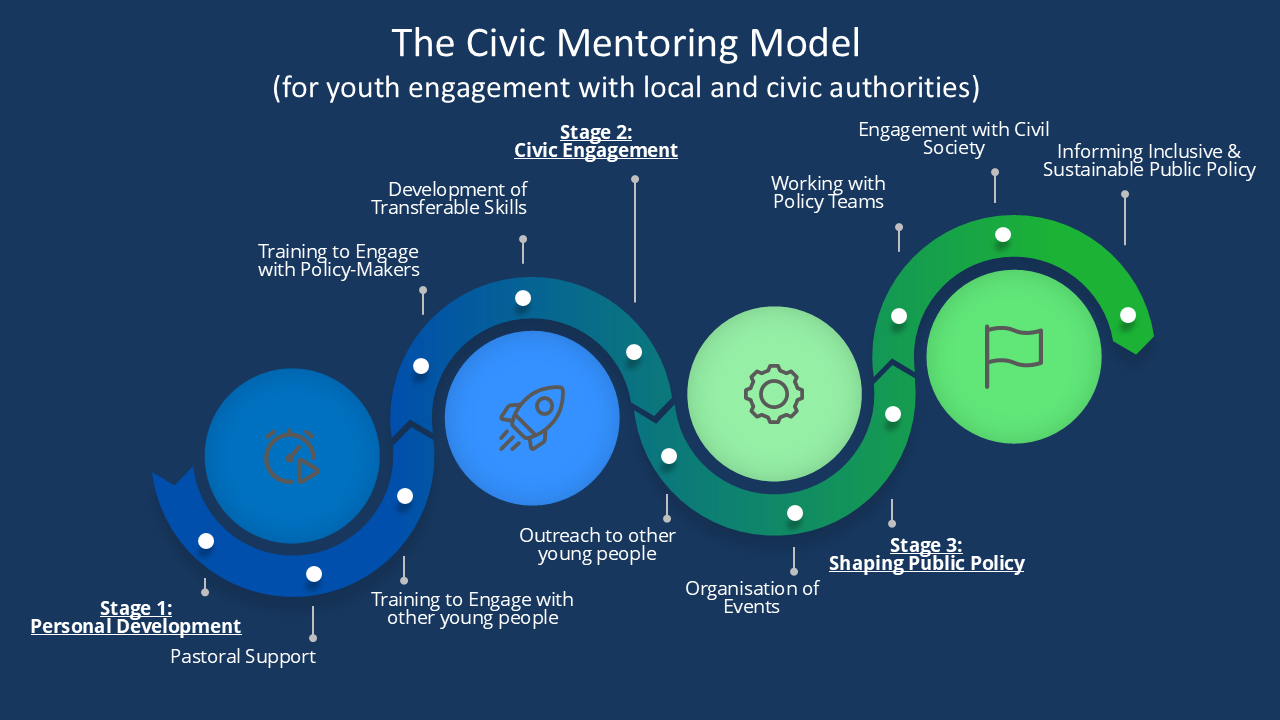
A compelling example of this in action is the ‘civic mentoring model’ developed through research with the Mayor of London’s Peer Outreach Team. This approach, focusing on personal development and civic engagement, empowers and resources young people to connect with their peers. It has demonstrably improved young participants’ lives, strengthened community civic capacity, increased participation in democratic processes, and even generated positive spillover effects for employment prospects.

However, effectively involving young people in shaping public policy remains a tougher challenge. Meaningful participation doesn’t happen by itself. Many politicians and public officials require support and training to work effectively with children and young people as genuine partners in the policymaking process.
A Virtuous Circle for a Stronger Democracy
By simultaneously strengthening young people’s democratic skills and improving the quality of opportunities for participation, the UK can transform the relationship between its youth and its democracy. This dual agenda has the potential to foster a virtuous circle: greater trust, higher levels of engagement, and more youth-centred, future-oriented public policy. Ultimately, this will enhance both the quality and the long-term sustainability of democracy in the UK.