







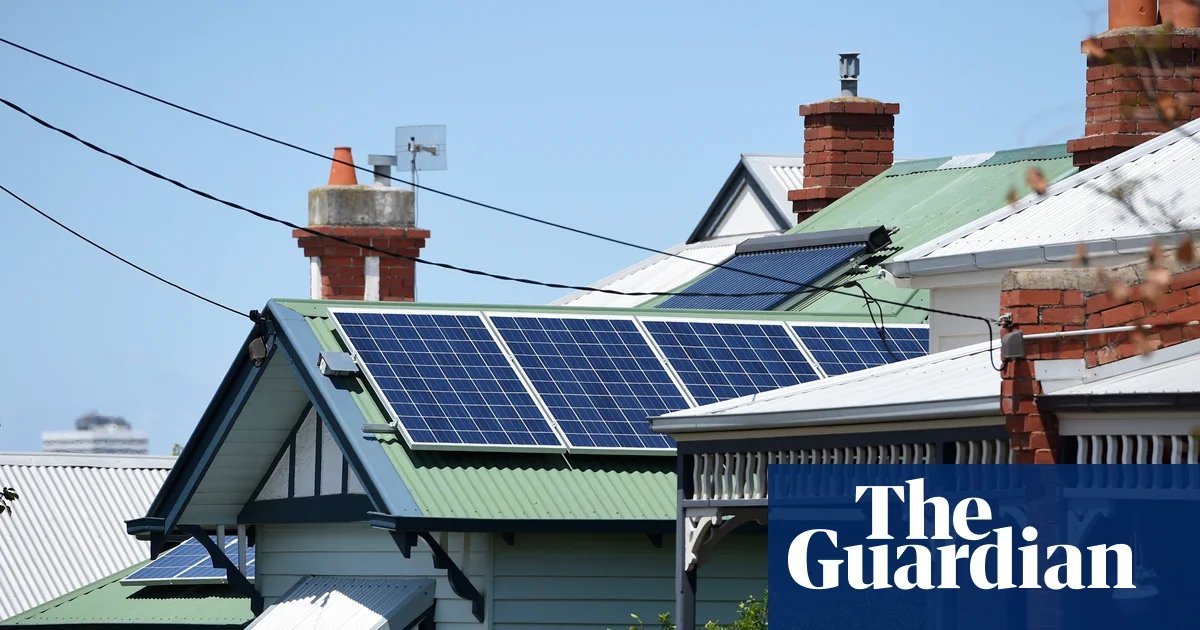
A bird’s-eye view of the Melbourne postcode 3029 reveals a landscape defined by a singular, striking feature: rooftop after rooftop blanketed in dark, reflective silicon. In the suburb of Tarneit, solar panels are not just common; they are a defining architectural standard.
“If you walk along the streets, it’s actually hard to see a house without solar panels,” says Saajidh Nizam, a local software engineer who manages his family’s home energy needs with a 6.6kWh solar system.
Postcode 3029 now holds the title for the highest concentration of rooftop solar in Australia. According to the Clean Energy Regulator, more than 28,000 systems have been installed in this region since 2001. As Australia solidifies its global lead in per-capita solar generation, this pocket of western Melbourne has become the unofficial poster child for the nation’s residential energy transition.
The surge is far from localized. Across Australia, approximately four million homes and small businesses—roughly 36% of all households—have embraced rooftop solar. The momentum shows no sign of slowing, with 2026 on track to set a new record for annual installations.
While Australia’s abundant sunshine is an obvious catalyst, industry experts suggest the boom is driven by a unique confluence of economic and structural factors. For over two decades, federal government certification schemes have significantly lowered upfront costs for homeowners. Coupled with high electricity prices and a housing stock characterized by low-density, spacious roofs, the barrier to entry has remained low compared to many international markets.
The impact of this grassroots energy revolution has been profound. A decade ago, rooftop solar accounted for less than 3% of Australia’s electricity generation, while coal provided 75%. Today, rooftop systems contribute nearly 14% of the nation’s electricity, while coal’s share has dropped to 50%. In the national electricity market, which supplies over 85% of the population, rooftop solar routinely delivers 40% of midday power, occasionally peaking above 60%.
The Australian Energy Market Operator (AEMO) notes that there are now more rooftop solar systems in Australia than there are backyard swimming pools. This shift has fundamentally reorganized the power grid, transforming consumers into active participants—or “prosumers”—who generate, use, and store their own energy.
The recent, rapid adoption of home batteries is further accelerating this transformation. With the federal government supporting the installation of over half a million batteries since mid-2025, the traditional “evening peak” of electricity demand is beginning to flatten. By discharging stored power when the sun goes down, households are reducing their reliance on fossil-fuel-heavy grid supply.
Research from the national corporate watchdog suggests these investments pay dividends. Households equipped with solar and battery storage systems report energy bills between 20% and 52% lower than average customers. For those participating in “virtual power plants”—where stored energy is aggregated and traded across a network—savings can climb as high as 63%.
The future, according to AEMO’s latest projections, is even more solar-centric. The agency forecasts that rooftop capacity will grow from 20GW today to 87GW by 2050, with more than half of all Australian homes expected to feature integrated solar and battery systems.
This domestic success is now influencing global policy. In a recent move, Australia became the first nation to endorse a global pledge to double the number of homes with rooftop solar worldwide—from 150 million to 300 million—by 2030.
For residents like Nizam in Tarneit, the transition is as much about personal responsibility as it is about savings. By reducing the strain on the grid and moving toward self-sufficiency, he believes his community is contributing to a broader environmental goal. “We’re trying to be a bit more self-sustaining and a bit less damaging on the environment,” he says. “We’re doing good on that front.”
Disclaimer: This content is auto-generated for informational purposes only.
Source: Read Original News