








Luxury Living and Soaring Prices: Student Housing Booms Around LSU
BATON ROUGE, LA – September 12, 2024
As the vibrant campus of Louisiana State University (LSU) in Baton Rouge welcomes back its students for the fall semester, a striking trend is reshaping the landscape of student accommodation. Thousands of students are opting for high-end apartment complexes, boasting some of the state’s highest lease rates and amenities that would have been unimaginable just a couple of decades ago. From elaborate game rooms and state-of-the-art fitness studios to, in one notable instance, a sprawling lazy river, student housing has unequivocally gone upscale – and, in the process, become significantly more expensive.
This burgeoning market is not just a local phenomenon; experts identify it as a significant driver of the multifamily market in Baton Rouge. Last year, the 17 high-end apartment complexes catering to LSU students achieved an impressive occupancy rate exceeding 96%, outperforming the national average for luxury student housing by a notable five points.
The financial implications are equally significant. Lease rates for these upscale units averaged nearly $2 per square foot, translating to approximately $1,440 for a one-bedroom unit. This figure represents almost a 15% premium over the average lease rates in downtown Baton Rouge and rivals the cost of some of the most luxurious apartments in downtown New Orleans.
The allure of this market has also captivated out-of-state investors, willing to pay top dollar for these properties. Last year alone, seven student complexes near LSU were sold, accounting for over 60% of the total $584 million in sales volume in the market. This remarkable figure stands out, especially considering these seven properties represented fewer than one-third of the 23 properties that changed hands in total.
Driving this unparalleled growth is a consistent increase in freshman enrollment at LSU, observed for eight consecutive years. Between 2019 and 2025, enrollment at the university’s flagship campus surged by 19.5%, reaching over 34,500 students last year. “It’s all driven by student demand,” stated Craig Davenport, an appraiser with Cook, Moore, Davenport & Associates, who meticulously compiled the apartment data. “To have almost 8,000 more students on campus in seven years is unprecedented growth.”
While LSU officials anticipate a slight dip in enrollment this fall due to increased selectivity in admissions, Davenport does not foresee a decline in demand for off-campus student housing.
Investors Eye the SEC: A National Trend
LSU’s experience is not isolated. Student housing has emerged as a major national business for developers and investors, widely perceived as a recession-proof investment. According to Walker and Dunlop, a Maryland-based commercial real estate firm, property sales volume in the student housing sector reached $8.5 billion in 2024, marking a substantial 43% increase over 2023. The report highlighted properties near universities in the Southeastern Conference (SEC) as particularly desirable to investors, largely due to “enrollment surges at the large, state-supported institutions.”
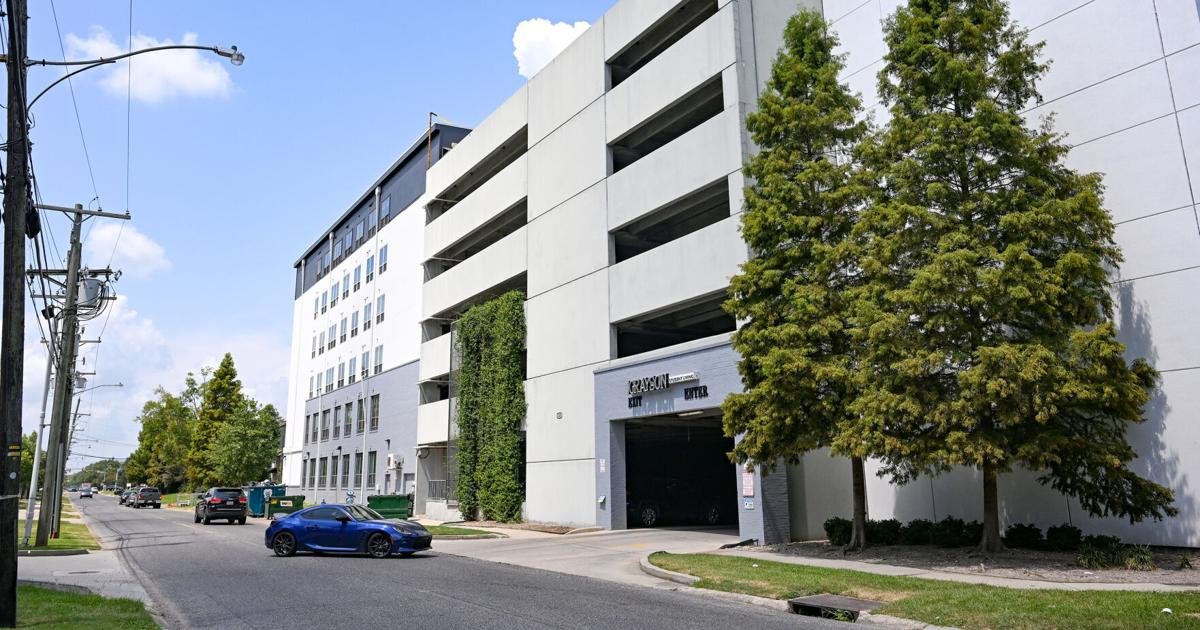
Louisiana’s multifamily sector saw this trend manifest in two of its biggest sales last year, both involving student complexes near LSU. In July, the 277-unit Park Place Apartments on East Boyd Drive, now rebranded as The Grayson, sold for over $82 million – a staggering $295,000 per unit, or $110,000 per bed. In December, the 137-unit Flatiron on West Parker, located directly across from The Grayson, fetched $37 million, translating to over $268,000 per unit or $126,280 per bed.
Comparatively, no non-student apartment complexes sold in Baton Rouge last year approached the per-unit price of these student-focused properties. The Gates at CitiPlace, a Class A property with 369 units, was the highest-priced non-student complex sold, yet it commanded 40% less than Flatiron and 50% less than Park Place.
This robust demand for student housing is also fueling new construction, a relative rarity across much of Louisiana given the prevailing inflation and persistently high interest rates. Currently, two new complexes are under construction near LSU, slated to add over 300 new units to the existing inventory upon their completion in 2027. Between 2018 and 2025, nearly 1,000 new units were completed, further underscoring the rapid expansion.
Different Animals: Regional Variations in Student Housing
Elsewhere in Louisiana, the student housing landscape presents a more complex picture. In New Orleans, both Tulane and Loyola universities are integrated into the Uptown residential neighborhood. Here, hundreds of two-family and multiplex homes have been converted into student rental housing in recent years. This dynamic has created unique challenges for nearby residents and ripple effects on the market. However, without large multifamily buildings similar to those near LSU, the impacts are more dispersed, according to broker Larry Schedler.
Both New Orleans universities have recently increased requirements for students to live on campus and are actively constructing more dormitories. LSU itself returned to a policy of requiring full-time freshmen to live on campus in 2018, a practice it had abandoned in the 1970s. This policy, combined with swelling enrollment under then-President William Tate, led to a deficit in on-campus accommodation. LSU’s 8,800 beds, 6,000 of which are dedicated to freshmen, proved insufficient. In 2024, the university even offered incoming freshmen living within a 30-mile radius of Baton Rouge $3,000 to reside at home for the semester.
University officials anticipate some relief this year due to the slight enrollment dip. “It’s not busting at the seams like it had been,” commented Pete Trentacoste, executive director of the office of residential life at LSU. Late last year, LSU broke ground on a new $200 million student housing complex. Upon its completion in 2027, this project will add over 1,260 new beds to campus, enabling the university to accommodate an estimated 2,500 upperclassmen.
“Without question, with more beds coming online for fall ’27, we know we’ll have more beds available for the upperclassmen,” Trentacoste affirmed. These new on-campus options will be designed to meet the expectations of today’s students, featuring workout facilities and food lockers for deliveries. However, Trentacoste stressed that the university is not engaged in an “arms race” with private apartment developers.
“We benefit by not having to reproduce all those amenities,” he explained. “We have a lot of that nearby.” This symbiotic relationship highlights a unique balance between university offerings and the rapidly expanding, amenity-rich private student housing market that continues to redefine the student living experience at LSU.