







For decades, the dynamic of Israeli-Indian defense relations has been clear: Israel supplied the military technology, expertise, and weapons that India sought, while India presented one of the world’s largest defense markets. However, in 2026, this established equation is undergoing a significant transformation.
A new 42-page investigation by Amnesty International, titled “Made in India: The Supply of Weapons and Ammunition to Israel,” raises concerns that Indian weapons exports to Israel could expose New Delhi and Indian companies to accountability for alleged violations of international law in Gaza. Amidst shipment records, corporate structures, and descriptions of artillery parts, machine-gun components, and drone warheads, the report also meticulously illustrates the considerable progress in the bilateral defense relationship.
India is increasingly involved in manufacturing for Israel, supplying Israeli companies, jointly developing defense systems, and integrating Indian factories into international defense supply chains. What was once a relationship heavily tilted towards Israeli exports to India has become significantly more reciprocal.
Dr. Oshrit Birvadker, a senior national security expert, director of the South and East Asia Center at the Jerusalem Institute for Strategy and Security, and CEO of Indivade, characterizes this as a strategic shift that Israel was initially slow to recognize.
“I have severe reservations regarding the validity of this report,” Birvadker told The Jerusalem Post. “Even Amnesty acknowledges the limits of its own findings, admitting an inability to verify the end-use of the shipments in question. From my perspective, the empirical data presented here demonstrates only one clear reality – Israel and India maintain a legitimate defense and commercial partnership between two democracies.”
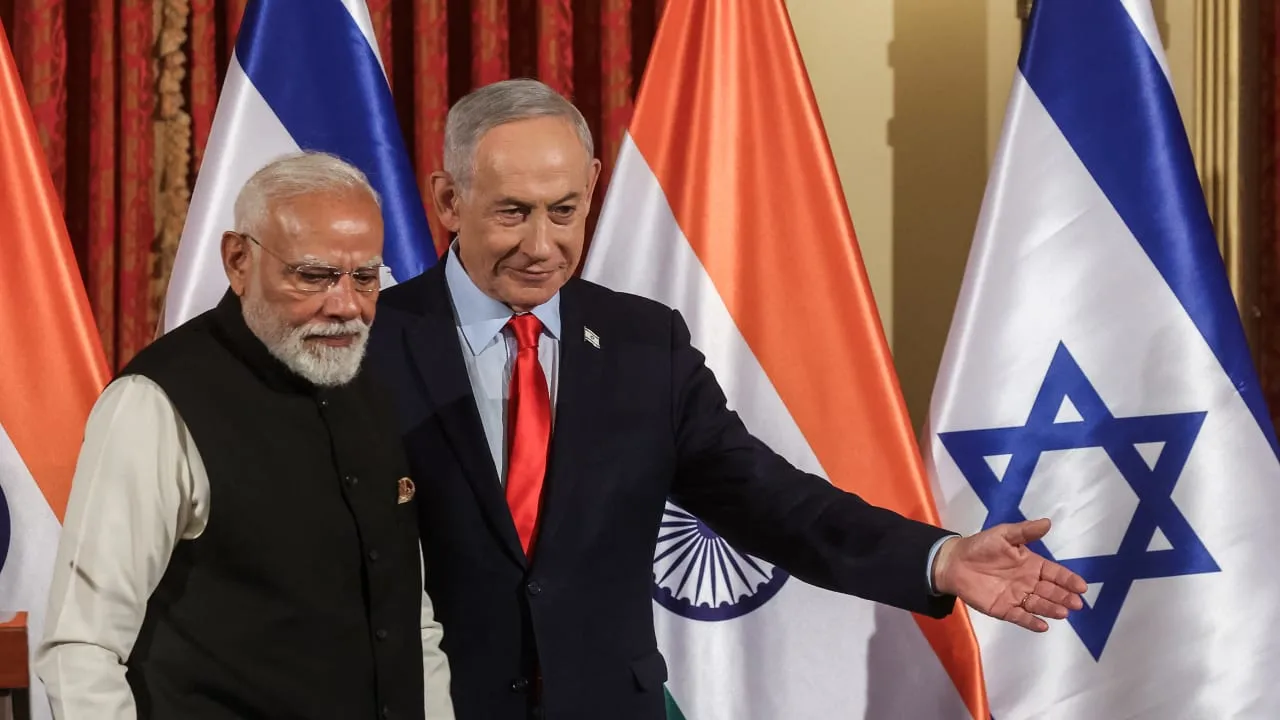
Despite Birvadker’s skepticism regarding the report’s conclusions, she acknowledges the evolving nature of the partnership itself. “For years, defense contractors and policymakers favored maintaining the status quo, treating India primarily as a buyer,” Birvadker stated. She explained that while Israeli companies did engage in joint ventures in India, much of this was driven by Indian Prime Minister Narendra Modi’s ‘Make in India’ policy rather than an Israeli vision of India as a future supply base.
Birvadker argues that the events of October 7, 2023, and the subsequent years of conflict and international pressure, altered this perspective. “It took an event of apocalyptic proportions coupled with growing international isolation, arms embargoes, and shipment delays from Israel’s closest ally, for the Israeli defense establishment to fully recognize India’s strategic weight,” Birvadker said.
“Two years later, that shift is underway. The defense establishment now signs major MOUs and recognizes India as an essential pillar of Israel’s security doctrine, realizing that ‘Make in India’ provides the necessary scale and rapid delivery pipelines required for Israel’s long-term security.”
Amnesty’s investigation, which is substantial in scale, utilized commercially available shipment-level trade data. Researchers examined exports between October 7, 2023, and November 30, 2025, under customs categories covering weapons, ammunition, and armored vehicles. In total, Amnesty identified 2,596 shipments from India to Israel. The organization claims these shipments included at least 390,516 parts for military-grade small arms, 564,970 parts of explosive ordnance—including artillery-shell components and drone warheads—and 298 military-vehicle components.
Amnesty describes these figures as conservative, noting that it deliberately excluded shipments where civilian and military uses could not be distinguished and removed products likely destined for anti-missile defense systems. Of the 2,596 shipments, Amnesty determined that at least 788 contained items with military uses, excluding air defense equipment. Another 1,838 shipments fell into a customs category for pistol and handgun parts, where civilian and military applications can overlap. Among 354 shipments specifically classified as parts for military weapons, 39 involved interceptor components for Rafael missile-defense systems, which Amnesty excluded from its offensive-weapons count.
Amnesty also acknowledged that shipment-level data cannot always definitively establish the final end-user or prove direct transfer to the IDF rather than an Israeli defense company or subsequent re-export. Birvadker argues that this distinction is crucial when evaluating Amnesty’s conclusions. “The report presents no evidence of intent or official policy by India to facilitate unlawful combat operations or human rights violations,” she told the Post. “Deducting complicity in genocide from routine maritime shipping logs represents an unfounded analytical leap, suggesting a predetermined agenda.”
However, Amnesty contends that the nature of some products and their recipients establishes a clear military connection. Its report names PLR Systems, a joint venture between India’s Adani Group and Israel Weapon Industries (IWI), as an exporter of components for IWI’s Negev machine gun, identifying 10,571 feeding-tray components and 33,033 bolt carriers and related assemblies exported by PLR to IWI during the examined period.
The report states that Indo-MIM exported over 59,600 automatic sears, components enabling automatic fire, to IWI, with an additional two shipments measured by weight. It recorded 1,273 Indo-MIM shipments of weapons parts to Israel after October 7, though only 54 were classified as demonstrably military due to the dual-use nature of many components.
Further up the weapons chain, Kalyani Strategic Systems, part of the Bharat Forge Group, allegedly exported 9,600 bodies for 155mm artillery rounds, while the state-owned Munitions India Limited sent a shipment of 1,000 finished 155mm high-explosive shells to Elbit Systems, according to trade data reviewed by Amnesty. Amnesty also identified a December 2025 shipment by Alpha Elsec Defence & Aerospace Systems, a joint venture with Elbit, of 122 five-kilogram warhead assemblies. This specification was linked to Elbit’s SkyStriker loitering munition, examples of which have been found among debris in Gaza. These transactions, Amnesty argues, solidify its accusation that Indian companies have become integral to the supply infrastructure supporting Israeli military operations. They also underscore the increasing strategic importance of this relationship to both nations.
India and Israel established full diplomatic relations only in 1992, with defense ties initially following a conventional exporter-client model. Israel became particularly important to India after the 1999 Kargil War with Pakistan. Over time, New Delhi began to mandate that foreign defense companies increase their presence and activities within India.
The expansion of the “Make in India” policy, introduced in 2014 under Prime Minister Modi, significantly accelerated domestic production, joint ventures, and technology transfer. The Adani-Elbit partnership, for instance, established what Amnesty describes as India’s first private military-drone manufacturing factory. Perhaps the most prominent example of bilateral development is the Barak-8 air-defense system, jointly developed by Israel Aerospace Industries and India’s Defense Research and Development Organization.
This transformation is part of a broader Indian strategy. New Delhi has set 2047, the centenary of its independence, as the target for becoming a developed and substantially more self-reliant global power, with domestic manufacturing, technological capability, and exports central to this ambition. Defense is increasingly viewed as an integral part of this national effort.
Indian defense exports reached $4 billion (390 billion rupees) in the financial year 2025. New Delhi is increasingly seeking future weapons procurements on terms that include technology transfer and greater Indian control over avionics, electronics, and guidance systems. The Jerusalem Post was invited to visit India this year to observe its defense sector firsthand. Despite this growth, India’s defense production and modernization remain uneven, with continued dependence on foreign technology in key areas and the persistent strategic challenge of preparing for potential conflicts with both Pakistan and China. This combination of rapidly growing industrial capability alongside ongoing technological requirements highlights Israel’s particular value to India.
Birvadker stated that India has moved beyond manufacturing solely for its own armed forces and is actively pursuing a position among the world’s leading defense exporters. “This sharp trajectory reflects growing global acceptance of Indian manufactured defense systems and the country’s seamless integration into international supply chains,” Birvadker explained. “Over the years, New Delhi has aggressively pursued the production of everything from small arms and drones to fighter jets and submarines, either independently or through strategic foreign partnerships.”
“This partnership with Israel is particularly vital,” she emphasized. “Unlike traditional defense suppliers that resist technology transfer, Israeli companies demonstrate a high willingness to invest in joint research and development, a factor critical to India’s defense sector growth, as best exemplified by the Barak 8 air defense system. Furthermore, Israeli firms are increasingly outsourcing the production of sub-components to Indian suppliers, elevating industrial standards across the broader Indian market.”
Another less quantifiable benefit exists. “Ultimately, having the IDF, which is widely regarded as one of the world’s most technologically advanced militaries, deploy Indian-manufactured systems serves as a powerful seal of quality that boosts global market confidence,” Birvadker said. “In the context of active combat, real-time operational deployment also provides invaluable field-tested feedback to refine and validate these capabilities.”
For Israel, Indian production offers cost advantages and, increasingly, enhanced supply-chain resilience. Western governments have become more politically divided regarding defense exports to Israel. Amnesty’s report itself notes restrictions or suspensions imposed in parts of Europe and argues that India continued expanding cooperation during this same period. Birvadker believes this makes India an increasingly valuable alternative manufacturing base.
“Serving as a critical alternative to Europe in manufacturing and ammunition, especially amid export restrictions and overt or quiet arms embargoes by European nations, India has emerged as an essential industrial fallback,” she said.
There are limits, however. Birvadker stressed that India cannot replace Washington in areas such as fighter aircraft, heavy precision-guided munitions, or direct strategic military assistance. Nevertheless, the growing two-way flow of weapons, components, technology, and capital means the relationship is increasingly one of “mutual interdependence rather than unilateral dependence.”
Amnesty is urging New Delhi to go beyond imposing additional export checks. It called for an immediate halt to arms transfers to Israel and a comprehensive embargo covering weapons, components, technologies, technical assistance, and training. It also recommended that Indian companies terminate business relationships, including joint research and development, with Elbit Systems, Rafael, and Israel Aerospace Industries.
“Israeli systems currently form the technological backbone of India’s security architecture along its sensitive borders with China and Pakistan,” Birvadker told the Post, commenting on the potential consequences for India’s own military if these recommendations were implemented. “Companies like Elbit, Rafael, and IAI are not standard import suppliers,” she said. “They are India’s premier partners in building a domestic defense industry.” Birvadker further argued that severing the relationship could set back India’s objective of technological self-reliance “by decades.” “India would once again find itself dependent on other global powers, a resurgence of defense colonialism,” Birvadker stated. “Who benefits from such an outcome?”
Amnesty’s challenge also targets India’s export-control system itself. India is not a party to the Arms Trade Treaty, though it is a party to the Geneva Conventions and Genocide Convention. Amnesty argues that these existing obligations are sufficient to require India to halt transfers where there is a clear risk that weapons could contribute to serious violations.
Indian arms exports are not unregulated. Military and dual-use goods are controlled through the SCOMET system and require authorization from the Directorate General of Foreign Trade. Applications are reviewed through an inter-ministerial process involving the foreign, defense, and home ministries, and official guidelines require consideration of the end user, declared end use, chain of transmission, and whether an export could conflict with Indian national security or foreign policy.
The controversy, according to Amnesty, lies in the lack of public transparency. The inter-ministerial deliberations are confidential, leaving no public record showing whether international humanitarian law or India’s treaty obligations were specifically assessed when licenses for exports to Israel were approved. Amnesty filed a Right to Information request seeking details of specific export licenses and any human rights assessments undertaken by the government but stated it had received no reply before publication.
Birvadker’s position is that New Delhi should resist external pressure rather than allow NGOs to dictate its strategic relationships. “New Delhi must categorically reject the pressure to suspend defense exports, fiercely guarding its principle of strategic autonomy and its sovereign right to conduct relations in alignment with its national interests,” she said. “Yielding to Amnesty’s demands would severely undermine India’s credibility as a reliable defense partner on the global stage,” she told the Post.
India’s concept of strategic autonomy predates the Israel controversy. It was evident, for example, when New Delhi resisted Western pressure over Russian oil purchases following the invasion of Ukraine, prioritizing energy security and its freedom to maintain relationships across competing geopolitical blocs. The relationship with Israel increasingly fits into this model. India remains a major purchaser of Israeli technology while becoming a supplier in its own right. Israeli companies gain an enormous manufacturing base and access to Indian industry; India acquires technology, domestic production, and exposure to global defense markets. The greater the integration, the harder it becomes to describe the partnership simply as one country selling weapons to another.
This is another revealing aspect of Amnesty’s report. Its authors see the hundreds of thousands of Indian-made components flowing to Israeli companies as evidence that the relationship should be curtailed. Birvadker cites the same supply chains as evidence that the relationship has become strategically indispensable. The argument over Gaza will remain contentious and unresolved, particularly when the charge of genocide is treated as settled despite substantial legal arguments against it. The industrial shift underpinning that debate, however, is already taking shape. India is no longer merely buying Israeli weapons; increasingly, some of Israel’s weapons begin their journey in India.