






As regulatory scrutiny intensifies regarding per- and polyfluoroalkyl substances (PFAS), environmental testing laboratories are facing a fundamental shift in their operational requirements. While much of the early focus on these “forever chemicals” centered on water samples, current analytical mandates are increasingly encompassing solid matrices—including soils, sediments, biosolids, and various tissues. This expansion has highlighted a long-standing challenge in the sector: the sample preparation bottleneck.
For decades, environmental labs have relied on traditional techniques such as Soxhlet extraction, sonication, and shaker-based methods. While these processes are well-understood, they are inherently labor-intensive. They require multiple manual steps, extensive vessel handling, long extraction times, and significant solvent consumption. These manual workflows are not only prone to variability and human error but also represent a significant risk for cross-contamination—a critical concern when dealing with the ultra-low detection limits required for PFAS analysis.
In response, the industry is pivoting toward more sophisticated, automated technologies. Microwave-assisted extraction (MAE) has emerged as a front-runner, offering a robust solution that aligns with rigorous official standards, including EPA 3546 for organic pollutants and EPA 1633 for PFAS in solid matrices. By utilizing closed-vessel systems that operate under strictly controlled temperature and pressure, MAE significantly accelerates the extraction process while ensuring superior reproducibility.
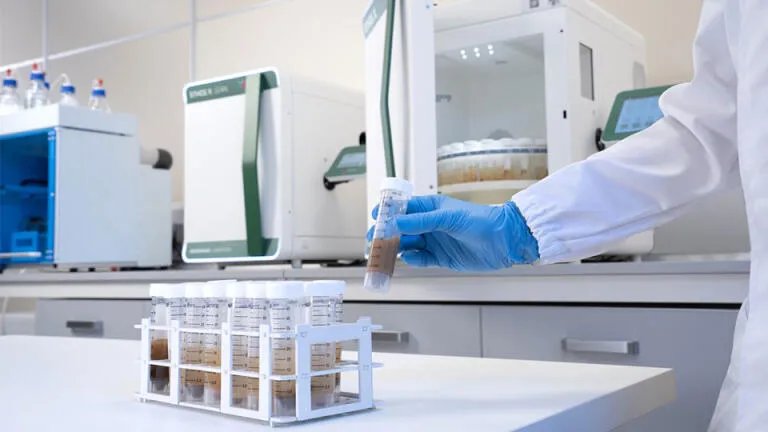
Leading the charge in this transition is the Milestone ETHOS X, a platform designed specifically to address the operational demands of modern environmental testing. Rather than relying on traditional multi-step workflows, the ETHOS X integrates the entire extraction process into a single, closed-vessel operation. This shift replaces hours of manual intervention with a streamlined, repeatable sequence that drastically reduces labor costs and operator exposure to hazardous substances.
The versatility of the ETHOS X is perhaps its most significant asset, as it allows labs to consolidate their workflows using application-specific rotors. For laboratories focused on the growing PFAS challenge, the XTR-44 rotor is engineered to process up to 44 solid samples simultaneously. By utilizing PFAS-free disposable vessels, the system effectively mitigates the risk of contamination while allowing for precise temperature control and homogeneous heating. This ensures that even complex matrices can be analyzed with high sensitivity and consistency.
Furthermore, the system offers a dedicated configuration for routine organic pollutants—such as PAHs, PCBs, and dioxins—known as the fastEX-24. This setup utilizes large-volume disposable glass vials, which eliminate the need for traditional vessel cleaning entirely. By removing the need for cleaning cycles, labs can prevent “memory effects” and cross-contamination between runs, further enhancing the reliability of their data. Importantly, the ability to process larger sample masses with this configuration supports the achievement of lower detection limits, which is essential for meeting increasingly stringent environmental regulations.
For the modern environmental laboratory, the implications of upgrading to an automated, microwave-assisted workflow are multifaceted. Beyond the obvious gains in throughput and speed, the transition provides improved control over safety and operating costs. By reducing solvent consumption and minimizing the amount of time technicians spend on manual preparation, laboratories can increase their capacity without compromising the quality or integrity of their results.
As the environmental analytical sector continues to adapt to the complexities of emerging contaminants, the reliance on outdated, manual extraction methods is becoming increasingly untenable. The integration of advanced platforms like the ETHOS X represents more than just a technological upgrade; it marks a strategic evolution toward the higher levels of efficiency, precision, and reproducibility that future environmental monitoring will demand. By removing the sample preparation bottleneck, labs are better positioned to focus on their primary mission: providing accurate, reliable data that safeguards public health and the environment.
Disclaimer: This content is auto-generated for informational purposes only.
Source: Read Original News