







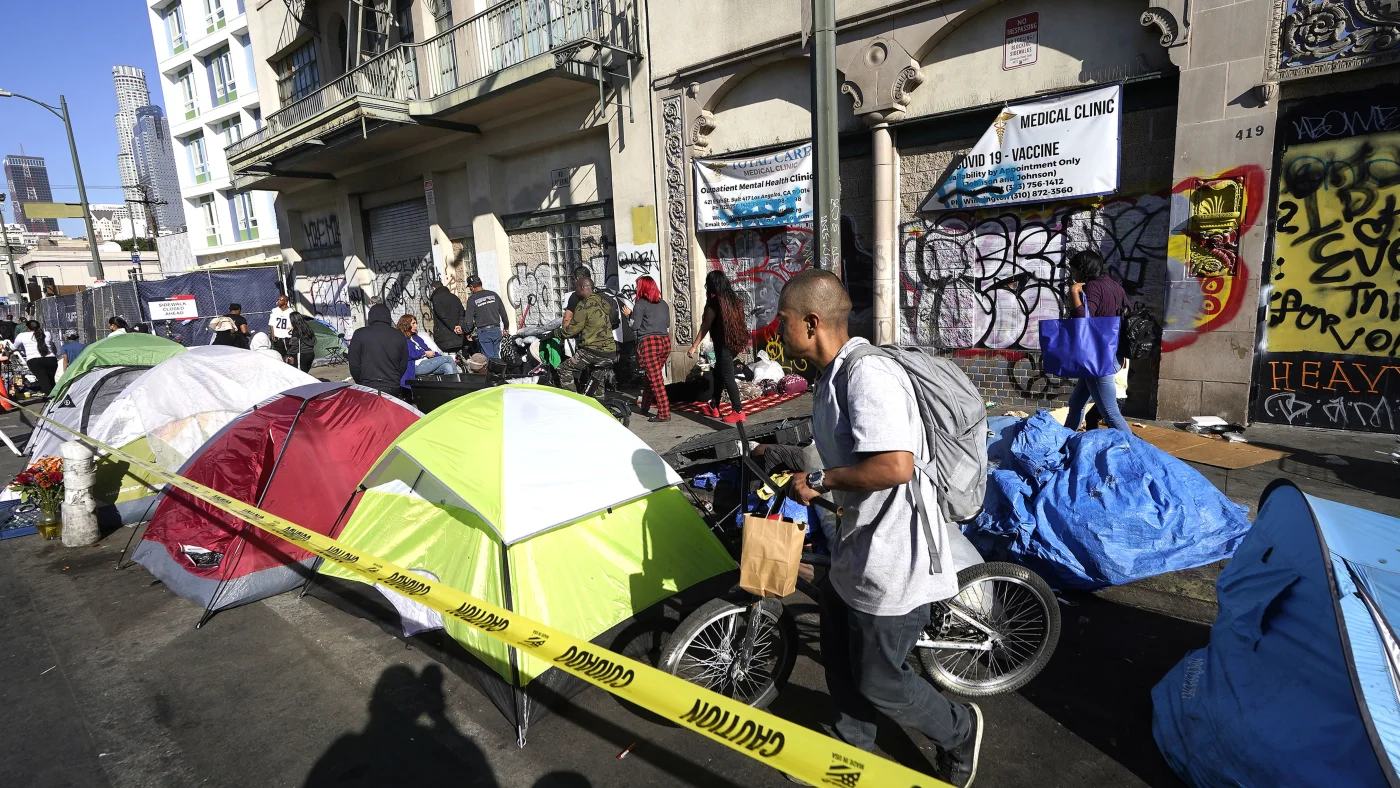
The homeless population in the United States has declined by more than 6% in 2025, marking the second consecutive year of progress in the fight against a crisis that saw record-high levels in recent years. New federal data reveals that approximately 49,000 fewer individuals were living on the streets or in shelters compared to the previous year.
Housing and Urban Development (HUD) Secretary Scott Turner heralded the findings, which were based on an annual national count, as a result of the administration’s aggressive policy shifts.
“President Trump’s actions to secure the border, get criminal illegals off our streets, and restore safety to our communities drove a historic decrease in homelessness,” Turner said in a press release. The administration pointed to a reduction in the surge of asylum seekers—who had placed significant pressure on shelter systems in cities like New York, Chicago, Boston, and Denver—as a primary catalyst for the improvement.
However, the causes behind the decline remain a subject of debate. An independent analysis commissioned by the National Alliance to End Homelessness confirmed the downward trend but attributed it to different factors.
“It’s good news that more people are getting housed, and that the programs that are funded by Congress are working,” said Ann Oliva, CEO of the Alliance.
While both the government and advocacy groups recognize the decline, the scale of the problem remains substantial. Nearly 700,000 people across the U.S. continue to experience homelessness, a figure that remains significantly higher than prepandemic levels.
The Trump administration has signaled a desire to fundamentally restructure federal aid, moving away from “housing first” models—which prioritize providing stable shelter without preconditions—toward a system that mandates addiction and mental health treatment. While the administration argues that these requirements lead to more effective recovery, their efforts to overhaul multi-billion-dollar HUD funding have been stalled by the court system.
Policy disagreements extend to the issue of urban encampments. Following a 2024 Supreme Court ruling that allowed cities to enforce bans on public camping, many municipalities have cleared out tent cities. While the administration points to these measures as a success, the Alliance found that cities with strict camping bans often performed worse than the national average in reducing their homeless populations.
Despite the friction over strategy, certain areas have shown clear success. Homelessness among veterans dropped more than 7% last year, continuing a long-term trend that has seen a 60% reduction since 2010—a success attributed to robust, targeted investment. Conversely, the number of individuals experiencing chronic homelessness saw a slight uptick.
Beyond government policy, experts point to broader economic shifts as potential drivers of the decline. Rents in many parts of the country, while still high, have begun to soften from their pandemic-era peaks, which may be slowing the rate at which people become newly unhoused. Additionally, emergency federal responses to regional natural disasters have provided support for displaced populations that were previously unaccounted for in traditional housing assistance programs.
Disclaimer: This content is auto-generated for informational purposes only.
Source: Read Original News