








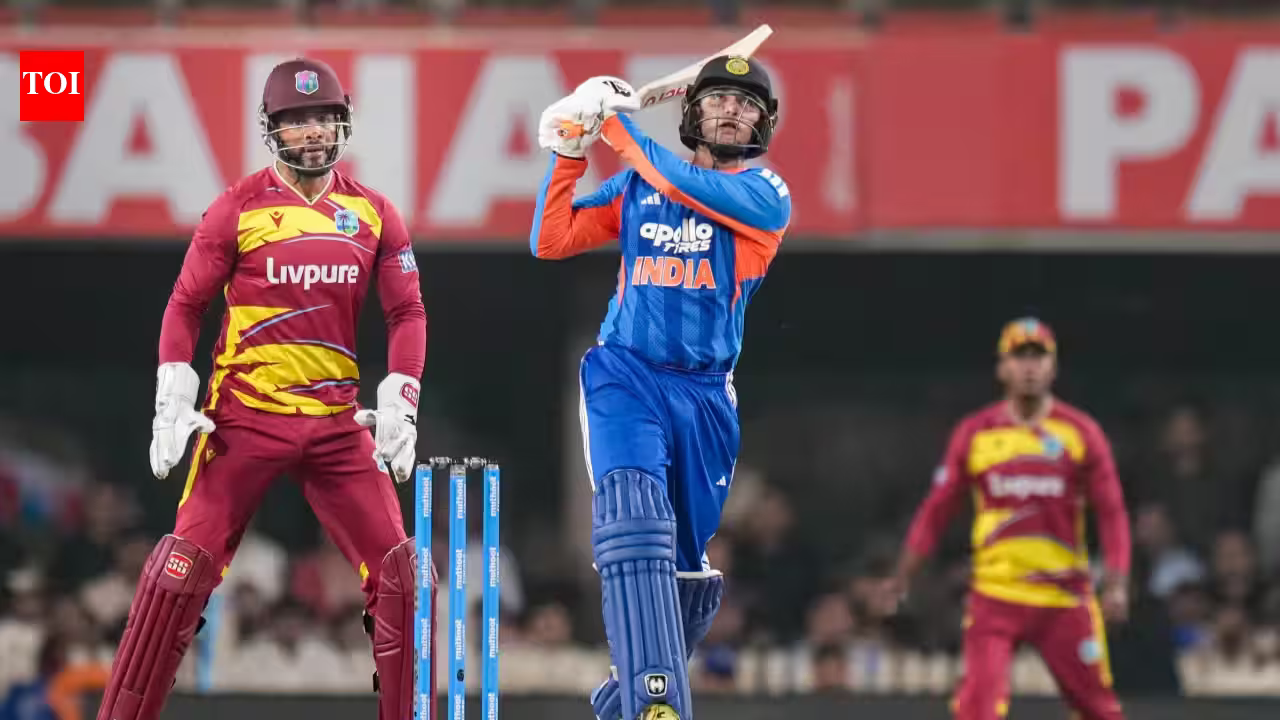
INDORE — Abhishek Sharma is rapidly turning the T20 International arena into his personal playground. In a high-octane third T20I clash against the West Indies at the Holkar Stadium on Sunday, the explosive left-hander etched his name into the record books, shattering a long-standing benchmark held by none other than the talismanic Suryakumar Yadav.
Sharma’s latest masterclass saw him become the fastest batter in the history of the format to reach 2,000 T20I runs in terms of balls faced, accomplishing the feat in a staggering 1,024 deliveries. The record, previously held by Suryakumar Yadav—who reached the milestone in 1,164 balls—and Australian legend Aaron Finch, who required 1,283, now belongs firmly to the young Indian opener.
## An Explosive Display of Power Hitting
The tone for the evening was set early. With the series locked at 1-1 following a hard-fought West Indian victory in Ranchi, India needed a commanding start to reclaim momentum. Sharma delivered exactly that. From the first ball, he exuded intent, systematically dismantling the West Indian bowling attack with a blend of brutal power and clinical precision.
His innings of 69 off just 30 deliveries was a masterclass in aggressive T20 batting. Featuring six boundaries and five towering sixes, Sharma acted as the primary engine for the Indian scorecard. Even as his opening partner Sanju Samson departed early for a meager three runs, Sharma remained unfazed. He quickly found a willing accomplice in Ishan Kishan, and the duo proceeded to launch a devastating counterattack that sent the visiting bowlers scrambling for answers.
By the time the Powerplay reached its crescendo, it was clear that Sharma’s approach was designed not just to score, but to demoralize. He targeted the gaps with ease and ensured that no bowler was allowed to settle into a rhythm, effectively putting the West Indies on the back foot during the initial exchange.
## Momentum Swings and the Turning Point
However, the game of cricket is rarely a one-way street, and the dynamics shifted dramatically in the middle overs. Just as Sharma appeared set to convert his half-century into a triple-digit score, the West Indies found a glimmer of hope through Shamar Springer.
In a moment of pure athleticism, Springer secured a caught-and-bowled dismissal that proved to be the turning point of the Indian innings. Sharma, attempting to dispatch a short-pitched delivery into the stands, mistimed his pull shot, sending a top edge ballooning directly back to the bowler.
The dismissal triggered a momentary collapse that tested the resilience of the Indian batting order. In a span of just 10 deliveries, the West Indies managed to snap up three crucial wickets, conceding a mere nine runs in the process. This sudden influx of pressure halted India’s momentum, forcing a rebuild phase and allowing the tourists to claw their way back into the contest after a blistering start by the hosts.
## High Stakes in the Heart of India
The Indore fixture arrived with significant implications for both sides. Having leveled the five-match series in Ranchi, the West Indies arrived at the Holkar Stadium brimming with confidence. Their decision to win the toss and bowl first was a tactical gamble, aimed at utilizing the surface conditions and putting pressure on the Indian top order early.
India’s lineup, led by Shreyas Iyer, remained focused on aggression, featuring a potent mix of experience and rising talent. Alongside stalwarts like Ishan Kishan and Axar Patel, the side included explosive finishers like Nitish Kumar Reddy and the sheer pace of Mayank Yadav. On the opposing side, Shai Hope continued to lead a balanced Caribbean squad, leaning on the experience of Shimron Hetmyer and Rovman Powell to keep the series alive.
As the dust settled on the first innings, the focus shifted to whether India’s bowling attack, spearheaded by Arshdeep Singh and the sheer speed of Mayank Yadav, could defend the total set by their top-order hero.
Regardless of the final outcome of the match, Abhishek Sharma’s historic milestone has solidified his reputation as one of the most destructive forces in modern cricket. While the record for the fastest 2,000 runs by balls faced will undoubtedly be contested in the years to come, for now, the spotlight stays firmly on the young man from Punjab, who continues to rewrite the manual on how T20 cricket should be played. As the series progresses, the tactical battle between India’s explosive batting and the West Indies’ resilient bowling will remain the defining narrative of this thrilling tour.
Disclaimer: This content is auto-generated for informational purposes only.
Source: Read Original News