







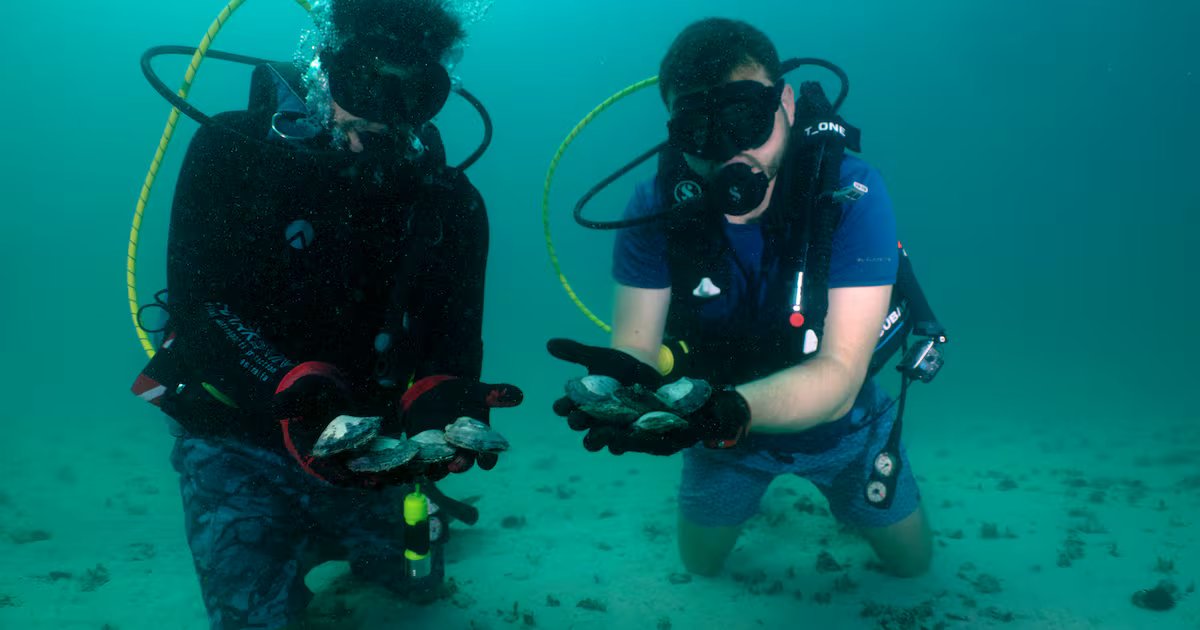
The Environment Agency Abu Dhabi has completed a multiyear survey mapping oyster beds across the emirate’s waters, creating what it described as the most comprehensive record of habitat distribution to date.
The project was conceived in 2022, with fieldwork carried out between 2023 and the end of last year. It builds on a 2021 deepwater survey that identified previously undocumented oyster beds and prompted a dedicated effort to map the habitats.
The agency said the survey would provide a scientific baseline that will help guide the long-term management of Abu Dhabi’s marine environment.
The findings will be used to expand monitoring programmes and identify areas that could be designated as protected marine habitats.
Researchers combined data from the earlier survey with historical pearl-diving maps from the 1960s and 1970s, hawksbill turtle tracking data, oyster rehabilitation sites and information from local community members.
Oyster beds are an important part of the UAE’s marine ecosystem and have cultural significance because of the country’s long history of pearling.
They play a key role in supporting marine biodiversity, providing habitat and feeding grounds for a wide variety of species.
Agency teams observed a direct link between oyster bed location and large concentrations of fish, as well as whale sightings in surrounding waters.
“This milestone reflects Abu Dhabi’s deep-rooted connection to its marine environment, shaped over generations through one of the world’s greatest pearling traditions, a heritage that placed these very waters at the centre of regional trade and identity for centuries,” said Dr Shaikha Salem Al Dhaheri, secretary general of the Environment Agency Abu Dhabi.
“These findings highlight the richness of our marine ecosystems and reinforce our responsibility to protect and sustain them for future generations, in line with Abu Dhabi’s commitment to Net Zero by 2050.”