





Defining the Rights of Nature
Environmental Rights
UNEP states that ‘Environmental Rights’ include rights of both humans (individually and communally) and non-humans (i.e. the rights of Nature). They also include both substantive rights (such as the right to a healthy environment) and procedural rights (access to information, public participation, and access to justice). (Source: United Nations Environment Programme, 2023. Environmental Rule of Law: Tracking Progress and Charting Future Directions)
Rights of Nature
Rights of Nature (RoN) is a legal approach that recognizes Nature, including ecosystems, species, and natural resources, as legal entities with rights, powers, duties, and liabilities similar to those of a legal person. Under this framework, Nature is considered a subject of law whose rights should be recognized and protected.
According to the Intergovernmental Science-Policy Platform on Biodiversity and Ecosystem Services (IPBES), Rights of Nature is a legal instrument that allows Nature, either wholly or partially—such as ecosystems or species—to possess inherent rights and receive legal protection comparable to that granted to people and corporations. It recognizes that ecosystems and species have the right to exist, thrive, and regenerate, and enables environmental protection to be pursued in courts not only for human benefit but also for Nature’s own sake.
The Rights of Nature approach seeks to protect the environment for all living beings by addressing environmental and development challenges at a systemic level. It promotes proactive conservation measures and effective ecological restoration, aiming to achieve more comprehensive and enduring environmental protection.
At its core, the Rights of Nature paradigm acknowledges the intrinsic value of Nature and recognizes it as a legal subject rather than merely an object of regulation. It shares common principles with ecological economics and complements human rights frameworks. Fundamentally, it affirms that Nature should be allowed to exist, thrive, and flourish, just as human beings — who are themselves an integral part of Nature — are entitled to do.
Rights of Nature Law
In most countries, laws classify Nature as property. This allows wetlands, forests, and other ecosystems to be managed in ways that may harm the environment. However, for thousands of years, Indigenous Peoples, Afro-descendant Peoples, and local communities have recognized that human life is inseparable from the rivers, forests, species, and territories that sustain us. This ancestral knowledge is now increasingly reflected in legal frameworks, international resolutions, court decisions, and public policies. The Rights of Nature framework recognizes ecosystems and natural communities as entities with independent and inalienable rights to exist and flourish. This redefines them as rights-bearing entities.
The law has seen the beginning of an evolution toward recognition of the inherent rights of Nature to exist, thrive and evolve. This evolving legal approach acknowledges that the traditional environmental regulatory systems generally described herein regard nature as property to be used for human benefit, rather than a rights-bearing partner with which humanity has co-evolved. Rights of Nature is grounded in the recognition that humankind and Nature share a fundamental, non-anthropocentric relationship given our shared existence on this planet, and it creates guidance for actions that respect this relationship. Legal provisions recognizing the Rights of Nature, sometimes referred to as Earth Jurisprudence, include constitutions, national statutes, and local laws.
In addition, new policies, guidelines and resolutions are increasingly pointing to the need for a legal approach that recognizes the rights of the Earth to well-being. Furthermore, educational activities on the rights of Nature are on the increase in the professional and public spheres to advance Earth Jurisprudence worldwide.
The World Charter for Nature
In 1982, the UN General Assembly adopted resolution 37/7 on the ‘The World Charter for Nature’, outlining general principles of conservation, functions and implementation.
Charter General Principles
- Nature shall be respected and its essential processes shall not be impaired.
- The genetic viability on the earth shall not be compromised; the population levels of all life forms, wild and domesticated, must be at least sufficient for their survival, and to this end necessary habitats shall be safeguarded.
- All areas of the earth, both land and sea, shall be subject to these principles of conservation; special protection shall be given to unique areas, to representative samples of all the different types of ecosystems and to the habitats of rare or endangered species.
- Ecosystems and organisms, as well as the land, marine and atmospheric resources that are utilized by man, shall be managed to achieve and maintain optimum sustainable productivity, but not in such a way as to endanger the integrity of those other ecosystems or species with which they coexist.
- Nature shall be secured against degradation caused by warfare or other hostile activities.
International Mother Earth Day
In 2009, the United Nations General Assembly proclaimed 22 April as International Mother Earth Day through resolution A/RES/63/278. In so doing, Member States acknowledged that the Earth and its ecosystems are our common home, and expressed their conviction that it is necessary to promote Harmony with Nature in order to achieve a just balance among the economic, social and environmental needs of present and future generations. The same year, the General Assembly adopted its first resolution on Harmony with Nature, A/RES/64/196.
Harmony with Nature
In 2009, under the leadership of the Plurinational State of Bolivia, intergovernmental negotiations were initiated on the principles of Harmony with Nature.
Since then, the General Assembly has adopted nine resolutions on Harmony with Nature, to define this newly found relationship based on a non-anthropocentric relationship with Nature. The resolutions contain different perspectives regarding the construction of a new, non-anthropocentric paradigm in which the fundamental basis for right and wrong action concerning the environment is grounded not solely in human concerns. A step in this direction was further reaffirmed in the outcome document of the United Nations Conference on Sustainable Development (2012), entitled “The future we want“:
We recognize that planet Earth and its ecosystems are our home and that “Mother Earth” is a common expression in a number of countries and regions, and we note that some countries recognize the rights of nature in the context of the promotion of sustainable development.
All resolutions and reports on Harmony with Nature as well as key outcome documents of 2012 and 2015 UN conferences containing specific references to Harmony with Nature can be accessed on the dedicated UN Portal.
UNGA Interactive Dialogues on Harmony with Nature
The Interactive Dialogues of the General Assembly on Harmony with Nature to commemorate International Mother Earth Day have brought to the forefront the need to move away from a human-centered worldview – or “anthropocentrism” – and establish a non-anthropocentric, or Earth-centered, relationship with the planet.
Universal Declaration of the Rights of Nature
Panama recently announced its intention to initiate an intergovernmental negotiation process towards a proposed Universal Declaration of the Rights of Nature within the UN General Assembly.

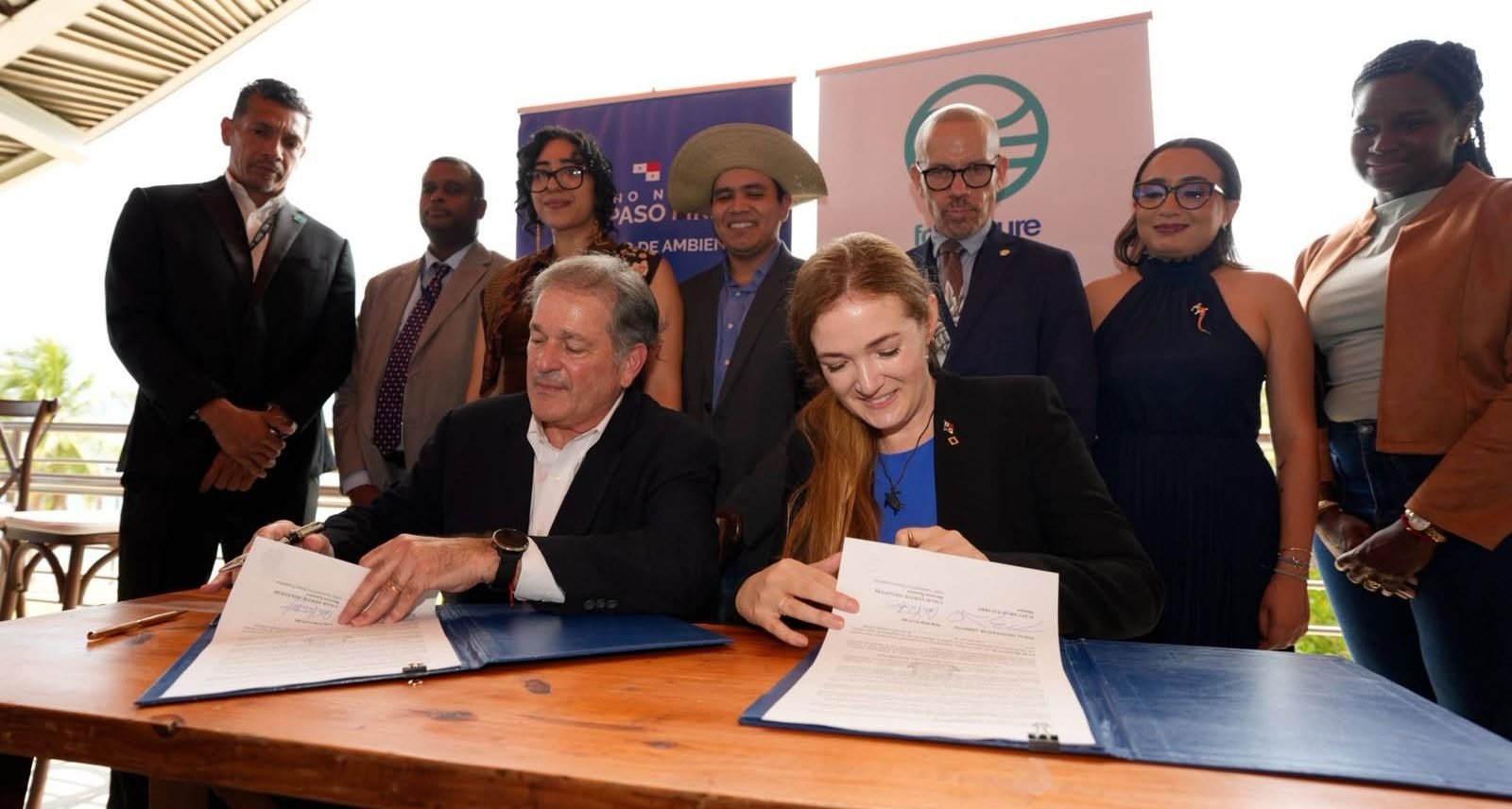
The Ministry of the Environment of Panama and For Nature signed a memorandum of understanding to jointly advance a Universal Declaration of the Rights of Nature before the United Nations General Assembly, in April 2026.
IUCN and Rights of Nature
In 2012, members of the International Union for Conservation of Nature (IUCN) adopted a Resolution at the World Conservation Congress tasking the Director General to initiate a strategy for dissemination, communication and advocacy on rights of Nature. Pursuant to this resolution, under the IUCN World Commission on Environmental Law, a specific Task Force on Rights of Nature was established and different motions (54 and 67)have been adopted in subsequent World Conservation Congresses. In November 2024, under the International Law Association, a Committee on Rights of Nature was established with the aim of studying the evolving law in this field and consider the development of common principles, general guidelines and concrete proposals.
Convention of Biological Diversity and the Kunming-Montreal Global Biodiversity Framework
The concept of harmony with Nature has found a place in the 2022 Kunming-Montreal Global Biodiversity Framework (KMGBF), following its reflection in the Aichi Targets. The KMGBF also makes a direct reference to the impact of the rights of Nature on biodiversity conservation efforts, by specifically recognizing rights of Nature as ‘being an integral part of its successful implementation’. The KMGBF also recognizes the right to a clean, healthy and sustainable environment and national level developments in highlighting the roles, contributions and rights of Indigenous Peoples and local communities as custodians of biodiversity, intrinsically linked to the rights of Nature development due to the spiritual, cultural and ecosystem-dependent connection between these Peoples and communities and their territories.
The adoption of the KMGBF constitutes a landmark decision that links rights of Nature, biodiversity loss, and environmental protection. This and the continued interest of States, especially under the biodiversity framework to further look into Nature’s value systems, sets the stage for the promotion of the recognition and implementation of rights of Nature as member states attempt to reach the KMGBF’s 2050 vision. This is significant as the time horizon proposed extends well beyond that of the 2030 Agenda for Sustainable Development.
In 2025, States meeting under the Conference of the Parties to the Convention on Biological Diversity (CBD) have invited UNEP to ‘continue its reflections on the rights of Nature in the context of its work on the environmental rule of law, while taking fully into consideration the different value systems (…)’. They have also asked for the enhancement of the visibility and dissemination of this topic, including by promoting the development of a joint interactive dialogue at the CBD 17th Conference of the Parties (CBD COP17).
Major initiative to promote the Rights of Nature include:
- the International Rights of Nature Tribunal, which stands out as a people-led initiative that seeks to demonstrate how courts and judges should treat environmental cases through the lens of rights of nature.
- the Global Alliance for the Rights of Nature (GARN) is the founder and secretariat of the Tribunal, established in 2010 as a global network of organizations and individuals committed to the universal recognition of rights of nature. It currently gathers more than 5,000 members, spread across more than 99 countries and 6 continents from diverse backgrounds, including lawyers, scientists, economics, Indigenous and spiritual leaders, artists, policy makers, among others.
- More than Human Life (MOTH) is an initiative of the Earth Rights Research and Action (TERRA), a program based at the Center for Human Rights and Global Justice at the New York University (NYU) School of Law. As an interdisciplinary initiative, it is dedicated to the ‘advancement of rights and well-being for humans, nonhumans, and the web of life that sustains life on Earth’.
A Film released in 2020 takes viewers on a journey that explores the more recent origins of this legal concept, and its application and implementation in Ecuador, New Zealand, and the United States.
Local Action | Legal Personality of the Rhône River
Supported by its signatories, the civil society organization id·eau launched the Rhône Appeal, aiming at granting legal personhood to the Rhône — from its glacier in Switzerland to its delta in France — to help protect its integrity and defend it against harmful activities. The Rhône Appeal intends to safeguard our fundamental rights and preserve a livable environment for future generations.

GEN Events