






New Delhi: The recent Aichi-Nagoya Asian Games will be remembered in Indian sporting history as a transformative moment, headlined by a remarkable 21-gold medal haul that signaled a shift in the nation’s continental standing. However, beneath the gloss of the medal tally, a fascinating narrative has emerged: a collection of champions who reached the podium despite receiving only modest targeted financial assistance from the government’s elite-athlete programs.
These results suggest a compelling paradox in Indian sports development—performances are frequently outpacing the funding pipelines designed to identify and support prospective medalists. While the broader infrastructure and government backing for Indian sport have never been more robust, these athletes prove that hunger, grit, and internal federation preparation can often bridge the gap where direct financial stipend falls short.
The Prodigy and the Price Tag
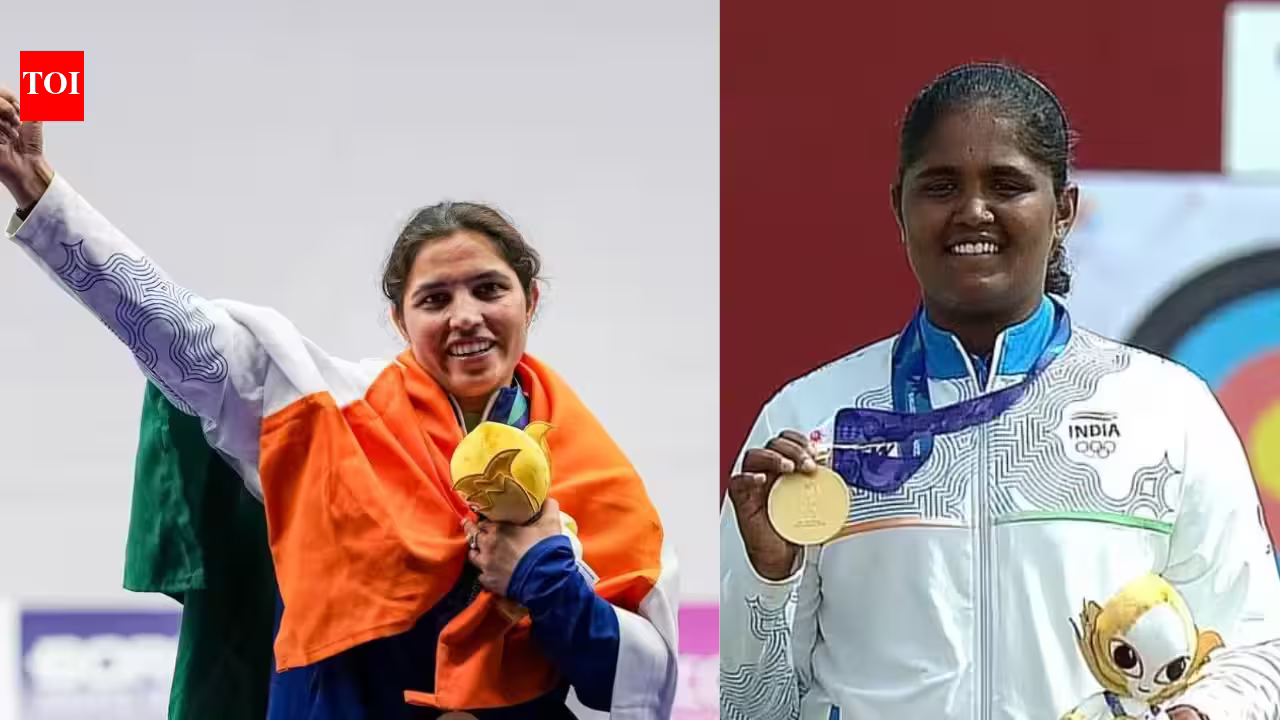
The most striking embodiment of this trend is 17-year-old recurve archer Kumkum Mohod. A recent addition to the Target Olympic Podium Scheme (TOPS) for the Aichi-Nagoya preparatory cycle, Mohod’s performance was nothing short of historic. She became the first Indian woman to clinch an individual recurve gold at the Asian Games, holding her nerve to defeat South Korean standout Oh Yejin 6-5 in a thrilling shoot-off.
Her campaign was one for the ages, culminating in three medals—including gold in the women’s recurve team event and silver in the mixed team—and securing a coveted quota for India at the Los Angeles Olympics. Yet, in the eyes of the government’s targeted funding ledger, her assistance totaled a mere Rs 50,000. While Mohod certainly benefited from the broader budget allocated to the National Sports Federation (NSF) under the Annual Calendar for Training and Competition (ACTC), her individual TOPS contribution remains a startlingly low figure compared to the magnitude of her success on the world stage.
Archery and the Pattern of Efficiency
The “Mohod phenomenon” is not an isolated incident within the archery contingent. In compound archery, a discipline where India has shown consistent dominance, the story of efficiency repeats itself. Sahil Rajesh Jadhav, a vital component of the men’s team gold and the mixed team gold, also operated under a TOPS allocation of just Rs 50,000.
Similarly, Kushal Dalal and Thirumuru Ganesh Maniratnam, who stood on the top of the podium after a gritty victory over China in the team event, received only Rs 50,000 each. The ability of these archers to deliver critical international success—and Olympic quotas—while sitting on the entry-level tier of financial support highlights a vital efficiency in their development, even if it raises questions about the agility of the funding allocation system.
The Funding Disparity Gap
A cursory look at the broader team roster reveals a wide spectrum of investment. In boxing, the contrasts become stark. Ankush Panghal, who delivered gold for India, received a targeted TOPS allocation of Rs 75,000. Meanwhile, his gold-medal winning teammates Lovlina Borgohain and Parveen Hooda were supported with Rs 22.97 lakh and Rs 8.59 lakh, respectively, during the same period.
While such discrepancies are often the result of established track records and international exposure tiers, the success of the lesser-funded athletes suggests that the system may be playing catch-up. Athletes who burst onto the scene suddenly often find themselves in a “funding vacuum,” where their rise to the elite level happens faster than the administrative processes can adjust their financial support category.
Sailing and Athletics: Success Beyond the System
Perhaps even more telling are the athletes who found the podium without being part of the TOPS program at all. The sailing duo of Harshita Tomar and Shital Verma secured a commendable bronze in the women’s skiff while operating entirely outside the TOPS umbrella. Similarly, silver-medal winning javelin thrower Yashvir Singh relied exclusively on the foundational ACTC budget, circumventing the targeted elite-athlete schemes entirely.
Other notable performers, such as shooter Neeru Dhanda—who received Rs 1 lakh as a TOPS Development athlete—and Kurash bronze-winner Pincky Balhara, who received Rs 75,000, further underscore that excellence is being cultivated in pockets of the system that aren’t necessarily the high-investment “priority” lanes.
What Lies Ahead for Indian Sports?
The data from Aichi-Nagoya provides a dual lesson. On one hand, it is a testament to the success of the ACTC and the work done by national federations to ensure that even athletes on lower-tier TOPS support receive the necessary training and competition exposure to compete with the world’s best. On the other hand, it serves as a wake-up call for sports administrators: the “next generation” of superstars is already outperforming the budgetary tiers assigned to them.
As India looks toward the Los Angeles Olympics, the challenge will be to ensure that these “budget-efficient” champions are brought into the fold with the support levels that match their new status. The Aichi-Nagoya Games proved that India has a deep reservoir of talent capable of winning in the face of limited individual funding. With the right investment in these specific high-performers, the sky may well be the limit for the next cycle.
Disclaimer: This content is auto-generated for informational purposes only.
Source: Read Original News