










In a major move that is expected to affect thousands of international travellers during the peak summer season, Air India has announced a temporary rationalisation of several international routes between June and August 2026. The airline said the decision has been driven by a combination of operational and economic pressures, including continued airspace restrictions over certain regions and record-high jet fuel prices impacting long-haul international operations.As per Air India Newsroom, the revised schedule is aimed at improving “network stability” and reducing the risk of sudden disruptions and last-minute passenger inconvenience. While the changes involve suspensions and frequency reductions across multiple continents, Air India stressed that it will continue operating more than 1,200 international flights every month, maintaining connectivity across five continents.
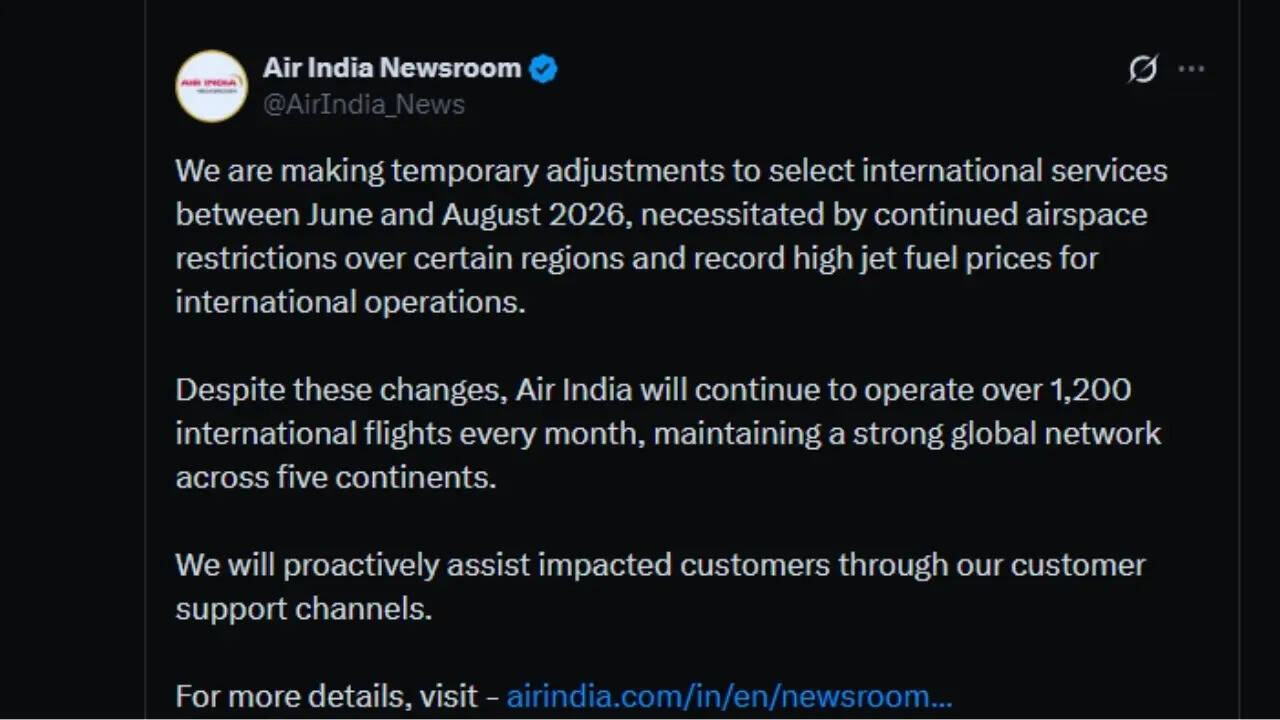
Air India Newsroom on X
Airspace restrictions over parts of West Asia and Eastern Europe have forced airlines to take longer flight paths, significantly increasing fuel burn, crew duty hours, and aircraft utilisation costs. Combined with historically high aviation turbine fuel prices, airlines operating ultra-long-haul routes have found several services commercially challenging.For Indian travellers, especially those flying abroad during the summer holiday period, the changes are likely to have a direct impact on flight availability, ticket pricing, and travel planning.
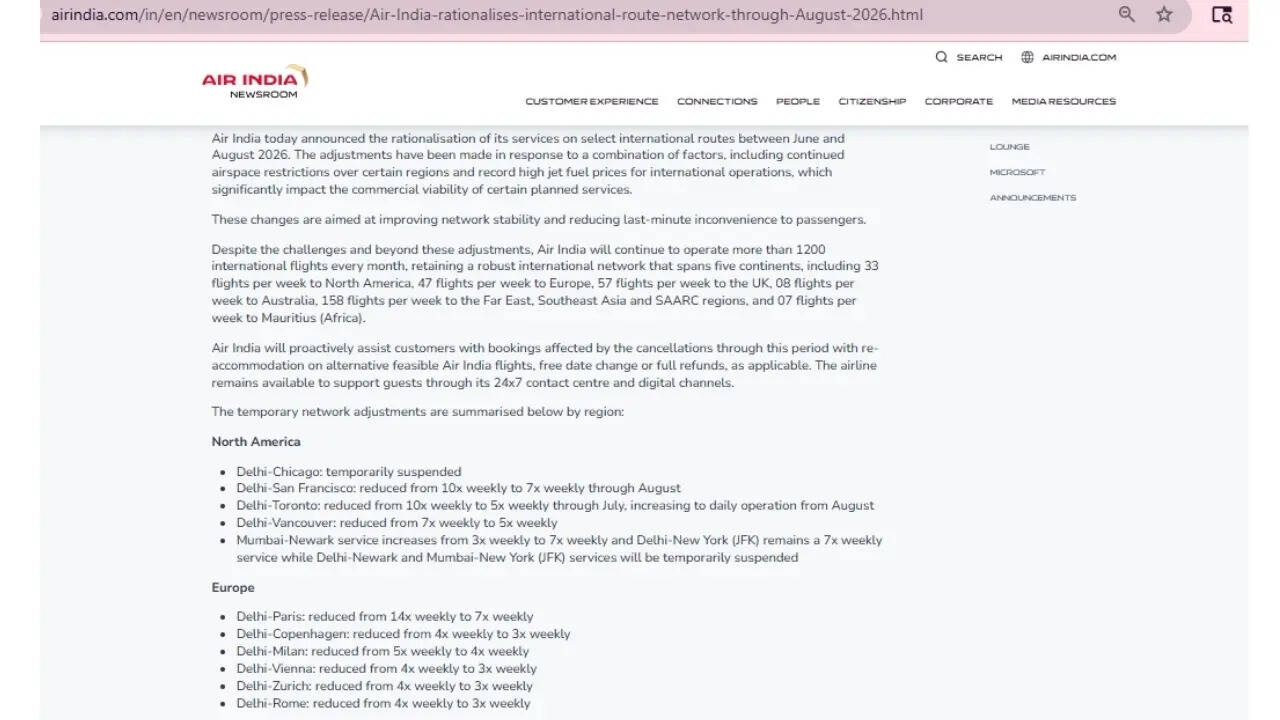
Air India flight update
North America sees major changes
Among the most significant changes are those affecting Air India’s North American network. The airline has temporarily suspended its Delhi–Chicago route altogether, a move that could impact passengers travelling to the American Midwest.The Delhi–San Francisco service, one of Air India’s busiest long-haul routes connecting India with the technology hub of California, has been reduced from 10 weekly flights to seven weekly flights through August. Similarly, the Delhi–Toronto route will operate only five times a week instead of 10 through July before returning to daily operations in August.Flights between Delhi and Vancouver have also been reduced from daily operations to five weekly services.However, the airline has simultaneously strengthened its Mumbai–Newark route, increasing operations from three weekly flights to daily service. Air India appears to be shifting capacity strategically toward routes with stronger passenger demand and better operational viability.Meanwhile, the Delhi–Newark and Mumbai–New York (JFK) services will be temporarily suspended, while the Delhi–New York (JFK) route will continue operating daily.For travellers heading to the United States and Canada, these changes could mean fewer direct options and increased reliance on alternate routings or different departure cities.
Europe routes also deduced
Air India’s European network has also seen multiple frequency reductions. The Delhi–Paris route, which currently operates twice daily, will now run only once daily, reducing weekly flights from 14 to seven. Several other European cities will also witness reduced connectivity from Delhi:
- Copenhagen: reduced from four to three weekly flights
- Milan: reduced from five to four weekly flights
- Vienna: reduced from four to three weekly flights
- Zurich: reduced from four to three weekly flights
- Rome: reduced from four to three weekly flights
These changes are likely to affect both leisure travellers and business passengers during one of the busiest travel periods of the year. Europe remains among the most popular outbound destinations for Indian tourists during the summer months, especially countries like France, Italy, and Switzerland.With fewer direct flights available, airfares on remaining services may witness upward pressure, particularly closer to departure dates.
Australia network scaled back
Air India has also reduced operations to Australia, where demand from Indian students, professionals, and tourists has remained consistently high. Flights from Delhi to both Melbourne and Sydney will be reduced from daily services to four weekly flights between June and August. The cuts are likely to impact Indian students travelling to Australian universities for the upcoming academic intake, as well as tourists planning winter travel to Australia during the Northern Hemisphere summer season.
Southeast Asia and SAARC Routes Hit Hard
Some of the most extensive reductions have been announced across Southeast Asia and neighbouring South Asian countries.The Delhi–Shanghai route will remain temporarily suspended through August. Chennai–Singapore flights have also been suspended during the same period. Singapore, one of the busiest international destinations for Indian travellers, will witness a substantial reduction in connectivity. Delhi–Singapore flights have been cut from 24 weekly services to 14, while Mumbai–Singapore operations have been reduced from 14 weekly flights to seven.Thailand-bound travellers will also see fewer options. Delhi–Bangkok flights will reduce from 28 weekly operations to 21 beginning July, while Mumbai–Bangkok services will be cut nearly in half, from 13 weekly flights to seven.Other Southeast Asian destinations affected include Delhi–Kuala Lumpur: reduced from 10 weekly flights to five; Delhi–Ho Chi Minh City: reduced from seven weekly flights to four in July and August; and Delhi–Hanoi: reduced from five weekly flights to fourIn the SAARC region, Nepal and Bangladesh routes have also been affected. Delhi–Kathmandu flights will reduce dramatically from 42 weekly operations to 28 in June and further to 21 in July and August. Delhi–Dhaka services have been reduced from daily operations to four weekly flights, while Mumbai–Dhaka flights have been temporarily suspended. Sri Lanka and the Maldives have also been impacted. Mumbai–Colombo flights will operate four times a week instead of daily, while Delhi–Colombo flights have been reduced from 14 weekly services to 12.It should also be noted that flights between Delhi and Malé have been temporarily halted until August due to maintenance activities, which may impact Indian tourists planning to visit the Maldives during the monsoon season.According to Air India, it will actively help all affected passengers by transferring them to alternative flights where possible. In addition, passengers can get their travel dates changed for free or receive a full refund based on certain conditions. It should also be noted that Air India’s 24×7 contact centre and other online assistance channels will be at the disposal of passengers.Passengers were asked to follow the news about flights and check their bookings before departure, especially those traveling on international routes impacted by the airline over the next three months.In general, for travelers, including those who plan to travel during summer to destinations such as North America, Europe, Australia, or Southeast Asia, the upcoming months could prove challenging.