







April 18, 2026
Modi plan of parliament expansion linked to quotas for women fails vote
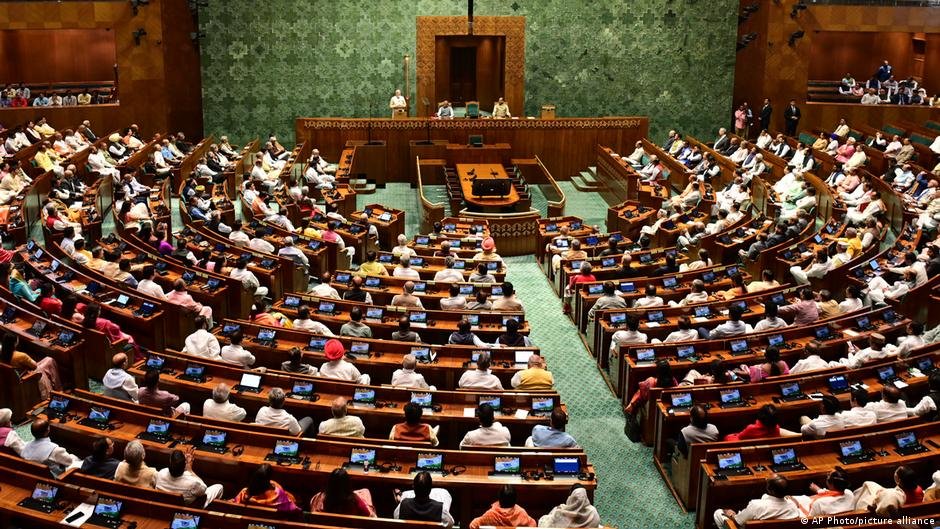
In a major setback for Prime Minister Narendra Modi’s government, its proposal to expand India’s parliament to increase the representation of women lawmakers failed after not being able to secure enough votes in the Lok Sabha, the lower house.
The Constitution (131st Amendment) Bill, 2026 was tabled in a special sitting of the parliament earlier this week and the vote came after two days of fiery deliberations.
How the bill failed
The reservation for women legislators was linked with a controversial bill for the redrawing of constituency boundaries across India based on population.
While the women’s quota was favored by the broad political gamut, the proposal of redrawing of constituencies, called delimitation, was met with intense contention from the opposition.
The opposition parties voiced concerns that the exercise would primarily benefit Modi’s Bharatiya Janata Party (BJP). They accused the ruling government of using the women’s quota issue as a ploy to manipulate the system and get more votes ahead of the 2029 polls.
The government had asserted that constituency changes were needed to reflect shifts in population since seats were last fixed after a census in 1971.
In the end, the Bill failed to garner the special two-thirds majority it needed to pass.
Of the total 528 present and voting members, 298 members voted in its favour and 230 against.
“The amendment bill has fallen. They used an unconstitutional trick in the name of women to break the Constitution,” Leader of Opposition Rahul Gandhi wrote on X right after the vote.
The Modi government has dismissed the claims and says it would continue to campaign for women’s quotas.
“The women of this country will not forgive you,” Home Minister Amit Shah said in parliament ahead of the vote.
Why is the parliament expansion bill important?
Had it passed, the measure could have significantly reshaped India’s electoral landscape since Indian independence in 1947.
The delimitation exercise would have increased the number of seats in the lower house by two-fifths by the time of the next general elections in 2029.
India southern states were worried that population-based delimitation would unfairly tilt political representation in favor of the northern states, where population growth has been higher.
Modi and Shah gave assurances in the parliament that the current proportional representation of southern states would remain nearly unchanged and would not be affected by delimitation.
A 33% reservation for women in the national Parliament and state assemblies had been approved in legislation passed in 2023, but it was then linked to the next census, which is currently underway.
That meant the changes would have gone beyond the 2029 polls.
The vote marks the first time that Modi’s government has failed to pass a constitutional amendment bill since it came to power in 2014.