







JOHANNESBURG – The political landscape of South Africa has been fundamentally redrawn as the African National Congress (ANC) faces its most significant electoral decline since the dawn of democracy in 1994. With 98% of voting districts declared by the Electoral Commission of South Africa (IEC) late this evening, the party of Nelson Mandela has seen its national support plummet, falling well below the historical benchmarks that once secured it an unchallenged dominance over the country’s legislative processes.
As the final results trickle in, the ANC’s share of the national vote has hovered precariously around the 40% mark, a seismic shift from the 57.5% it secured in the 2019 general elections. The electoral data confirms that the party has suffered massive losses in its traditional strongholds, with voter turnout and support being cannibalized by both established opposition parties and new political entrants.
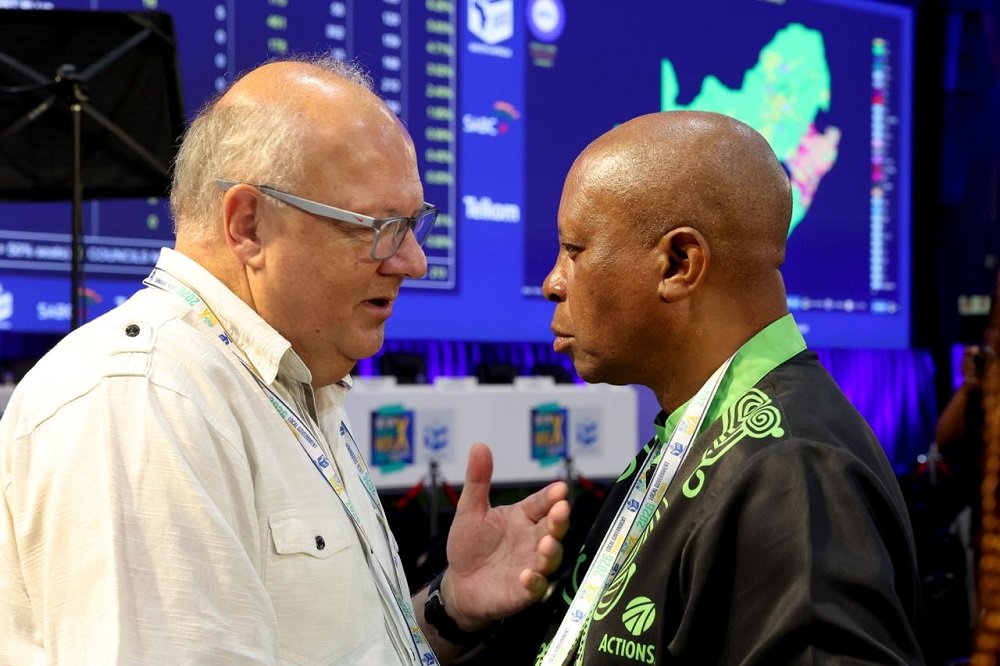
The atmosphere at the National Results Operations Centre in Midrand is one of hushed tension as ANC leadership prepares to address the nation. For a party that has governed without interruption for three decades, these results represent a watershed moment that will almost certainly force the movement into a coalition government—a scenario that was once considered a remote possibility but is now an urgent, mathematical necessity.
Analysts point to a convergence of factors that fueled the electoral tide against the ruling party. Persistent energy crises, crumbling infrastructure, double-digit unemployment, and widespread allegations of systemic corruption have severely eroded public trust. The results from urban centers, in particular, reveal a growing impatience with the pace of service delivery, with the ANC losing significant ground in Gauteng and KwaZulu-Natal.
“We are witnessing the end of an era of hegemony,” noted political analyst Dr. Sipho Mbeki. “The electorate has sent a thunderous message. The ANC can no longer govern by decree; they must now navigate the complexities of power-sharing, compromise, and parliamentary accountability in a way they have never had to do before.”
While the ANC remains the single largest party, its inability to secure an outright majority means that South Africa is entering uncharted waters. The next few days are expected to be characterized by frantic backroom negotiations as the ANC seeks potential coalition partners to stabilize the executive. Conversely, opposition blocs are already signaling their intent to capitalize on the governing party’s fragility, potentially forming a multi-party pact to unseat the current administration.
As the IEC works to certify the final 2% of the results, the nation remains on edge. The outcome of this election marks not just a decline in percentage points, but a structural realignment of South African democracy, signaling that the era of one-party dominance has officially come to a close. All eyes are now on Luthuli House as the party reflects on a diminished mandate and a future defined by the uncertainties of coalition governance.
Disclaimer: This content is auto-generated for informational purposes only.
Source: Read Original News