







The Unburdened Legend: Why Anupam Kher Chooses Freedom Over Fortune
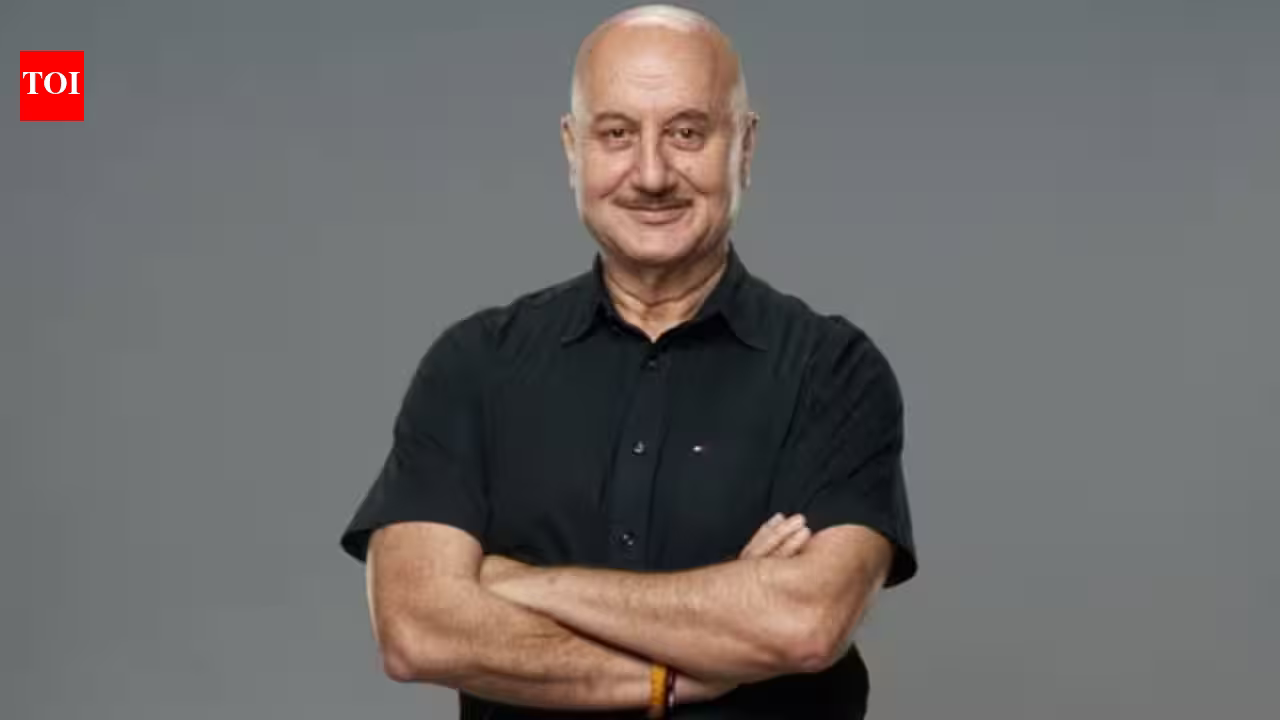
In an industry defined by glitz, high-security entourages, and the relentless accumulation of real estate as status symbols, Anupam Kher stands as an outlier. With a staggering 500-plus films to his name, Kher is undoubtedly one of the most recognizable faces in Indian cinema. Yet, as he maneuvers through the golden jubilee years of his career, the veteran actor has cultivated a philosophy that is startlingly minimalist. Speaking at the International Film Festival of India (IFFI) in Goa, Kher revealed that his greatest luxury isn’t a penthouse or a fleet of cars—it’s the absence of things that tie him down.
For Kher, the decision to not own a house or employ a ring of bodyguards isn’t a performance of humility; it is a hard-won realization of what constitutes true liberty. In an era where “more” is the industry standard, Kher’s “less” feels like a radical act of defiance.
A Legacy Forged in a Single Room
To understand Kher’s current detachment from material wealth, one must look back at the cramped, bustling quarters of his childhood. Long before he was a household name, Kher was one of 14 family members sharing a single room. It is a detail that could easily be framed as a tragedy, yet he recalls it with a strange, enduring warmth.
“We were very poor,” Kher reflected during his session at IFFI. “But all of us were very happy in that small room.” It was this environment that birthed his foundational philosophy, sparked by a conversation with his grandfather. When the young Kher asked how such poverty could coexist with such happiness, his grandfather offered a perspective that has anchored the actor for decades: “When you are so poor, the only luxury you have is happiness.”
That singular lesson—that joy is not a byproduct of assets but a choice made in the face of scarcity—has shielded Kher from the “hunger” that often consumes his peers. While he understands the utility of money for comfort, he views the pursuit of luxury accessories—the watches, the designer bags, the vanity of status—as a burden rather than a blessing. “I am not a saint,” he admits, “but I feel liberated by my decision. I don’t need external factors to make me feel important.”
Defying the Script of Societal Expectation
Perhaps the most defining trait of Anupam Kher’s life is his stubborn refusal to live by the script written by society. In a culture that often dictates milestones—career progression, property ownership, public image maintenance—Kher has navigated his path with a defiant autonomy.
“I exist in society, but I don’t decide my life on the basis of what society thinks,” he stated, his voice carrying the weight of a man who has successfully charted his own course for 43 years. If he had listened to the conventional wisdom of his peers, he likely never would have left Shimla, nor survived the brutal, Darwinian environment of the film industry.
For Kher, the opinions of others are merely background noise. He acknowledges that while a small circle of trusted voices matters, the general societal gaze is irrelevant to the internal architecture of his life. This perspective has allowed him to transition from a struggling newcomer to a global icon without losing his grip on his own identity—a feat that, frankly, few in the entertainment world can claim.
Becoming Jatayu: A Performance, Not a Paycheck
Beyond his personal philosophy, Kher has been garnering immense praise for his voice work as Jatayu in Nitesh Tiwari’s magnum opus, Ramayana. For an actor of his stature, one might expect a project like this to be just another line item in an already overflowing filmography. However, Kher treated the role with the intensity of a lead character, viewing it not as a “dubbing exercise” but as a psychological exploration.
When the production team showed him the 12-minute preview, Kher was struck by the sheer scale of the vision. The technical prowess was impressive, but the emotional core of the project was what resonated with him. “I was performing Jatayu,” he emphasized. “I tried not to make the initial narration sound like that of a typical, clichéd Hindi film.”
The connection between the actor and the mythic bird was rooted in a shared ethos: “Giving up is not a choice.” By channeling his own tenacity into the character’s final, brave stand, Kher managed to breathe a new, raw humanity into the mythological figure. The audience’s “phenomenal” response is a testament to the fact that when an actor approaches a role with personal conviction rather than mechanical effort, it inevitably leaves a mark.
The Hunger for Exploration Over Wealth
As the interview shifted back to his outlook on the future, the contrast between Kher and the industry archetype became even more apparent. While most celebrities are driven by an insatiable, endless desire to earn—a “hunger” for more projects, more zeroes in the bank, more luxury—Kher defines his appetite differently.
“People who have money have a hunger to earn more money,” Kher observed. “I have a hunger to explore more in the creative field.” This shift in focus is why he feels “liberated.” By removing the desire for the physical manifestations of success, he has cleared the floor for intellectual and creative expansion.
In an industry that is notoriously quick to discard those who fall out of favor, Anupam Kher remains essential. He is a testament to the idea that true relevance isn’t bought; it is sustained by staying unencumbered. Whether he is voicing a legendary character in a billion-dollar production or walking through the streets without the protection of a security detail, he remains the author of his own life. For Kher, the best way to live long in the spotlight is to ensure that your shadow isn’t weighed down by the heavy baggage of “having it all.”
Disclaimer: This content is auto-generated for informational purposes only.
Source: Read Original News