








A Refined Industrial Design
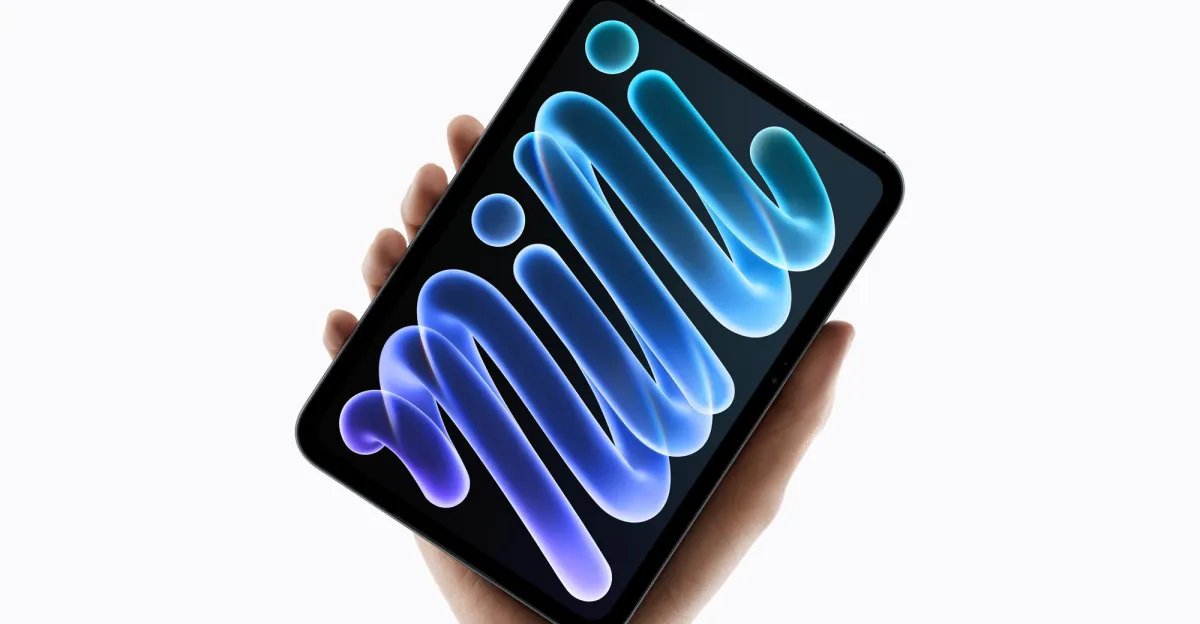
The latest iteration of the iPad Mini represents a significant architectural shift for Apple’s smallest tablet form factor. Measured at just 5.4mm in thickness, the device achieves a slimmer profile than its predecessor while simultaneously reducing its bezel size by 24 percent. This engineering feat allows the device to retain the compact physical footprint that users demand, while pushing the active display area closer to the edges of the chassis.
Complementing the refined dimensions is an OLED display panel that marks a substantial leap in screen technology. The display is capable of hitting a peak brightness of 1200 nits, ensuring visibility even in direct sunlight. Conversely, Apple has implemented a 1-nit minimum brightness threshold, which drastically reduces eye strain for users operating the device in pitch-black environments. While the display supports 4K resolution, it remains capped at a 60Hz refresh rate, eschewing ProMotion technology for this specific form factor.
The A20 Pro Chip and On-Device Artificial Intelligence
At the core of the new iPad Mini lies the A20 Pro chip, a silicon upgrade designed to bridge the gap between mobile utility and advanced computing. This processor is engineered to handle intensive on-device AI tasks, effectively moving the computational load away from remote servers. This architecture supports Apple’s latest Siri AI suite, allowing for granular adjustments to the assistant’s tone, pace, and response expressiveness.
The configuration of the A20 Pro varies based on the storage tier selected. Models equipped with 128GB or 256GB of storage feature a 5-core CPU, consisting of two super cores and three efficiency cores. However, users opting for the 512GB model receive an enhanced 6-core CPU, which adds a fourth efficiency core to the layout. Every variant of the device benefits from a unified 16-core Neural Engine, ensuring that AI-driven features operate with consistent speed regardless of the selected storage capacity.
Acoustic Engineering Through the Display
One of the more unique hardware implementations in this model is the introduction of an Acoustic Display system. Moving beyond traditional speaker grilles, Apple has integrated specialized woofers that interact with the display assembly itself. This design approach aims to transmit sound vibrations through the display glass to generate a more robust bass response and increase overall volume without requiring additional internal space.
To balance these low-end frequencies, custom tweeters have been strategically positioned within the gap between the glass front and the aluminum enclosure. This dual-system configuration is intended to produce clearer high-frequency audio, providing a more balanced soundscape for media consumption. By utilizing the chassis and screen as structural components for sound, the iPad Mini attempts to maximize the acoustic performance of its limited physical internal volume.
Enhanced Utility and Connectivity
Practical improvements extend to the device’s external hardware and connectivity modules. A significant change for frequent video callers is the relocation of the 12MP front-facing camera to the long edge of the chassis. This adjustment places the lens in the natural center of the user’s field of vision when the tablet is held in landscape orientation, facilitating more natural eye contact during meetings.
Durability and connectivity have also seen modern upgrades. The tablet now carries an IP67 rating, providing protection against water immersion and dust ingress. Networking capabilities are bolstered by the next-gen C2 cellular modem and Apple’s proprietary N1 networking chip, which work in tandem to optimize signal acquisition and data throughput. Despite the increased power of the A20 Pro chip and the advanced display tech, Apple maintains a reliable 10-hour battery life threshold for standard tasks such as video playback and web browsing.
Market Positioning and Availability
This release follows a series of incremental updates for the iPad Mini line, including the 2024 seventh-generation model which focused primarily on silicon efficiency and baseline storage adjustments. By integrating the A20 Pro and high-end OLED display, Apple aims to move the iPad Mini from a secondary utility device toward a more capable primary machine for power users who require portability.
The device will be offered in midnight and starlight color finishes, with storage tiers ranging from 128GB to 512GB. A notable addition for professional or outdoor users is the availability of a nano-texture display finish, specifically designed to mitigate glare in challenging lighting conditions. Preorders for the new iPad Mini are scheduled to commence on Wednesday, October 28th, with units appearing in retail locations starting November 6th. Through this launch, Apple is clearly positioning the hardware as a high-performance tool, prioritizing specialized display and processing capabilities over the basic iterative updates that defined the previous generation.
Disclaimer: This content is auto-generated for informational purposes only.
Source: Read Original News