








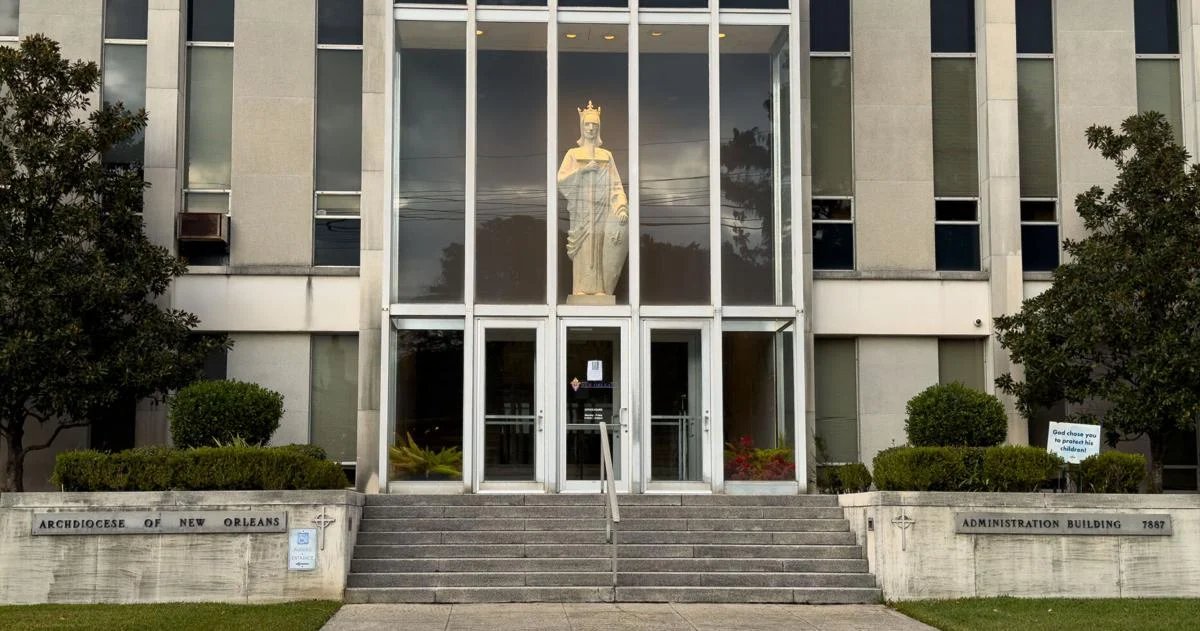
The Archdiocese of New Orleans is facing mounting scrutiny over its adherence to a landmark $305 million bankruptcy settlement, with court-appointed officials and abuse survivors questioning the church’s commitment to transparency. Nearly nine months after the Archdiocese exited a protracted six-year bankruptcy process, tensions remain high regarding the implementation of nonmonetary reforms designed to address decades of clergy abuse.
The friction reached a boiling point during a recent status conference before U.S. Bankruptcy Court Judge Meredith Grabill. The hearing followed a blistering 45-page filing from Don Massey, the bankruptcy trustee, who accused the church of failing to foster a genuine “culture of change.”
## Tensions Over Clergy Accountability
Central to the current dispute is the status of 11 clergy members whose names appeared in bankruptcy claim documents but who have never been added to the church’s “credibly accused” list. In his filing, Massey noted that the Archdiocese in July “flatly refused” to initiate investigations into these individuals.
Archdiocese attorney Ian Gunn defended the church’s actions, asserting that they have exceeded legal requirements and dedicated substantial resources to child protection protocols. Gunn explained that the church’s internal policies require a formal request from a survivor before an investigation can be triggered, a hurdle that has complicated the review process.
Archbishop James Checchio, who assumed leadership in February, expressed personal frustration with the characterization of the church’s actions. He pushed back against labels of being “morally repugnant,” arguing that such rhetoric serves only to inflame a sensitive situation rather than promote resolution. While the Archdiocese has since clarified that many of the 11 individuals in question are deceased or fall outside their jurisdiction, survivors and their legal advocates continue to press for greater transparency, arguing that public acknowledgment is essential for healing.
## Digital Transparency and AI in Institutional Reporting
While the legal battle unfolds in New Orleans, the tech sector is increasingly focused on how institutions leverage digital infrastructure to handle sensitive oversight. Software developers are increasingly integrating AI-driven compliance tools to manage internal reporting systems, which can automate the tracking of allegations and ensure that investigations meet regulatory timelines.
Modern “RegTech” solutions—now being adopted by large organizations—utilize secure database management to prevent the “black hole” of information that frequently plagues institutional investigations. By employing predictive analytics and automated workflows, these digital systems can ensure that when a survivor submits a report, the documentation is immediately cross-referenced with internal registries, significantly reducing the “failure in communication” noted by Judge Grabill during the hearing.
## Unmet Expectations for Survivors
Beyond the procedural debates, the human toll of the bankruptcy remains significant. As of now, none of the nearly 740 survivors eligible for compensation have received payment.
The financial picture has also shifted, creating additional anxiety among claimants. Initial estimates suggested a smaller pool of roughly 500 claimants, but the final count of 739 has significantly diluted the individual payouts. With one point currently valued at roughly $6,400, many survivors feel the compensation—intended to be a measure of accountability—falls short of expectations.
Additionally, the process for appealing these allocations has drawn criticism. Survivors face a $1,000 fee to appeal their points, a barrier many describe as prohibitive. As the Archdiocese attempts to turn the page, the “devil in the details”—as noted by Judge Grabill—continues to pose a massive obstacle to the trust the church claims it is working to rebuild.
Disclaimer: This content is auto-generated for informational purposes only.
Source: Read Original News