






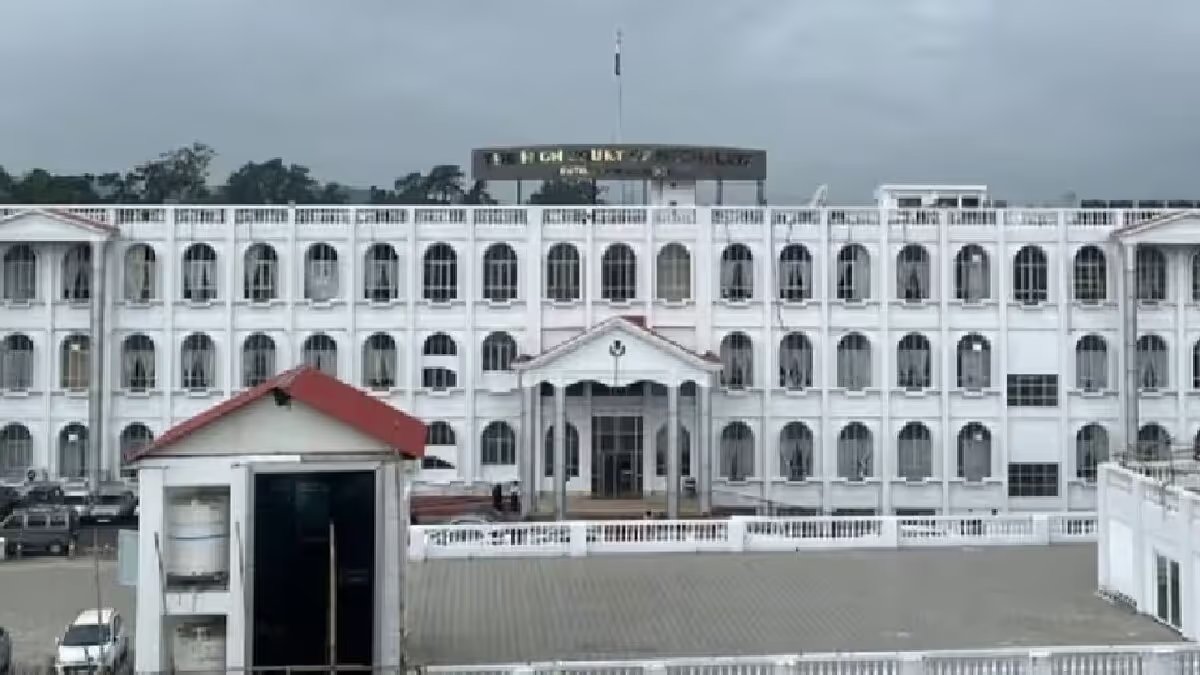
The Meghalaya High Court has dismissed a petition filed by the Union of India and the Directorate General of Assam Rifles, ruling that Hindi translators serving in the paramilitary force are entitled to the same pay scales as their counterparts in the Central Secretariat Official Language Service (CSOLS).
The judgment, pronounced on April 15, 2026, by a division bench comprising Chief Justice Revati Mohite Dere and Justice W Diengdoh, brings to a close a legal battle that stretches back over 15 years — one marked by repeated tribunal orders, government refusals, and a trail of writ petitions across two High Courts.
The case began in 2010 when a group of Hindi translators employed with Assam Rifles approached the Central Administrative Tribunal (CAT), Guwahati Bench, arguing that although they performed duties identical to those of CSOLS translators, their pay was significantly lower. They sought revised pay scales on the basis of a Ministry of Finance Office Memorandum dated November 24, 2008, which directed all ministries and departments to extend CSOLS-equivalent pay to “similarly designated Official Language posts existing in their subordinate offices.”
The CAT ruled in their favour in 2011. However, rather than comply, the government chose to contest — setting off a cycle of fresh speaking orders, review petitions, and remittals that consumed over a decade of judicial time.
Following a 2014 order from the Gauhati High Court directing the Ministry of Home Affairs to take an appropriate decision in consultation with the Finance Department, the government issued a speaking order in July 2014 refusing pay parity. It argued that the cadre structure, recruitment rules, promotional hierarchy, and pre-revised pay scales of Assam Rifles were “significantly different” from those of CSOLS.
The translators were undeterred. Further tribunal proceedings followed — O.A. No. 379 of 2014 and O.A. No. 215 of 2017 — and the CAT once again, in May 2016, quashed the government’s speaking order and directed a fresh one. A fresh speaking order dated 19 December 2016 was then issued, again refusing the pay upgrade. The CAT struck that down too, in March 2019.
When the Assam Rifles challenged the 2019 order before the Meghalaya High Court, the court remitted the matter back to the tribunal, finding that the CAT’s order lacked reasoning. The CAT then undertook a fresh adjudication and, on 21 March 2023, once again set aside the 2016 speaking order and directed payment of upgraded scales from each employee’s respective date of entitlement.
It was this final CAT order that the Union of India challenged in the present petition — and lost.
The court’s reasoning cut to the heart of the matter cleanly. The government’s own written statement before the tribunal had conceded, in paragraph 18, that “the educational qualifications, nature of duties and responsibilities of the applicants are similar to those of their counterparts working in Central Secretariat Official Language Service.”
The court found that admission was impossible to walk back. Having accepted the parity in qualifications and duties, the government could not simultaneously deny pay parity, especially when the Ministry of Finance memorandum already mandated it.
The court also noted that Assam Rifles is listed as entry number 8 among the 25 attached and subordinate offices under the Ministry of Home Affairs, the precise category of organisations to which the 2008 Office Memorandum applied. The bench observed that the petitioners “cannot shy away from the fact that the Assam Rifles is part of the Ministry of Home Affairs.”
On the government’s argument that a specific order from the Home Ministry was necessary before the benefit could be extended, the court was dismissive. The memorandum and its corrigendum were, it said, clear enough on their own — no further direction was required.
The petition was dismissed. The court directed that the CAT’s order of March 21, 2023 be complied with at the earliest, and set a deadline of eight weeks from the date of pronouncement.
For the 18 respondents — translators and officers who had spent years navigating courts while watching their pay stagnate — the ruling marks a long-overdue recognition of their entitlement.