








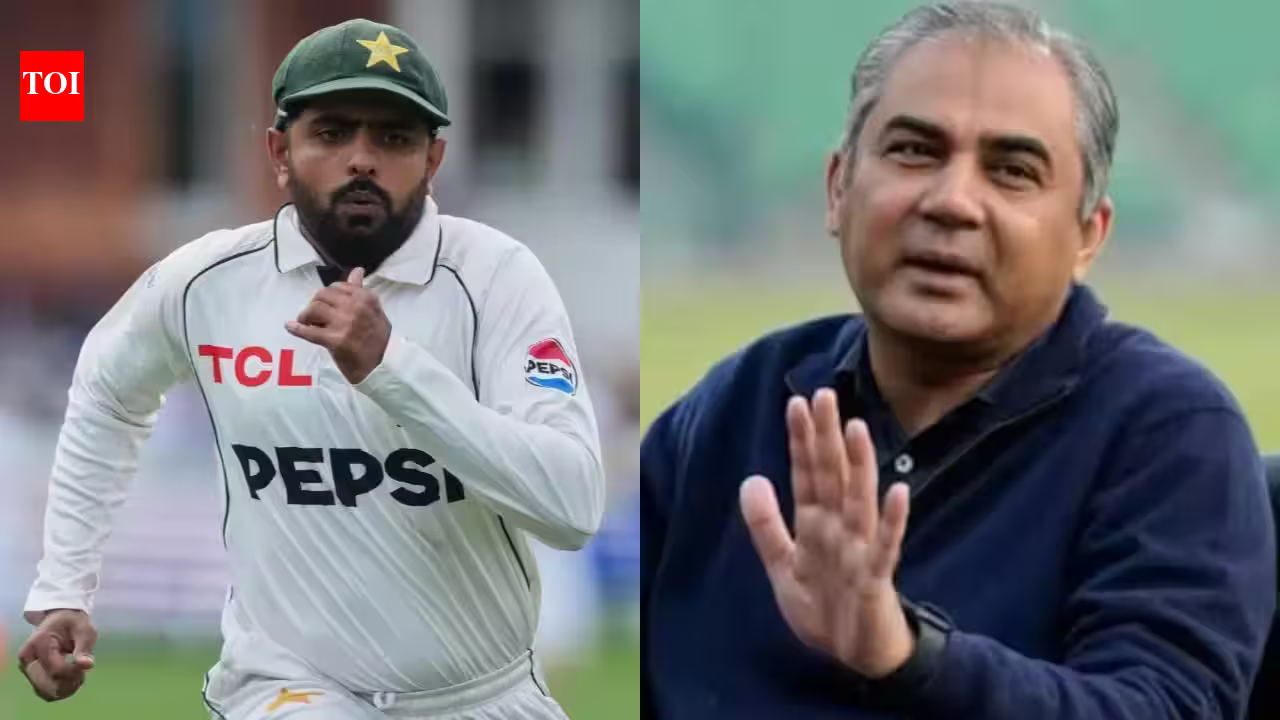
Turbulence within the Pakistan cricket hierarchy reached a boiling point this week as captain Babar Azam publicly addressed the Pakistan Cricket Board’s (PCB) radical mid-series overhaul. In a startling revelation that highlights the growing disconnect between the national team’s leadership and the board’s administration, Babar admitted he was entirely blindsided by the decision to drop seven key players and restructure the coaching staff ahead of the crucial third Test against England.
The PCB’s decision, which saw the sudden exodus of major names such as Mohammad Rizwan, Imam-ul-Haq, and Aamir Jamal, followed a pair of crushing defeats that left the Pakistan camp reeling. While the board has framed the shake-up as a necessary reaction to poor performance, the lack of coordination with the team’s on-field leader has sparked intense debate regarding the governance of the side.
A Captain Left in the Dark
Addressing the media in a pre-match press conference ahead of the showdown at Edgbaston, Babar Azam was candid about his role—or lack thereof—in the recent personnel purge. When pressed on the rationale behind the sudden release of established stars, the captain offered a response that underscored a profound communication breakdown at the highest levels of the national organization.
“It was news to me as well,” Babar told reporters. “I also came to know about it later. Since the PCB made the decision, they can explain it better.”
The gravity of that statement cannot be overstated. In professional sports, the captain typically serves as the primary conduit between the locker room and the selection committee. For a marquee leader like Babar to be left out of the loop regarding the release of key players—including prominent figures like Salman Ali Agha and Khurram Shahzad—suggests that the PCB’s recent actions were top-down mandates rather than collaborative strategic planning.
The Cost of Defeat
The atmosphere surrounding the Pakistan squad has been heavy since the start of the English tour. After suffering back-to-back heavy defeats, the board faced immense pressure from fans and pundits to revitalize a struggling unit. The list of players released—Mohammad Rizwan, Imam-ul-Haq, Salman Ali Agha, Aamir Jamal, Khurram Shahzad, Ali Usman, and Awais Zafar—represents a significant portion of the team’s core experience.
The PCB has remained tight-lipped regarding the specific mechanics of the decision-making process, opting instead to present the move as an urgent pivot toward the future. However, by effectively gutting the roster mid-series, the board has placed a monumental burden on the remaining players, who must now gel with a new, less-experienced lineup in the hostile environment of an English Test series.
Babar Returns to the Helm
Amidst the administrative chaos, the most pressing question for the team was the health of their captain. Babar Azam, who missed several training sessions earlier this week due to a lingering fever, confirmed his availability for the upcoming match. His presence at the crease will be the only semblance of stability for a team that has been through a tumultuous week of personnel movement and leadership uncertainty.
“I am fit and ready to lead,” Babar confirmed, signaling his intent to focus on the game ahead despite the surrounding noise. For Pakistan, the objective at Edgbaston is simple but daunting: avoid a series whitewash. However, the task of rallying a fractured squad after such a public display of boardroom volatility will require more than just technical skill; it will require the kind of leadership that is currently being undermined by the very organization meant to support it.
The Road to Edgbaston
As the final Test approaches, the contrast between the two camps could not be more stark. England, under the stewardship of Joe Root, arrives with a settled squad featuring the likes of Harry Brook, Gus Atkinson, and Jofra Archer, maintaining a steady course throughout the series.
Pakistan’s revised squad list reflects a desperate attempt at reinvention. With names like Azan Awais, Arafat Minhas, and Ubaid Shah joining the fray, the team bears a significantly different complexion than the one that opened the series. Whether this injection of new blood can offset the loss of veteran experience remains the primary narrative as both teams take the field.
Ultimately, the crisis within the PCB has shifted the spotlight away from the actual cricket and toward the internal dynamics of the organization. Babar Azam’s public distancing from the board’s decisions is a rare and dangerous admission in a sport that prizes unity above all else. As the players take to the pitch at Edgbaston, the scoreline will be the final judge of whether the board’s gamble was a bold stroke of reform or a disruptive error in judgment. For now, the cricketing world watches, waiting to see if a fractured team can find enough common ground to compete on the biggest stage.
Disclaimer: This content is auto-generated for informational purposes only.
Source: Read Original News