








Bangkok, a city long accustomed to seasonal monsoon downpours, has reached a harrowing breaking point. In the wake of a relentless two-day deluge that dumped an staggering 300mm of rain—the equivalent of six months of typical London rainfall—the Thai capital has been transformed into a series of stagnant, debris-filled lakes.
The humanitarian toll is mounting, with government officials confirming approximately 40 deaths linked to the disaster, primarily caused by drowning and accidental electrocution. Across the metropolis, thousands have been forced to abandon their submerged homes, seeking refuge in over 230 emergency shelters.
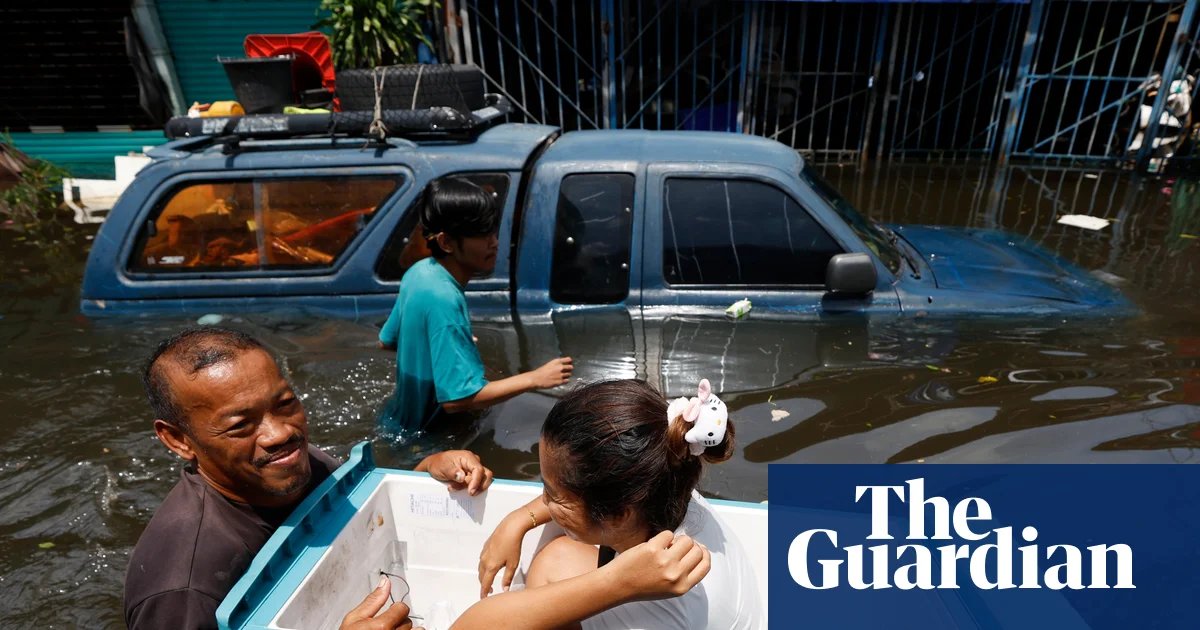
For residents like 73-year-old Suleemas Kurangkul, the disaster was marked by a chilling persistence. “It was like all day, all night,” she said, recalling how the water rose too quickly for warnings to be effective. Her residence, the 1970s-era Khlong Chan flat complex, has become a grim symbol of the crisis, with images showing apartment blocks rising from brown, murky water and the rooftops of submerged cars barely visible above the surface. While water levels have begun to recede, the aftermath has left behind a foul-smelling landscape of wreckage and rotting waste.
The city’s infrastructure, built on the Chao Phraya River’s vast floodplain, is struggling to cope. Bangkok relies on a delicate network of canals, pumps, and dikes, much of which has been compromised by decades of aggressive concrete urban development. As the drainage systems failed, the city descended into a dystopian reality: residents were seen navigating streets in inflatable paddling pools or, in one surreal instance, a floating refrigerator.
The disruption has paralyzed the capital. Major transit hubs, including Suvarnabhumi airport, faced significant operational failures as staff were unable to commute, leading to mass flight cancellations and a backlog of thousands of pieces of luggage. With school closures and city-wide gridlock, the economic and social fabric of the megacity is under severe strain.
Prime Minister Anutin Charnvirakul has warned that the threat is far from over, noting that floodwaters from the north continue to descend upon the city. A emergency “war room” has been established as authorities brace for further heavy rain forecast for the coming week.
Climate scientists observe that these catastrophic events are becoming a signature of the region. Oceanographer Nikolaos Skliris notes a significant trend toward extreme rainfall, exacerbated by a warming atmosphere that holds more moisture. While the current event was triggered by a stalled low-pressure system moving from the unusually warm South China Sea, experts like Naim Laeni argue that the government’s response was hampered by a lack of preparation for the sheer duration of the storm.
“The government did not communicate the seriousness,” Laeni said. “Usually in Bangkok, we receive heavy rain for a few hours, not for days.”
As rescue efforts continue—including in neighboring Myanmar, which has suffered even deadlier flash floods and landslides—the people of Bangkok are left to begin the long process of recovery. For many, like Suleemas, the only comfort remains in community resilience. “It’s very hard,” she said. “But together we are fighting.”
Disclaimer: This content is auto-generated for informational purposes only.
Source: Read Original News