








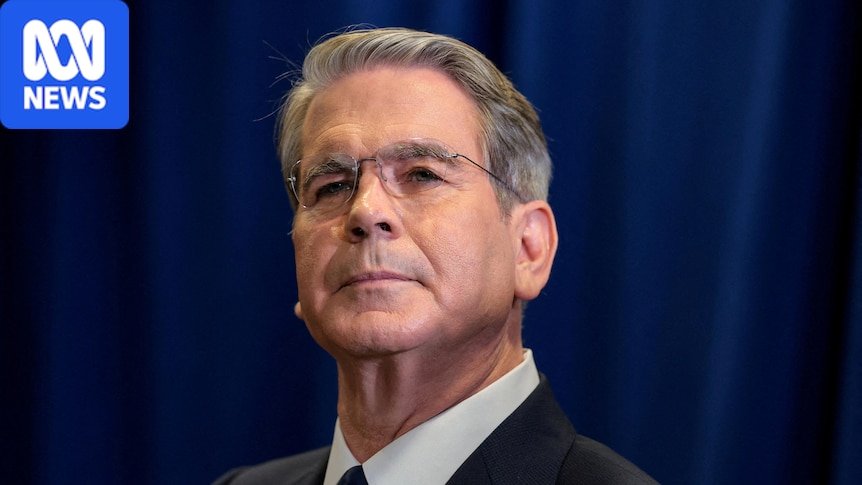
US Treasury Secretary Scott Bessent has relocated to a secure military base following intelligence reports of active Iranian threats against his life. The move marks the latest instance of a high-ranking Trump administration official seeking the protection of federal military facilities amid a period of heightened geopolitical volatility.
Sources familiar with the matter confirmed to Reuters that the decision was driven by specific threats linked to the Iranian government. While the exact nature and immediate imminence of the plots remain classified, security concerns surrounding Mr. Bessent reportedly intensified after a media report last year publicized his purchase of a $12.5 million mansion. The inclusion of aerial photography in that coverage reportedly allowed the property to be geolocated, heightening the risk to his personal safety.
Mr. Bessent has been a central figure in the administration’s hardline stance against Tehran, spearheading “Operation Economic Outcast.” Launched in August, the campaign utilizes heavy financial sanctions against Middle Eastern banks and financial institutions that facilitate trade with Iran. The initiative aims to cripple Iran’s economy to force an end to regional maritime attacks and the disruption of shipping in the Strait of Hormuz.
In a statement responding to the security relocation, a Treasury spokesperson emphasized that the administration would not be intimidated. “The secretary will not be deterred by the Iranian regime’s threats and remains committed to executing Operation Economic Outcast and maintaining the blockade, which together are collapsing Iran’s economy,” the spokesperson said.
Mr. Bessent is far from the only senior official to seek refuge behind military gates. The trend of political leadership residing on military property has become increasingly common within the current administration. Secretary of State Marco Rubio and Secretary of Defense Pete Hegseth are currently living in neighboring homes on “Generals’ Row” at Fort McNair in Washington, D.C. Similarly, White House Chief of Staff Stephen Miller transitioned to military housing at the same site following the assassination of activist Charlie Kirk.
Other high-profile figures, including former officials Pam Bondi and Kristi Noem, have also utilized military housing during their tenures. This reliance on the Department of Defense’s residential infrastructure has sparked some internal debate, with reports suggesting that the influx of political appointees is placing significant strain on the housing availability intended for uniformed military officers.
While Iran has consistently denied allegations of plotting attacks against U.S. officials on American soil, intelligence memos have characterized the current threat level as being in an “advanced stage.” Tensions have been further exacerbated by recent developments in Iran’s military capabilities; the Islamic Revolutionary Guard Corps recently announced the removal of a 2,000-kilometer range limit on its ballistic missiles, a move that U.S. officials fear could eventually lead to the development of intercontinental delivery systems.
Disclaimer: This content is auto-generated for informational purposes only.
Source: Read Original News