







Berlin’s municipal election is shaping up to be a quiet affair this year, as the filing deadline for Town Council candidates passed Tuesday with only three individuals seeking the three open seats. Unless a write-in candidate enters the fray before the Sept. 25 deadline, the Oct. 6 election will likely be canceled, effectively clearing the path for the three unopposed contenders to be sworn in.
The upcoming transition marks a significant shift for the five-member governing body. Vice President Dean Burrell, a fixture in Berlin politics for 32 years, is retiring, and his final meeting is set for Sept. 28. Additionally, Councilman Steve Green is stepping down following his successful bid for the Worcester County Commissioners, where he will begin his term in December.
The three candidates poised to fill these vacancies, along with the incumbent at-large seat, bring a mix of experience and new perspectives to the town’s leadership.
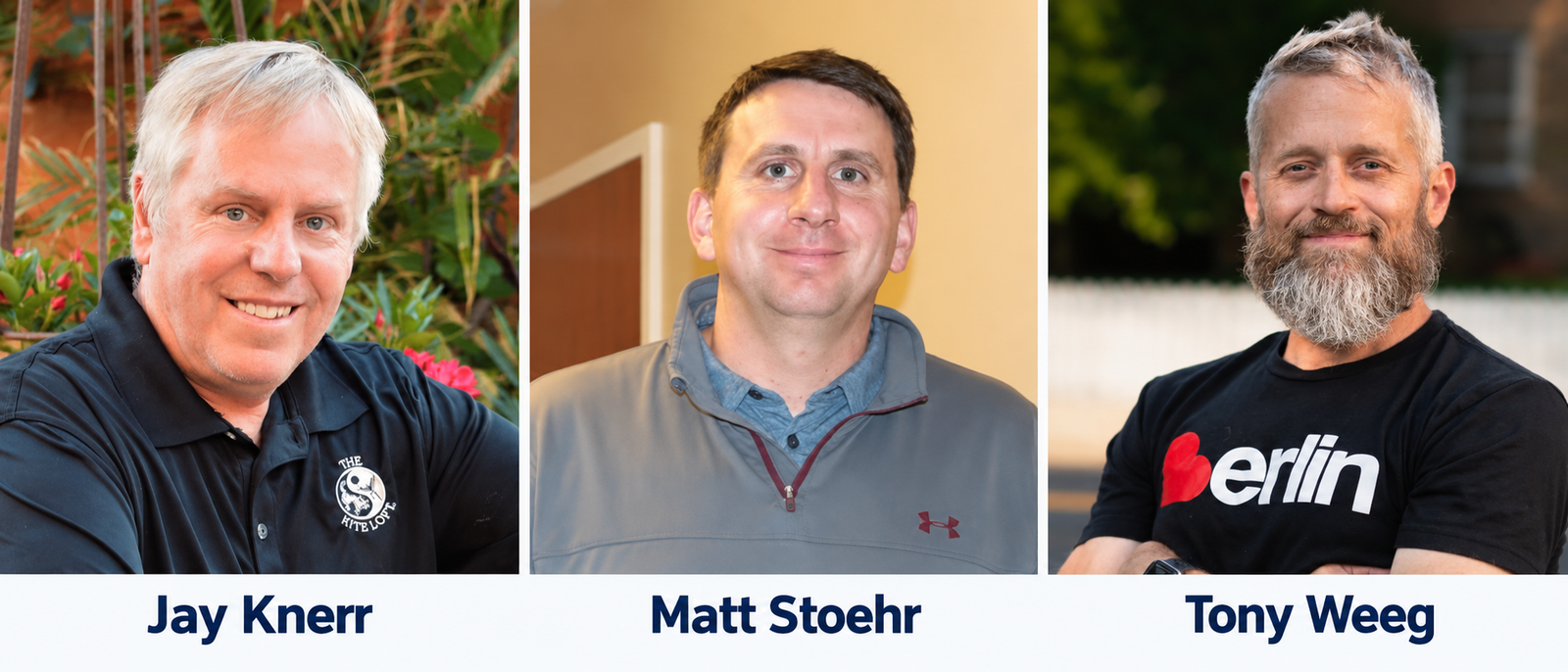
Matthew Stoehr, the current chair of Berlin’s Planning Commission, is the sole candidate for Green’s District 1 seat. A business owner with a background in finance, Stoehr has served on the commission since 2019. He has centered his platform on maintaining open communication and focusing on “infill” development—prioritizing the use of vacant lots within current town boundaries over the annexation of additional land.
Vying for Burrell’s District 4 seat is Tony Weeg, founder of the nonprofit We Heart Berlin. This marks Weeg’s third attempt at securing a council seat. A professional in software development and media, Weeg has proposed utilizing technology to increase government transparency, including the creation of a searchable database for town meeting records. His priorities also include improving pedestrian and bicycle connectivity and managing the town’s property tax rate with greater efficiency.
Rounding out the list is incumbent at-large representative Jay Knerr, who is seeking another four-year term. Since joining the council in 2020, Knerr has focused on balancing tourism with the needs of year-round residents, advocating for responsible development that preserves Berlin’s small-town character. He points to the recent revitalization efforts at the former Heron Park chicken-processing plant and the secured $1.4 million in funding for the Flower Street School community center as key successes during his tenure.
While the election is officially scheduled for Oct. 6, the lack of competitive seats means the focus is shifting toward the transition process. Should the race remain uncontested, the new council members will begin their four-year terms tasked with addressing the town’s ongoing infrastructure, public safety, and budgetary needs. For now, the town awaits the Sept. 25 deadline to see if any last-minute write-in campaigns will spark a formal vote.
Disclaimer: This content is auto-generated for informational purposes only.
Source: Read Original News