





New Delhi: The NDTV Defence Summit 2026 served as a pivotal platform for India’s military and strategic leadership to outline a bold roadmap for national security, emphasizing a shift toward next-generation warfare, indigenous innovation, and unwavering operational readiness. From high-tech fighter jet ambitions to the persistent challenges on the borders, the summit underscored India’s evolution into a proactive and technologically-driven global military power.
Ambitious Aerospace Goals
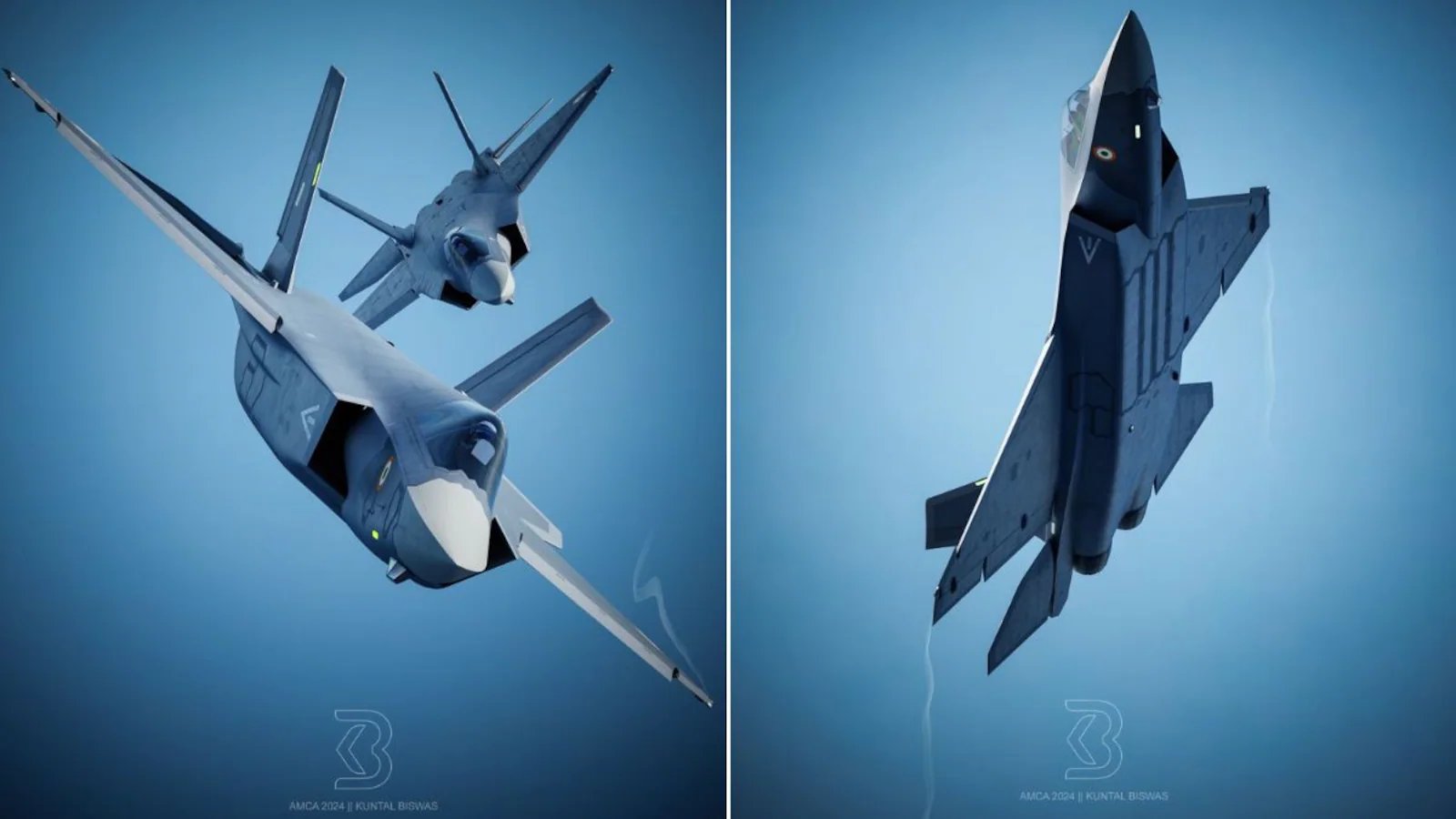
Defence Minister Rajnath Singh made a significant announcement regarding the nation’s aerial capabilities, confirming that India is actively working toward developing sixth-generation fighter aircraft. This move signals a forward-thinking approach, aiming to build systems capable of navigating the complex battlefields of the next two decades. Parallel to this, the government confirmed that the first prototype of the indigenous Advanced Medium Combat Aircraft (AMCA) is slated for its maiden flight in September 2028. While global acquisition of stealth platforms like the Russian Sukhoi-57 remains under deliberation, the primary focus remains on domestic self-reliance to counter the growing stealth capabilities of regional rivals.
The Primacy of Land and Technology
Despite the rapid integration of artificial intelligence and digital warfare, the Chief of Army Staff, General Dhiraj Seth, reaffirmed a foundational military doctrine: land remains the ultimate arbiter of victory. While acknowledging that technology is fundamentally altering how wars are fought—often clouding the battlefield with information noise and cyber-narratives—General Seth asserted that territorial control remains the only “indisputable marker” of success.
The Chief of Defence Staff (CDS), General NS Raja Subramani, echoed this sentiment while highlighting the transformative power of AI. He emphasized that the Indian armed forces are treating AI as a critical strategic opportunity, focusing on enhancing decision-support, logistics, and intelligence networks in collaboration with the national AI mission.
Securing the Borders and Beyond
The summit provided a clear, firm stance on India’s security posture. Defence Minister Rajnath Singh issued a stern warning to Pakistan, clarifying that while India desires regional peace, it will not tolerate the continued propagation of terrorism and remains fully prepared for decisive, targeted strikes. Regarding the northern borders, the CDS described the situation with China as “stable,” noting that high-level diplomatic dialogue remains the preferred mechanism for ensuring long-term peace.
On the maritime front, Chief of Naval Staff Admiral Krishna Swaminathan emphasized the need for self-sufficiency. Reflecting on lessons learned from the Strait of Hormuz and other volatile shipping lanes, the Navy is aggressively pursuing indigenous warship and submarine production. Addressing potential platform shortages, the Admiral maintained a practical outlook: “We have to fight with what we have,” while continuing to push for the commissioning of new conventional and nuclear-powered assets.
A Future-Proof Military Architecture
As the armed forces look toward an era of 5th and 6th-generation warfare, the consensus at the summit was that India cannot afford to wait for future perfection at the cost of current operational needs. Air Marshal Tejpal Singh stressed that while “jumping generations” for aircraft might be a long-term goal, India must immediately modernize its supporting architecture—specifically distributed sensing, resilient communications, and open mission systems.
Through collaboration with international partners, such as France’s presence in the Indo-Pacific, and private sector integration with technology providers like ICEYE, India is clearly building a multi-layered security framework. By blending legacy strength with cutting-edge digital infrastructure, the Indian establishment is positioning itself to handle the volatile, high-speed nature of 21st-century conflict.
Disclaimer: This content is auto-generated for informational purposes only.
Source: Read Original News