








India Must Shift from Labour Provider to IP Powerhouse, Says L&T Director R. Shankar Raman
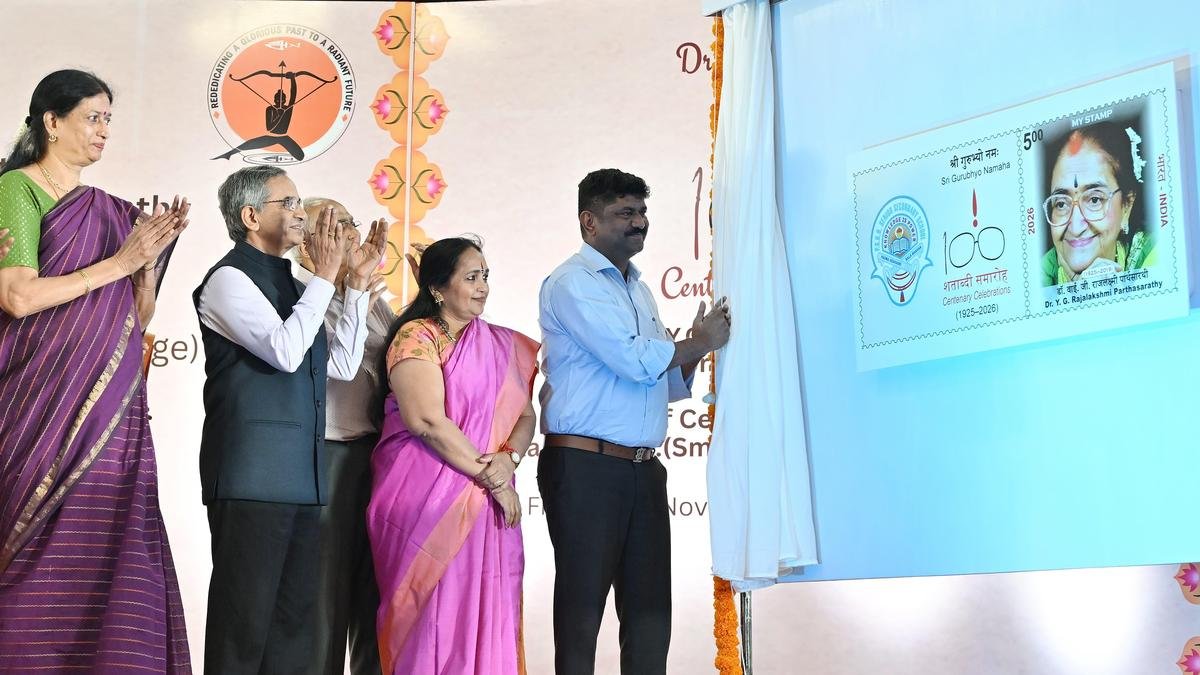
CHENNAI – R. Shankar Raman, President and Director of Larsen & Toubro (L&T), delivered a compelling call to action regarding India’s technological future during the release of the centenary commemorative ‘My Stamp’ honoring the late Y.G. Rajalakshmi Parthasarathy. Speaking in Chennai on Friday, Mr. Raman emphasized that the nation’s economic evolution hinges on a strategic pivot from providing cost-effective labor to becoming a global hub for indigenous intellectual property (IP).
Strengthening the Innovation Ecosystem
Highlighting L&T’s own commitment to homegrown research, Mr. Raman noted that the company has actively encouraged its engineers to pursue formal protection for their innovations. L&T has successfully filed over 500 patents, primarily focused on high-growth sectors such as semiconductors, defense electronics, and sustainable energy.
“The fundamental value of any enterprise lies in the intellectual property it possesses,” Mr. Raman asserted. He argued that while India boasts a vast pool of technical talent—exemplified by the thousands of engineers in Bengaluru developing high-end IP for multinational corporations—this talent must be redirected toward domestic firms to build long-term national wealth.
Policy Shifts and Private Sector Collaboration
Mr. Raman addressed the friction between industry growth and current economic policies, suggesting that the government needs to foster a more symbiotic relationship with private capital. He expressed concern that recent shifts in tax regulations have curtailed essential benefits for Research and Development (R&D) investments.
“The government does not value private capital enough,” he remarked, suggesting that for India to transition into a magnet for “expensive,” high-value talent, the fiscal environment must reward long-term investment. He further cautioned that India cannot aim to excel in every sector simultaneously; instead, the nation should identify areas of natural advantage and focus its resources on achieving global dominance in those specific domains.
Changing the Global Narrative
A significant portion of Mr. Raman’s address focused on India’s “modesty” regarding its scientific breakthroughs. He pointed specifically to the country’s space program, noting that India achieves satellite launches at a fraction of the cost of the United States, yet these feats often fail to receive the international recognition they deserve.
“We are very shy about broadcasting our achievements,” he said. He urged for a shift in diplomatic and commercial strategy, suggesting that political leaders and business delegations should prioritize hard-nosed trade and technology transfers over traditional engagements.
Commemorating a Legacy
The event served as a tribute to the late Dr. Y.G. Rajalakshmi Parthasarathy, a stalwart in the field of education. The centenary commemorative stamp, released by Sayeed Rashid, Postmaster General (Southern Region/Chennai City Region), honored her monumental contributions to schooling in India. The ceremony, which also featured the Shastiabdapoorthi Endowment Lecture, was attended by Sheela Rajendra, the dean-cum-director-cum-correspondent of the PSBB Group of Schools.
Concluding his remarks, Mr. Raman expressed optimism for the future. He noted that while a fundamental change in mindset is required, the growing awareness among Indian industry leaders—many of whom have spent decades building robust balance sheets—provides a strong foundation for the next wave of indigenous innovation. “Companies like ours that have survived for decades and continue to invest in the future will play a pivotal role,” he said. “Hopefully, tomorrow will be better.”
Disclaimer: This content is auto-generated for informational purposes only.
Source: Read Original News